Safety
Black Henna Warning: PPD Dangers
Genuine henna stains orange then brown over days. A paste that stains black in an hour almost always contains PPD. Here is how to spot black henna and safe alternatives.
Real henna is never jet black, and it never stains black in minutes. It stains slowly, coming up orange and maturing to a reddish brown over a day or two. So when a street stall or festival booth offers a "black henna" tattoo that dries dark and dramatic within the hour, that is not strong henna. It is almost always ordinary henna cut with a hair-dye chemical called para-phenylenediamine, or PPD, and PPD on bare skin can cause severe contact dermatitis, chemical burns, permanent scarring and a lifelong allergy. This guide explains the black henna dangers in plain terms: how to spot it before it touches you, what a reaction looks like, what to do if you have already had one, and the safe alternatives worth choosing instead.
The short version
- Real henna is never black. It stains orange first and matures to brown over 24 to 48 hours.
- Instant black means an additive. The usual one is PPD, a chemical only approved for hair dye, not skin.
- PPD can cause chemical burns and blistering, and can leave permanent scars in the shape of the design.
- One reaction is for life. PPD sensitisation is usually permanent and can spread to hair dye and other products.
- Safe alternatives exist: genuine natural henna, or jagua for a true blue-black stain.
What "black henna" actually is
There is no plant that produces a jet-black henna paste. Genuine henna comes from Lawsonia inermis, and the only dye it contains stains in the orange-to-brown range. The term "black henna" is a marketing label stuck on a mixture, not a variety of the plant. In practice it means one of two things, and the difference matters enormously.
Sometimes "black henna" refers to natural henna darkened with indigo, the same plant dye used in denim and in traditional hair colouring. Used carefully and left as a hair or beard product, that can be relatively benign. Far more often, though, "black henna" sold for skin decoration is ordinary henna, or sometimes no henna at all, spiked with para-phenylenediamine to force a fast, dark, opaque stain. It is this second version, the one that appears at holiday resorts, festivals and markets, that causes the injuries this article is about. If a stall promises a black tattoo that is ready within an hour, assume it is the PPD kind.
Why real henna can never be jet black
The safety line is drawn by chemistry, not opinion. A natural henna stain is built by a single dye molecule, lawsone, forming a slow chemical bond with the keratin in the dead outer layer of your skin. That bond starts orange and only deepens to brown as it oxidises over the following one to two days. The reaction physically cannot produce a black colour on contact, and it physically cannot finish in fifteen minutes. We cover this in full in our explainer on the science of how a henna stain forms, but the practical takeaway is simple: speed and blackness are the two things real henna cannot do.
That gives you a test you can apply before anything touches your skin. Ask how dark it will be and how fast. If the honest answer is "orange at first, brown by tomorrow, over several hours," that is henna. If the answer is "black, and dry within the hour," that is a chemical mix. The timeline below shows the gap between the two.
Natural henna matures from pale orange to brown over a day or two. A stain that arrives black and finished in under an hour is not the plant.
The chemical in black henna: para-phenylenediamine
The additive at the heart of the problem is para-phenylenediamine (PPD), a coal-tar compound used legitimately in permanent hair dye. In that setting it is mixed at a controlled concentration, developed with an oxidiser and rinsed out, and it never sits directly against bare skin for long. Black henna abuses it completely: it is applied neat or nearly neat, left in prolonged contact with the skin, and often at concentrations far above anything permitted for cosmetics. PPD is not approved for direct application to the skin, and using it this way is what turns a decorative paste into a chemical hazard.
PPD is a well-documented sensitiser. It was named Allergen of the Year in 2006 by the American Contact Dermatitis Society and sits among the most common positive results in dermatology patch testing. The danger is twofold. First, a strong dose can inflame and burn the skin on the very first exposure. Second, and more insidiously, PPD can quietly sensitise you, so that a future exposure, even to something as ordinary as hair dye, triggers a violent allergic reaction. That sensitisation is generally considered lifelong.
How to spot black henna before it touches you
You can screen out almost every risky application with a few questions and a look at the cone. None of these signs is subtle once you know what you are looking for.
Promises of instant black
Any claim that the tattoo will be black, or ready in under an hour, is the clearest warning sign there is.
Jet-black paste
Natural henna paste is khaki green to brown. A paste that is already inky black in the cone has been dyed.
A harsh chemical smell
Real henna smells earthy, like hay or spinach. A sharp, ammonia-like or solvent smell points to additives.
No cure or wait time
Genuine henna needs hours on the skin. A booth that rushes you out in minutes is not selling henna.
No ingredient answer
An artist who cannot or will not tell you exactly what is in the cone is not one to trust with your skin.
Tourist and festival stalls
Beach resorts, fairs and markets are where black henna is most common, often aimed at visitors wanting a quick souvenir.
Real henna versus black henna, side by side
Set the two against each other and the differences are stark. Everything that makes black henna dangerous flows from the fact that it is not really henna at all.
| Real natural henna | "Black henna" with PPD | |
|---|---|---|
| Paste colour | Khaki green to brown | Inky jet black |
| Stain colour | Orange, maturing to reddish brown | Solid black |
| Time to develop | Hours on skin, then 24 to 48 hours to darken | Dark within minutes to an hour |
| Smell | Earthy, like hay or tea | Sharp, chemical or ammonia-like |
| Active ingredient | Lawsone, a plant dye | Para-phenylenediamine, a hair-dye chemical |
| Approved for skin | Traditional use as a temporary skin stain | No, PPD is not permitted for direct skin use |
| Main risk | Rare mild sensitivity | Chemical burns, blistering, scarring, lifelong allergy |
What a black henna reaction looks like
A PPD reaction is a form of allergic contact dermatitis, and its cruel signature is that it usually appears in the exact shape of the design. Because it is a delayed hypersensitivity reaction, it often does not show up immediately. Many people walk away from the stall pleased, and only days later does the skin where the paste sat begin to react.
Early signs are redness, swelling and intense itching along the lines of the tattoo. In more severe cases the skin blisters, weeps and forms raised welts, and can go on to develop open sores and chemical burns. As it heals it may leave behind patches of skin that are permanently lighter or darker than the surrounding area, or raised scar tissue, tracing the pattern for life. In the worst reports, extensive or repeated exposure has led to widespread reactions needing hospital treatment. What should have been a two-week decoration can become a permanent mark.
How a PPD reaction typically unfolds
A delayed allergic reaction, which is why the tattoo can look fine at first. Timing varies from person to person.
If you think you are reacting to a black henna tattoo: stop touching or scratching the area and do not try to scrub the stain off, which only drives more chemical into the skin. Wash the site gently with a mild soap and water. Seek medical advice promptly, from a pharmacist, a doctor or, for severe blistering, swelling or spreading redness, urgent care. Tell them it may be a PPD reaction from a black henna tattoo, because that changes how it is treated. Take a photo for your records, and afterwards treat yourself as PPD-allergic for life: avoid all para-phenylenediamine, including many permanent hair dyes, and mention the allergy before any hair colouring or patch testing.
Safe alternatives that still look striking
None of this means giving up on temporary body art. It means choosing a medium that stains through a real, skin-safe process rather than a shortcut chemical. Two options cover almost every reason people reach for black henna in the first place.
The first is genuine natural henna. If what you love is the tradition and the warm reddish-brown colour, this is the real thing, and used properly it has an excellent safety record. The trade-off is honesty about colour and time: it will be brown, not black, and it takes a day or two to reach full depth. Our guide on whether henna is safe and how to buy it responsibly walks through how to source fresh, additive-free paste and what to check on the label. If you are still unsure how henna differs from the broader idea of "mehndi," our explainer on henna versus mehndi clears up the terms.
The second is jagua, a gel made from the fruit of the South American genipap tree. Jagua stains a genuine blue-black, so it scratches the itch that sends people toward black henna in the first place, and it does so through a natural fruit dye rather than PPD. It is not risk-free, a small number of people are sensitive to it, so a patch test 48 hours ahead is still wise, but it is a categorically different proposition from a coal-tar chemical. Between real henna for brown and jagua for near-black, there is no good reason to accept a PPD paste.
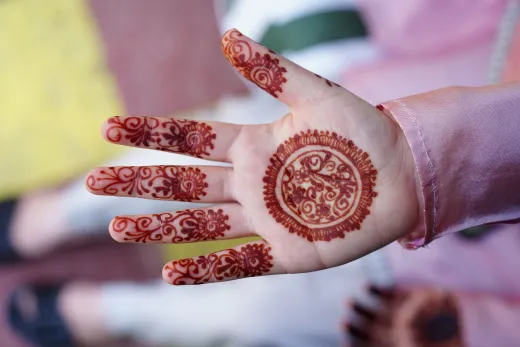
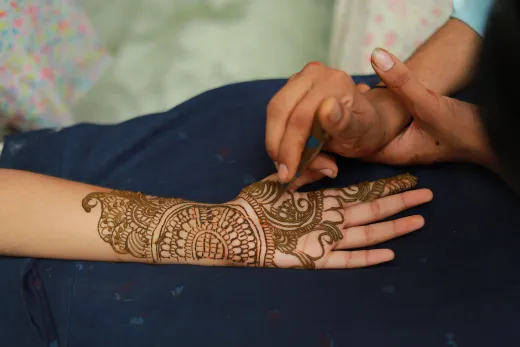
Real henna in pictures
A few real examples worth saving. Screenshots communicate far better than words, so take the ones you like to your artist.
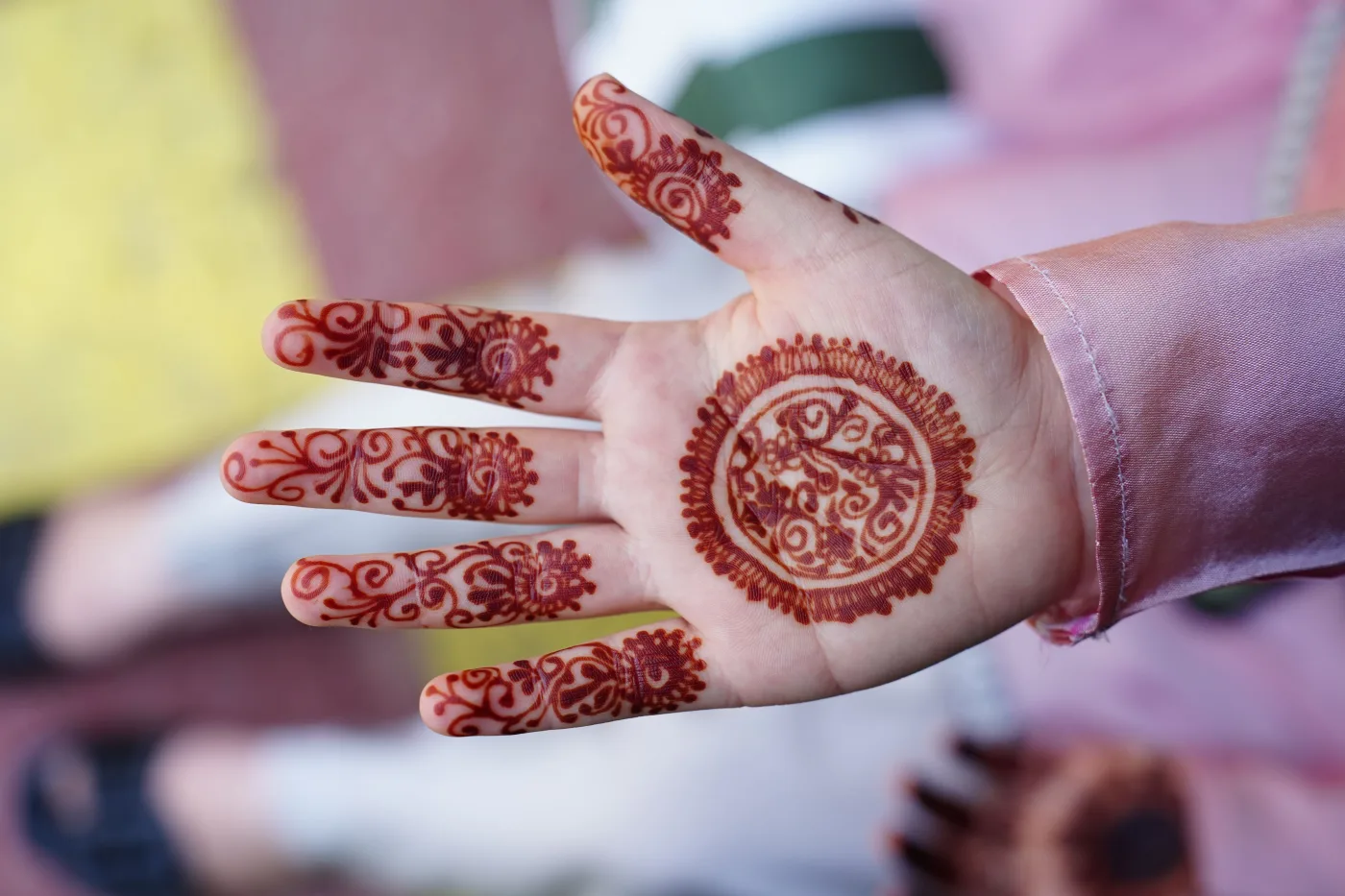
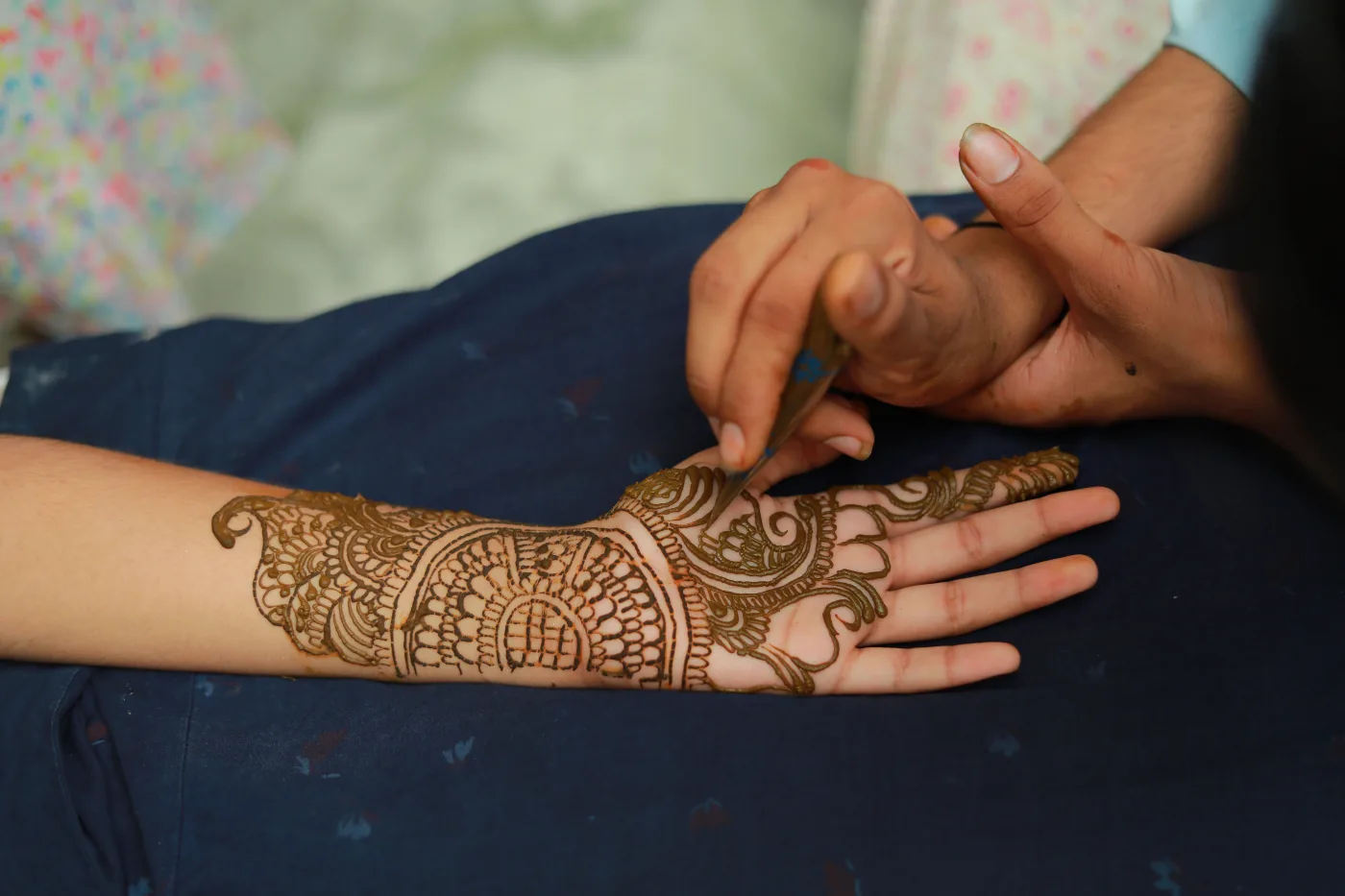
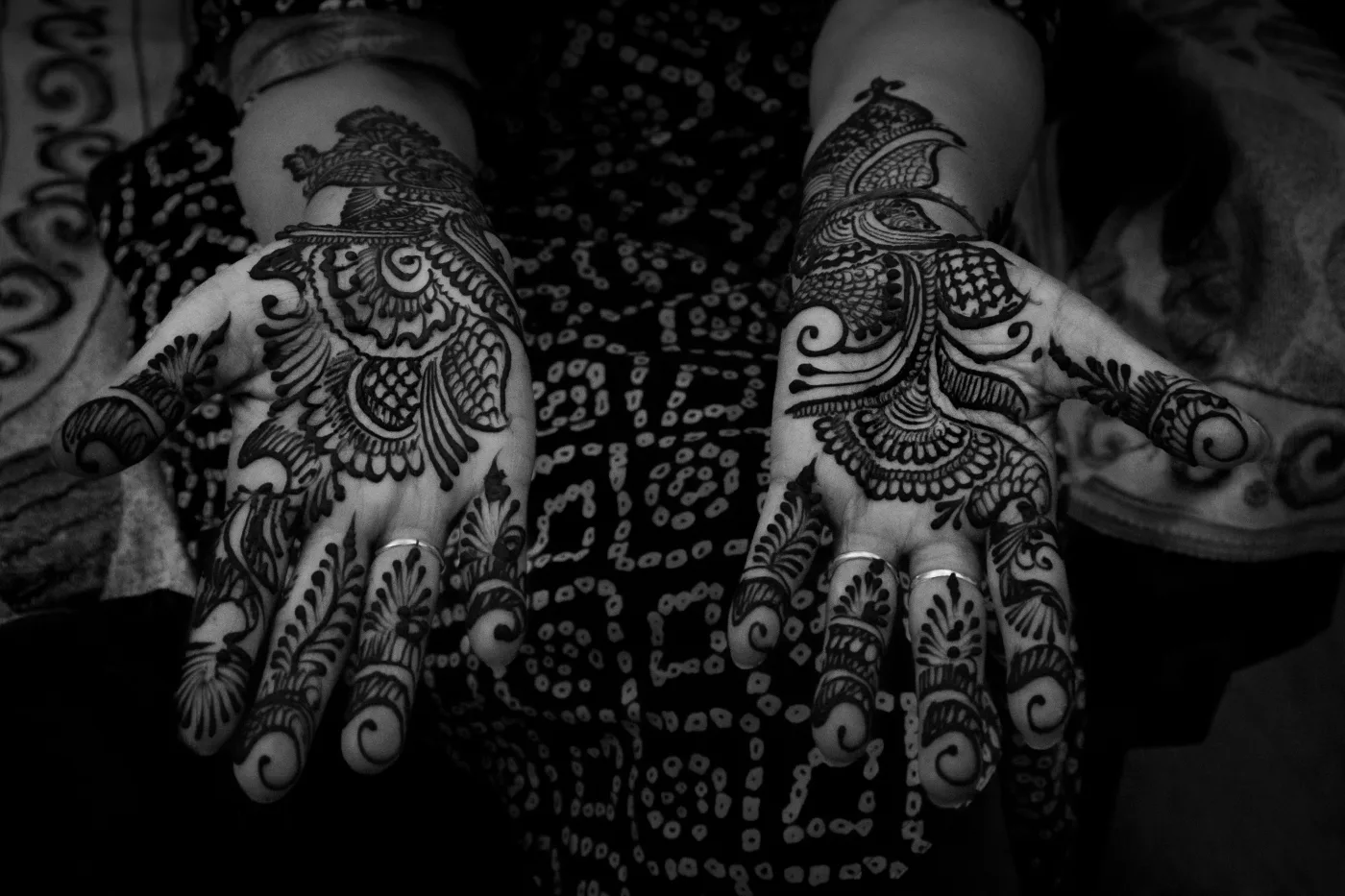
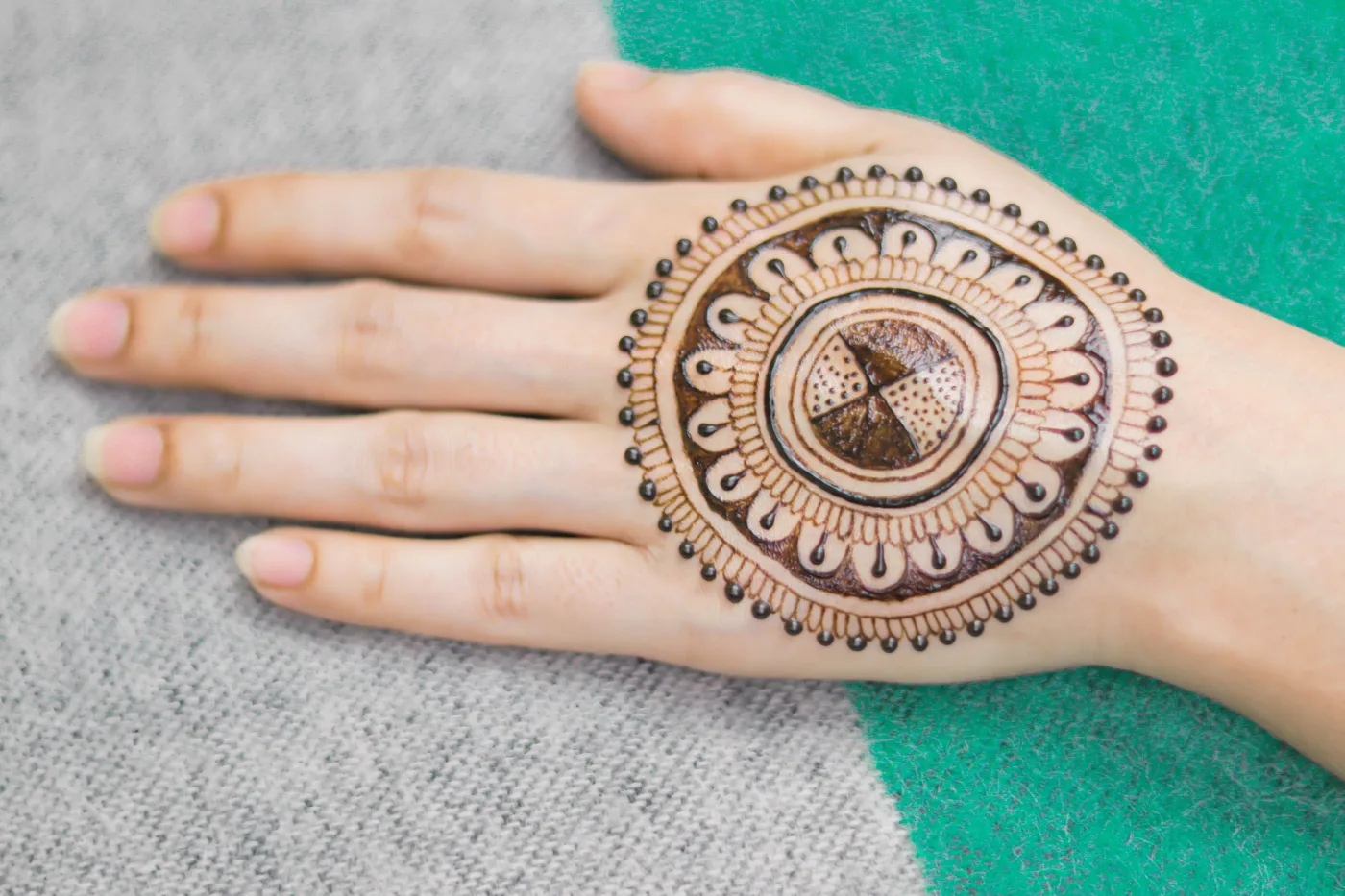
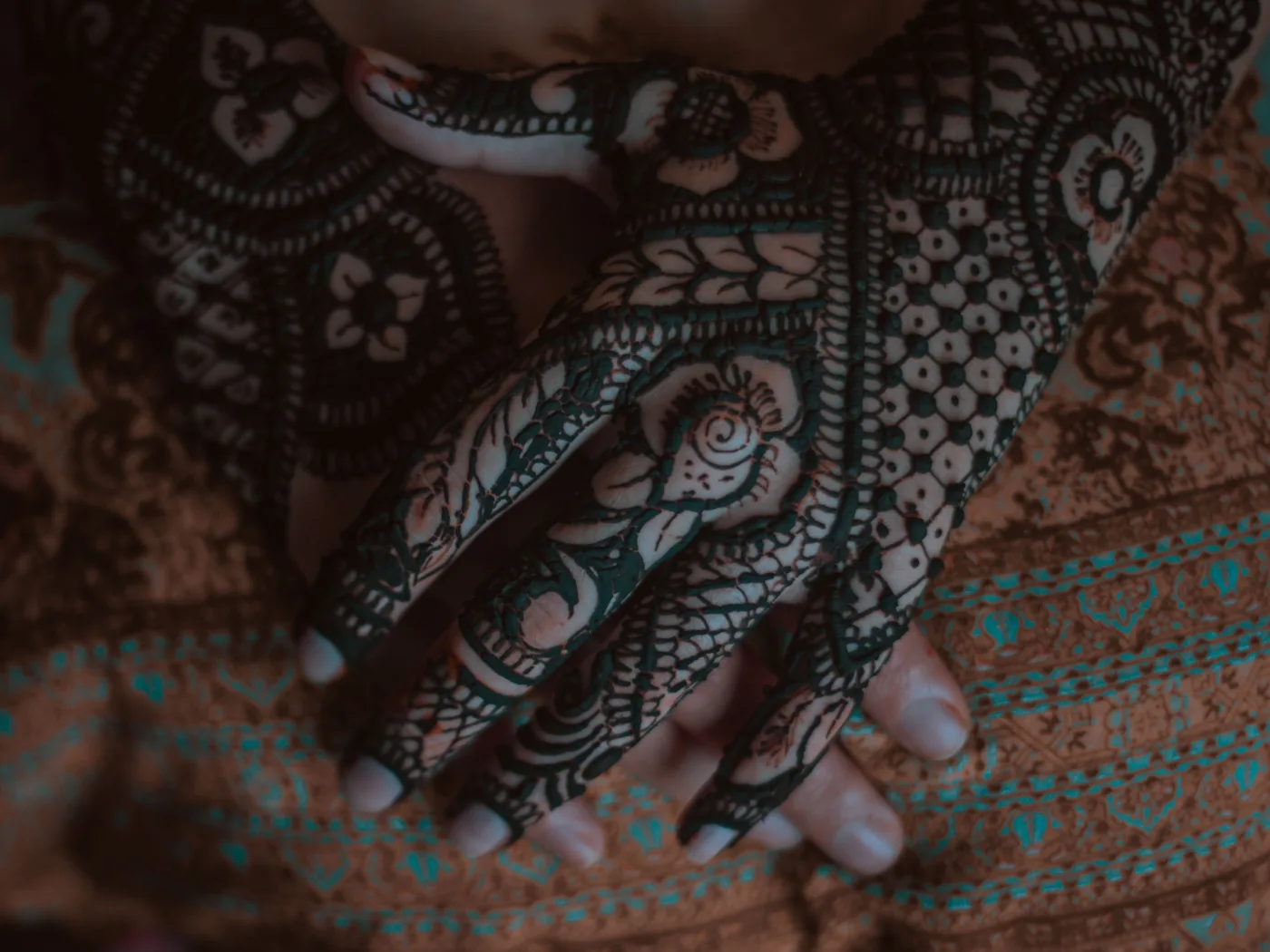
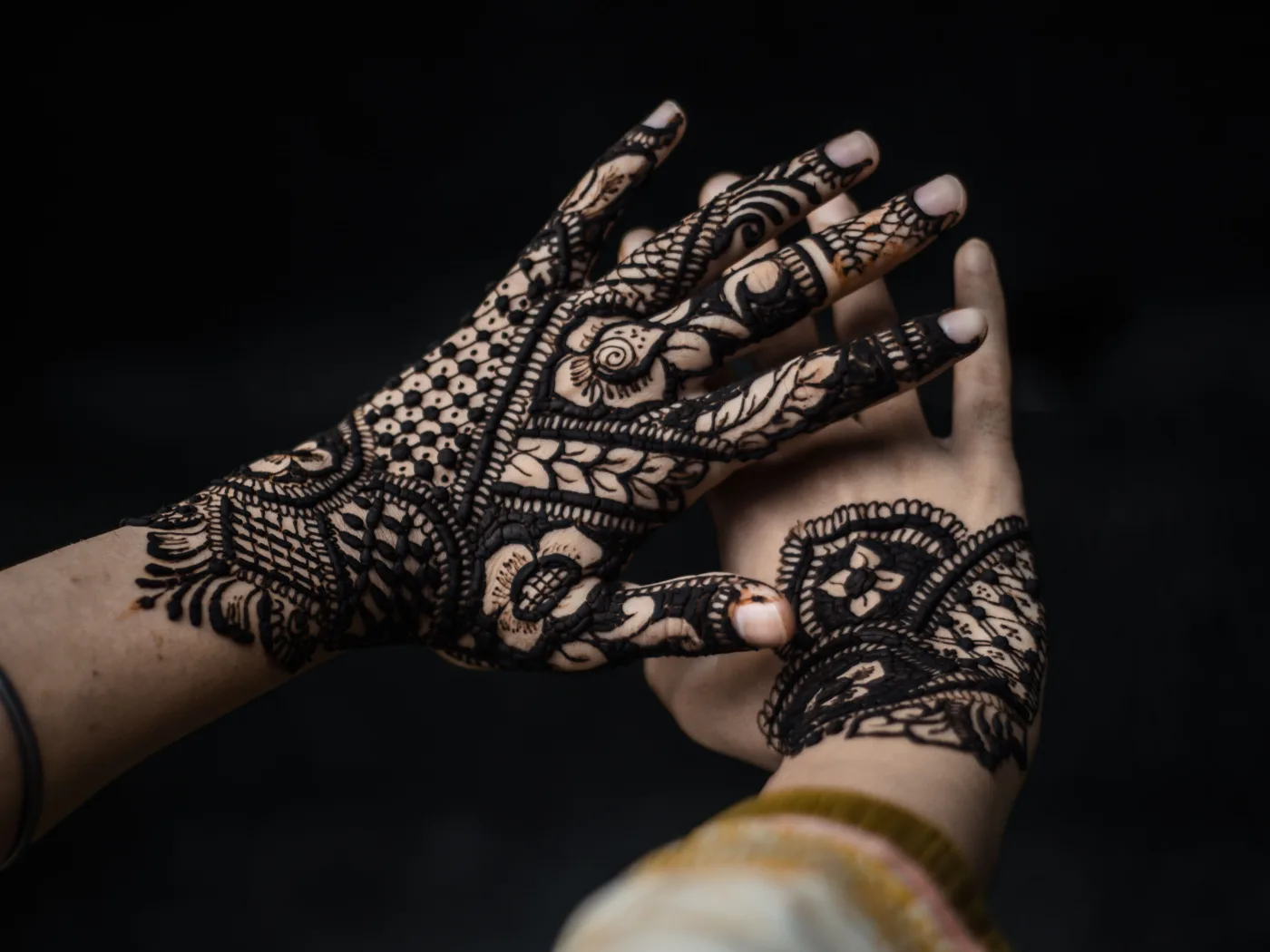
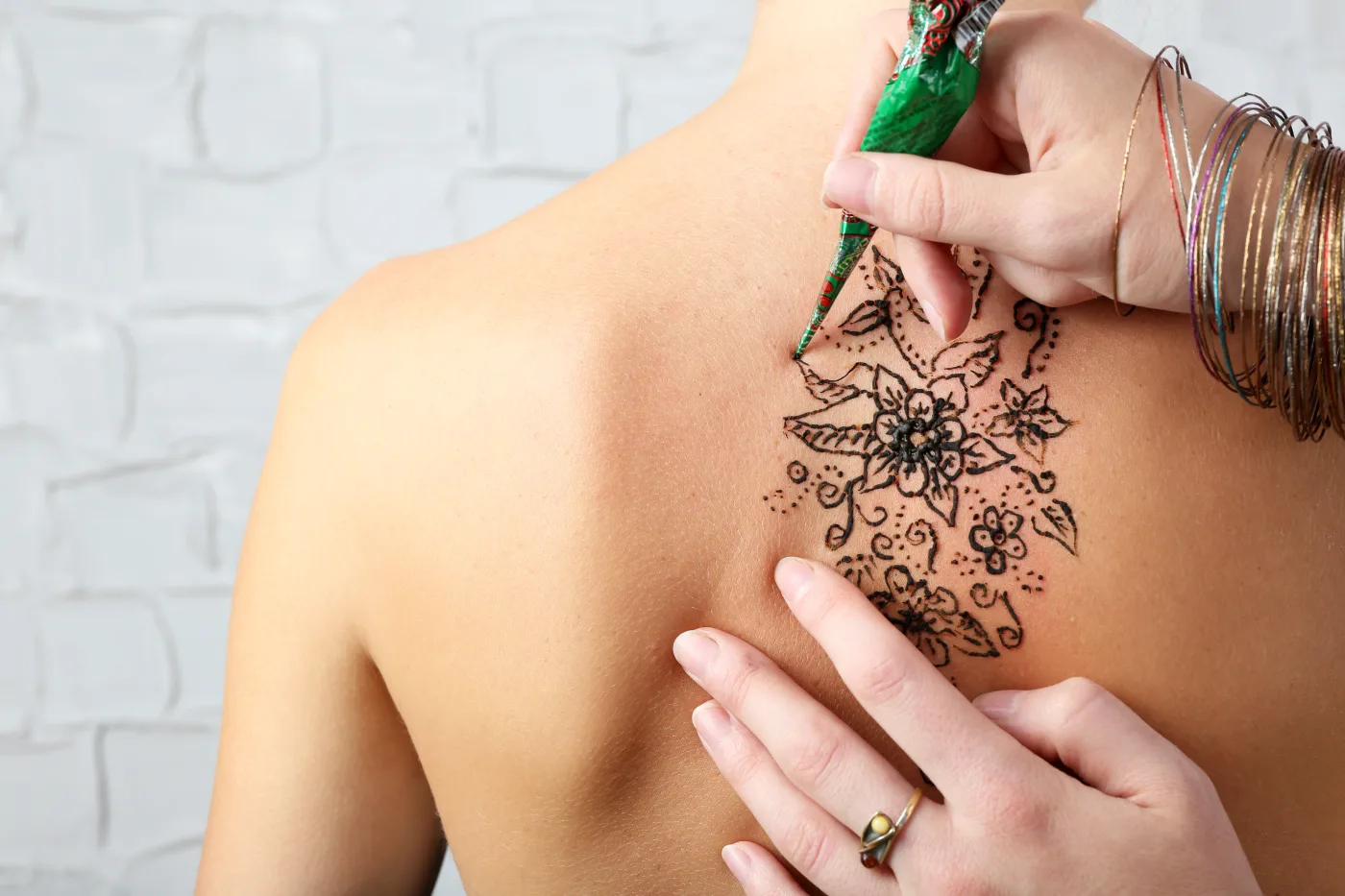
Photos provided by Pexels.
Frequently asked questions
Is black henna safe?
No. Most "black henna" sold for skin is ordinary henna spiked with para-phenylenediamine (PPD), a hair-dye chemical that is not approved for direct application to the skin. It can cause severe contact dermatitis, blistering, chemical burns, permanent scarring and a lifelong allergy. Natural henna, which stains brown rather than black, is the safe version. If a paste stains black quickly, treat it as unsafe and avoid it.
What is the chemical in black henna that causes harm?
It is para-phenylenediamine, usually shortened to PPD. It is a coal-tar dye used in permanent hair colour, where it is controlled, diluted and rinsed out. In black henna it is applied neat or concentrated and left in prolonged contact with bare skin, which is exactly the exposure that triggers burns and allergic reactions. PPD was named Allergen of the Year in 2006 and is a leading cause of positive skin patch tests.
How can I tell black henna from real henna?
Watch the paste and the pitch. Natural henna paste is khaki green to brown, smells earthy, needs hours on the skin, and stains orange before maturing to reddish brown over a day or two. Black henna paste is inky black, often smells sharp or chemical, and is sold on the promise of a black result within the hour. Any claim of instant black or a jet-black paste is a clear warning sign.
What does a black henna reaction look like, and when does it appear?
It usually appears in the shape of the design, because it is an allergic contact reaction to the PPD that sat there. It is often delayed, showing up two to five days later rather than at once, starting as redness and intense itching and progressing in worse cases to blistering, weeping, open sores and scarring. Because it can be delayed, a tattoo that looked fine at the stall can still cause a serious reaction days afterwards.
I had black henna years ago with no problem. Am I still at risk?
Possibly more than you think. Even an exposure that caused no visible reaction can have sensitised you to PPD, and sensitisation is generally lifelong. A later exposure, such as using a permanent hair dye, can then provoke a sudden and severe reaction. If you know you have had black henna, treat yourself as potentially PPD-allergic and tell your hairdresser or doctor before any hair colouring or patch testing.
What is a safe alternative for a dark temporary tattoo?
For a warm reddish-brown design, choose genuine natural henna from a trusted, additive-free source. For a true blue-black colour, jagua gel, made from a South American fruit, gives a dark stain through a natural dye rather than PPD. Jagua can still cause sensitivity in a few people, so patch test 48 hours in advance, but it is far safer than any PPD-based black henna.
Have a question or a topic to suggest?
We read every message. Tell us what you would like to see next on the blog.
Get in touchYou may also like
Is Henna Safe? Skin, Kids, Allergies
Is henna safe? Natural henna is safe for most skin. The real risks are black henna and PPD, rare allergies and G6PD in babies. Plus how to patch test.
The Chemistry of a Henna Stain
Henna stain science explained clearly: how lawsone bonds to keratin, why the stain starts orange then turns brown, and why palms stain the darkest.
Henna vs Mehndi: What's the Difference?
Henna vs mehndi: they are the same plant and the same dye, just two different words. Learn the etymology, the regional split and where the confusion begins.