Safety
Is Henna Safe? Skin, Kids, Allergies
Natural henna is a safe, temporary plant stain for most people. The real dangers are PPD in black henna, rare true allergies and G6PD risk in infants. Who should be cautious.
For most people, on most skin, the answer is yes: natural henna is safe. The paste is just ground leaves of the henna plant mixed with a mild acid, and its dye bonds harmlessly to the dead outer layer of the skin. The problems that make headlines almost never come from real henna. They come from a look-alike called "black henna" that has been spiked with a hair-dye chemical, from the rare genuine henna allergy, and from a specific inherited condition that makes henna risky for a small number of newborns. This guide separates the real risks from the myths, explains who should be cautious, and shows how to patch test before you sit down for a design.
The short version
- Natural henna is generally safe on skin for most children and adults. It stains, it fades, it does not burn.
- "Black henna" is the real danger. It is not henna at all but henna spiked with PPD, a strong hair-dye chemical.
- True henna allergy is rare but real. A patch test 48 hours before is the sensible precaution.
- Newborns and infants with G6PD deficiency should avoid henna, which can trigger a breakdown of red blood cells.
- If it stains black in an hour, walk away. Real henna is orange first and takes a day or two to deepen.
What natural henna actually is
Body henna, or mehndi, is a paste made from the dried, powdered leaves of Lawsonia inermis, the henna plant. The leaves contain a single dye molecule called lawsone, which is released when the powder is mixed with something mildly acidic such as lemon juice or tea. When the paste sits on the skin, that lawsone bonds to keratin in the outermost dead layer and leaves a stain that starts orange and matures to reddish brown over a day or two. Nothing penetrates to the living cells beneath, which is exactly why a natural stain is painless and temporary. We cover the full chemistry in our explainer on how a henna stain actually forms.
Understood that way, natural henna is closer to a plant-based stain than to an ink or a tattoo. It is not injected, it does not break the skin, and it fades on its own as those surface cells shed. That is the baseline for the whole safety question: pure henna is a benign plant paste. The risk appears when something is added to it, when a person is genuinely sensitised to it, or when a person has an underlying condition that changes how their body reacts.
The real danger: "black henna" and PPD
By far the most important safety point is this one, so it comes first. Natural henna cannot stain black on contact. It physically has to build slowly and start orange. Any paste marketed as "black henna" that promises a dark, instant, jet-black result has been mixed with something else, and that something is almost always para-phenylenediamine (PPD), a chemical used in permanent hair dye. On skin, and especially at the high concentrations found in black henna cones, PPD is a potent allergen. It can cause severe allergic contact dermatitis: blistering, intense itching, weeping sores and, in some cases, permanent scarring in the shape of the design.
The cruel part is the delay. A black-henna reaction often does not appear for three to twelve days after application, long after the person has left the stall and assumed all was well. By the time the skin erupts, the damage is already under way. Worse, a single exposure can cause lifelong sensitisation to PPD and related chemicals, meaning future contact with ordinary hair dye, dark clothing dyes or printer inks can trigger reactions for years afterward. PPD is common enough as a cause of these reactions that the American Contact Dermatitis Society named it Allergen of the Year in 2006. We go through the warning signs and the aftermath in detail in our full piece on why black henna is dangerous.
The one rule that prevents almost every serious injury: if a paste stains dark black within an hour, it is not henna. Real henna is orange when the paste comes off and deepens over the next 24 to 48 hours. Instant black means an added dye. Do not let it near your skin, and be especially firm about this at holiday markets and tourist stalls, where black henna is most common.
Genuine henna allergy: rare but real
Setting aside black henna entirely, can a person be allergic to pure, natural henna? Yes, but it is uncommon. Reported cases of true allergic contact dermatitis to natural henna do exist, more often in people who work with it frequently, such as professional artists, but for the general public a genuine reaction to the plant itself is rare. When it does happen it looks like any other contact allergy: redness, itching, small bumps or a rash confined to where the paste sat, usually developing within a day or two.
This is different in scale and severity from a PPD reaction. Natural henna sensitivity tends to be a localised, self-limiting rash rather than the blistering, scarring injury that black henna can inflict. It is still worth taking seriously, particularly if you have very reactive skin or a history of contact allergies, which is exactly what patch testing is for.
Who should be cautious
Most people can wear natural henna without a second thought. A few groups have a genuine reason to take extra care, and one group should avoid it outright. Here is who, and why.
Newborns and infants with G6PD deficiency
The clearest medical caution. See the section below. For this group, avoid henna rather than patch test.
People with reactive or allergy-prone skin
A history of eczema or contact allergies raises the odds of a natural-henna reaction. Patch test first.
Anyone previously exposed to black henna or PPD
Prior sensitisation to PPD can make later reactions faster and stronger. Treat all dark, fast pastes as off-limits.
Young children generally
Natural henna is widely used on children, but skin is thinner and squirmier. Patch test and supervise, and never use black henna.
Pregnant and breastfeeding people
Natural henna on skin is generally considered low risk, but if you are unsure, ask your midwife or doctor and avoid black henna entirely.
Anyone offered an unknown pre-mixed cone
The risk is what has been added, not the plant. If you cannot verify the ingredients, do not assume it is pure.
Henna and G6PD deficiency in babies
This is the one situation where natural henna, not the adulterated kind, carries a specific and documented medical risk, so it deserves its own section. Glucose-6-phosphate dehydrogenase deficiency, or G6PD deficiency, is a common inherited condition in which red blood cells are more fragile than usual and can break down when exposed to certain triggers. It is most prevalent in people of African, Mediterranean, Middle Eastern and South Asian descent, the same regions where henna is a long tradition, which is part of why the caution matters.
Natural henna has been linked to haemolytic crises, an episode of red blood cell breakdown, in G6PD-deficient infants. The concern is greatest for newborns and very young babies, whose systems are least able to cope and in whom the effect can be serious. Because a parent often does not know whether a baby carries the deficiency, the safe general guidance is simply to keep henna off the skin of newborns and infants, and to speak to a doctor before applying it to a young child if G6PD deficiency runs in the family. This is a case where the sensible default is caution, not a patch test.
General guidance, not a diagnosis: this article explains widely reported risks so you can make an informed choice. It is not medical advice. If you or your child has G6PD deficiency, a history of severe allergies, or any condition you are unsure about, ask a qualified healthcare professional before using henna.
Safe henna versus henna to be cautious with
Almost every real-world decision comes down to telling genuine henna apart from something that has been altered or used in the wrong situation. This table is the quick version.
| Generally safe | Be cautious or avoid |
|---|---|
| Natural henna that stains orange, then browns over a day or two | Any paste that stains dark black within an hour |
| Paste you or a trusted artist mixed from plain henna powder | Unlabelled pre-mixed cones of unknown ingredients |
| Brown, reddish or maroon final colour | Jet-black "black henna" or "neutral" cones with added dye |
| Henna on healthy adult and older-child skin, after a patch test if prone to reactions | Henna on newborns and infants, especially with any G6PD history |
| A design that itched only mildly and faded cleanly | A design that blistered, wept or left a raised outline |
| Artists who tell you the colour takes 48 hours to develop | Sellers who promise instant, permanent, black results |
How to patch test henna properly
A patch test is the single most useful thing you can do before a full design, especially for a child, for reactive skin, or for a paste you have not used before. It is the same principle dermatologists use to diagnose contact allergies, scaled down to your bathroom. It costs nothing and takes two minutes plus a wait.
A patch test in three steps. A faint orange-brown stain with no irritation is the expected, safe result. Redness, swelling, itching or bumps mean do not proceed.
To do it, dab a coin-sized spot of the paste on the inner forearm, let it dry, and leave it in place for as long as you normally would for a design. Then remove it and watch the site for a full 48 hours. A henna stain developing there is normal and expected. What you are watching for is trouble: redness beyond the stain, swelling, itching, small blisters or bumps. Any of those means do not go ahead with the full design. If the paste is a black or unknown cone and it reacts, that is doubly a reason to reject it, and note that a PPD reaction can be delayed by several days, so a clear patch test does not fully clear an unknown cone. The only paste you can really trust is one whose ingredients you know.
Safe practice: a short checklist
Put the risks together and safe henna comes down to a handful of habits. None of them are onerous, and together they remove almost all of the real-world danger.
Know your paste
Use plain henna you or a trusted artist mixed, or a clearly labelled natural cone. Avoid anything unmarked.
Reject instant black
No natural henna stains black on contact. Fast, dark, permanent claims mean added dye. Decline it.
Patch test when in doubt
First time, reactive skin, or a child: test a small spot 48 hours ahead and watch for irritation.
Extra care for the very young
Keep henna off newborns and infants, and ask a doctor if G6PD deficiency runs in the family.
Watch the aftermath
Mild itch that fades is fine. Blisters, weeping or a raised outline are not. Seek medical advice if they appear.
Let colour take its time
Expect orange first and full colour in a day or two. Patience is the sign of the genuine plant.
So, is henna safe?
For the great majority of people, natural henna is a safe, temporary, plant-based stain that has been used for thousands of years. The dangers that give henna a bad name are, in order of real importance, the PPD in "black henna", the rare genuine allergy to the plant, and the specific risk to newborns and infants with G6PD deficiency. Every one of those is avoidable with the same simple discipline: know what is in your paste, refuse anything that stains instantly black, patch test when there is any doubt, and keep henna off the very youngest skin. If you want to be sure you are even talking about the plant and not a chemical imitation in the first place, our guide to henna versus mehndi and what the words really mean is a good next read.
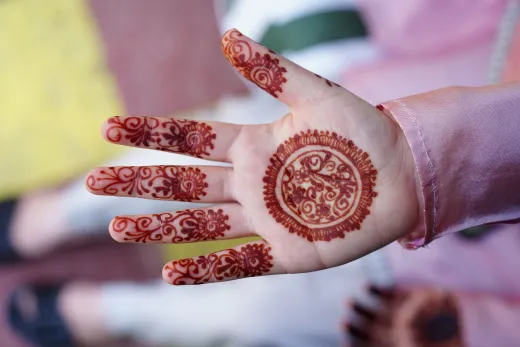
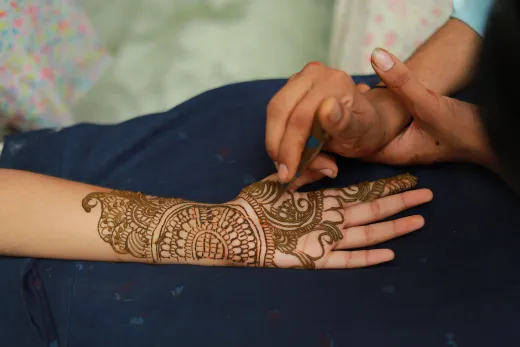
Natural henna in pictures
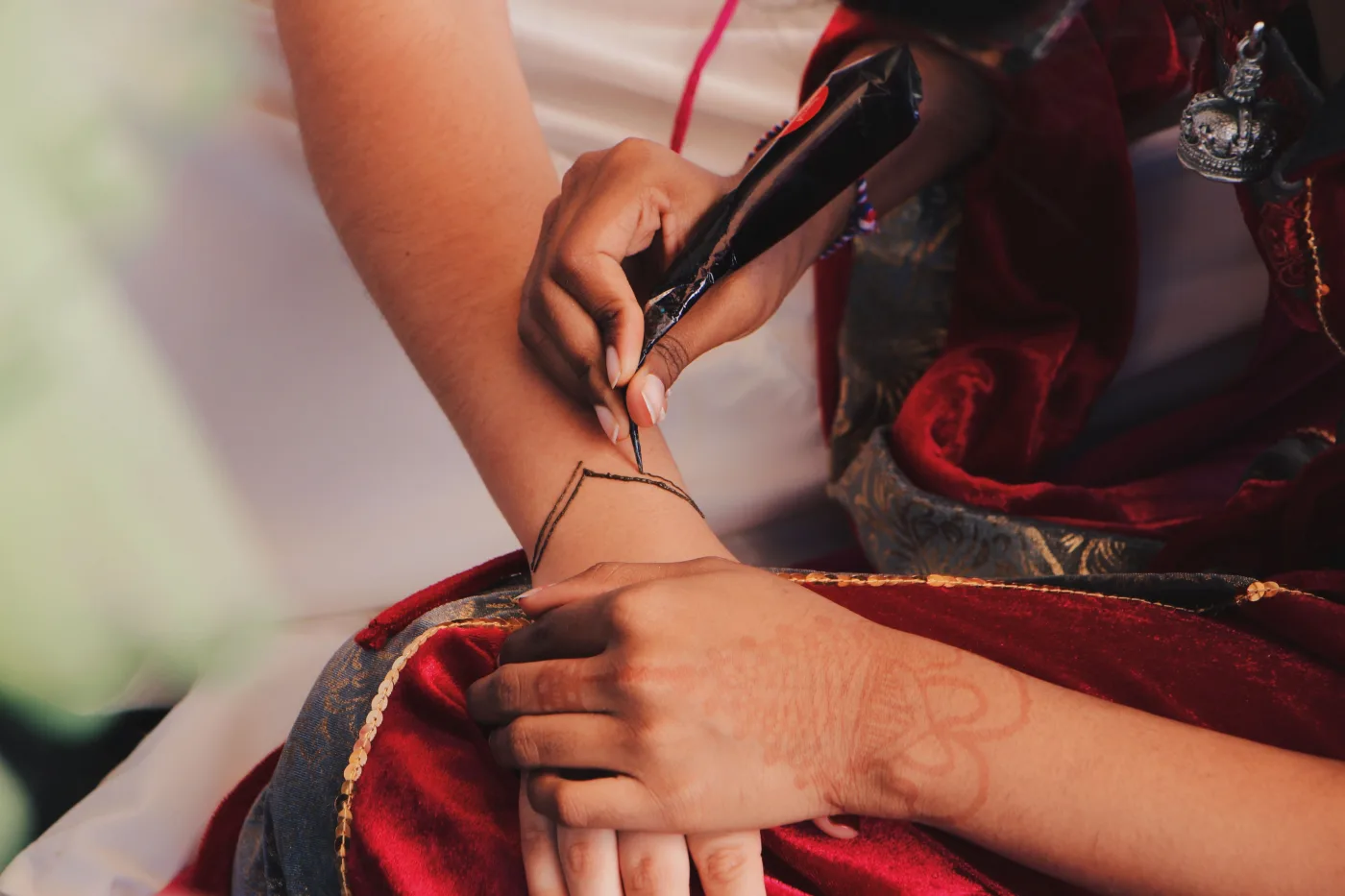
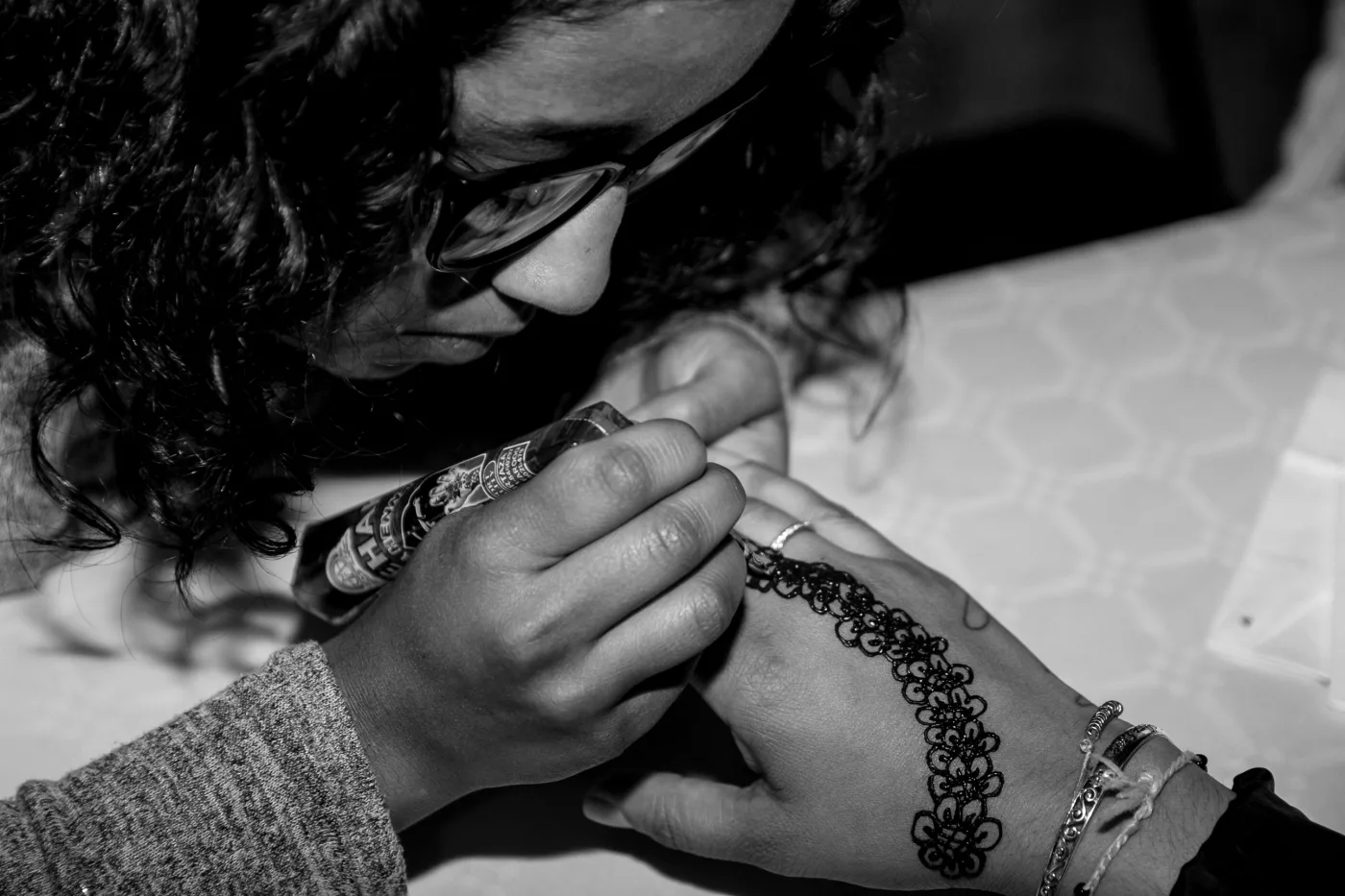
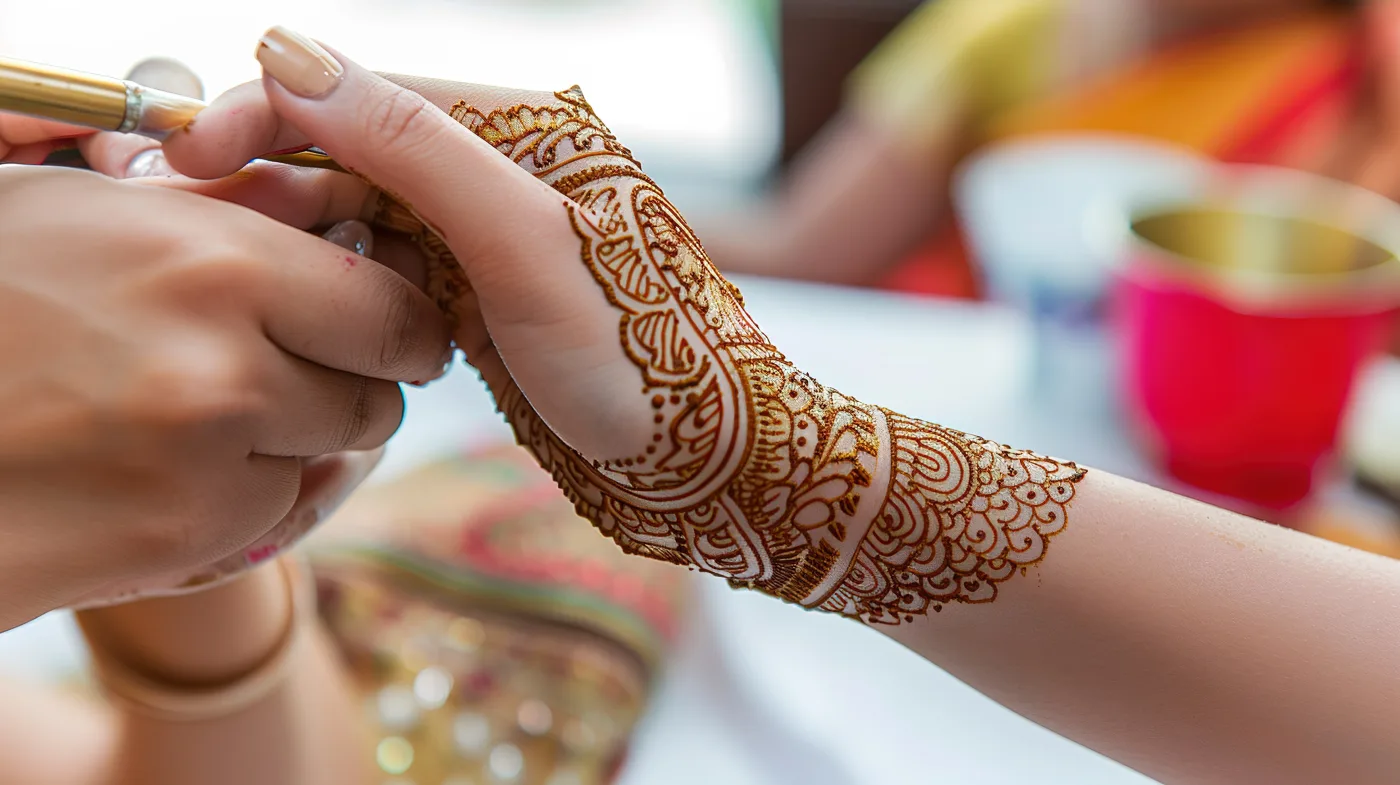
A few real examples worth saving. Screenshots communicate far better than words, so take the ones you like to your artist.
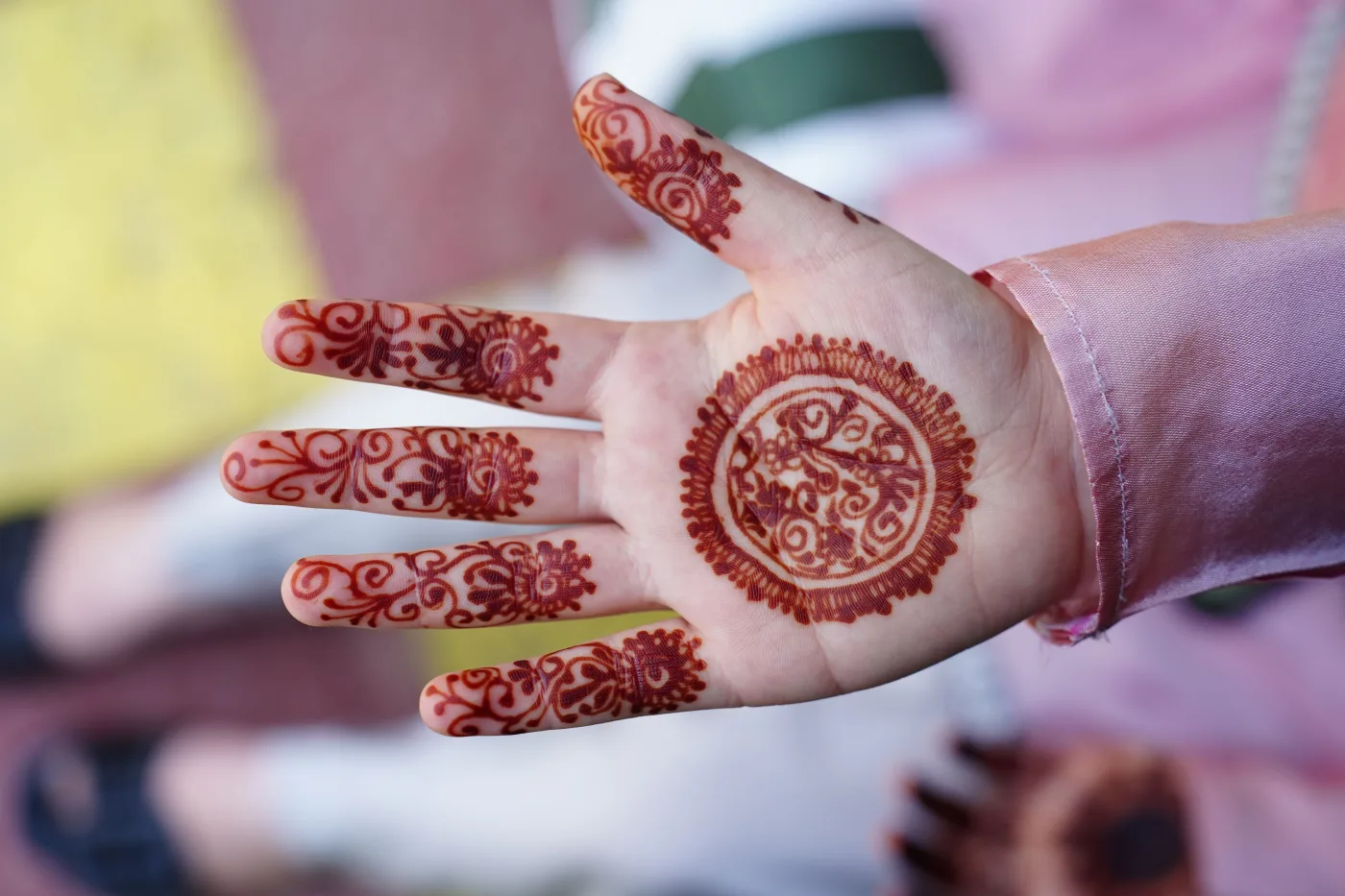
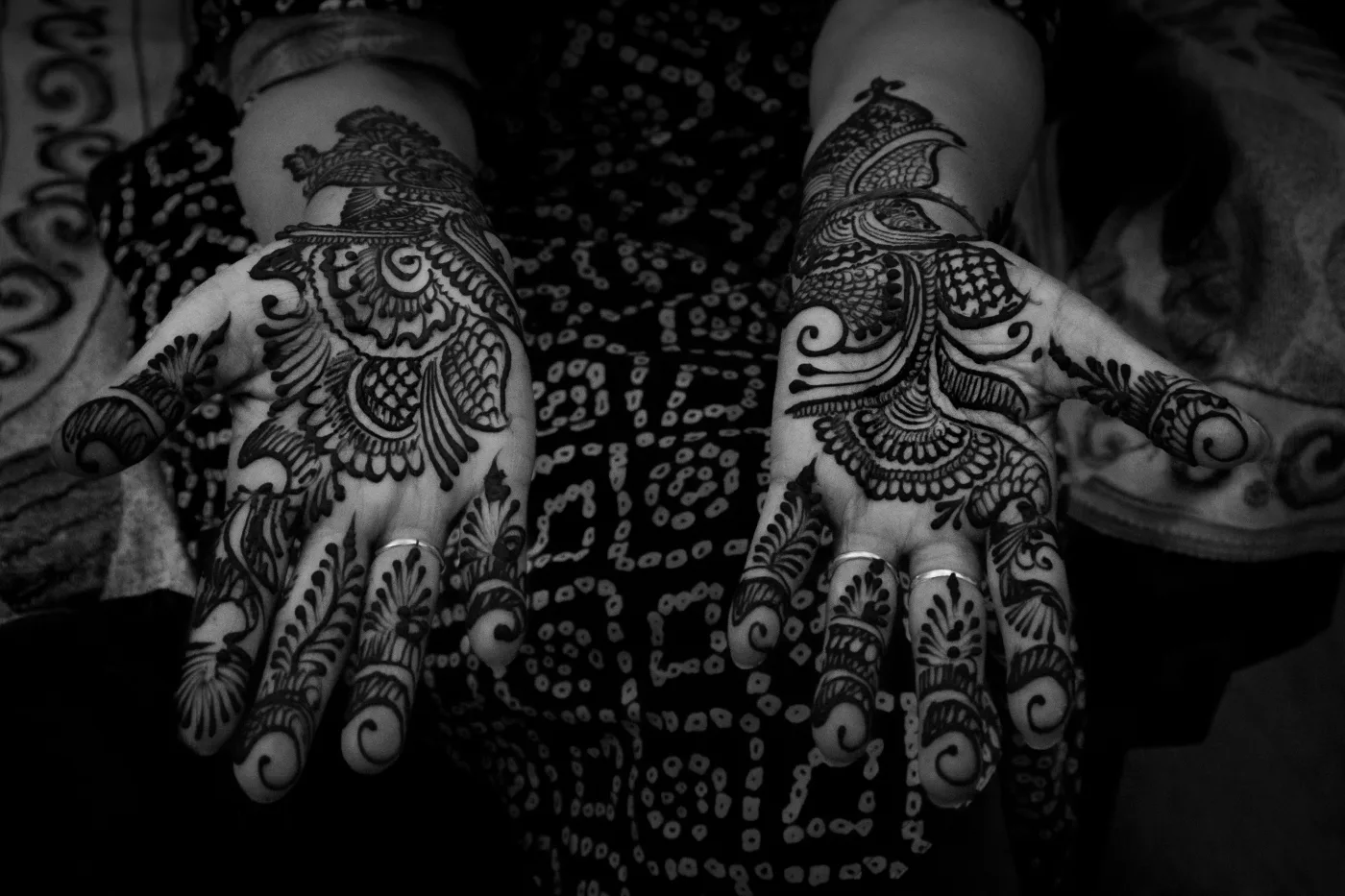
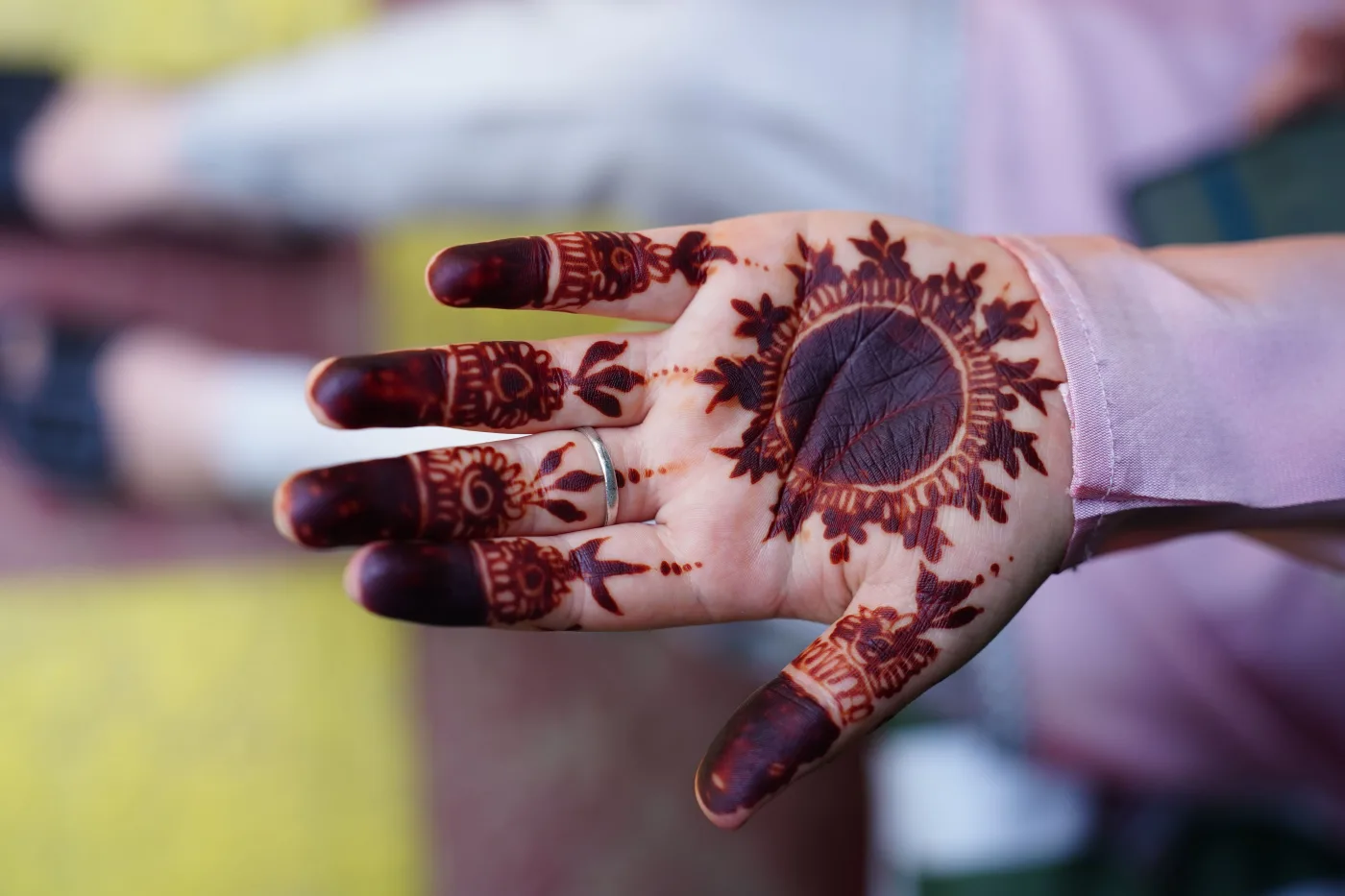
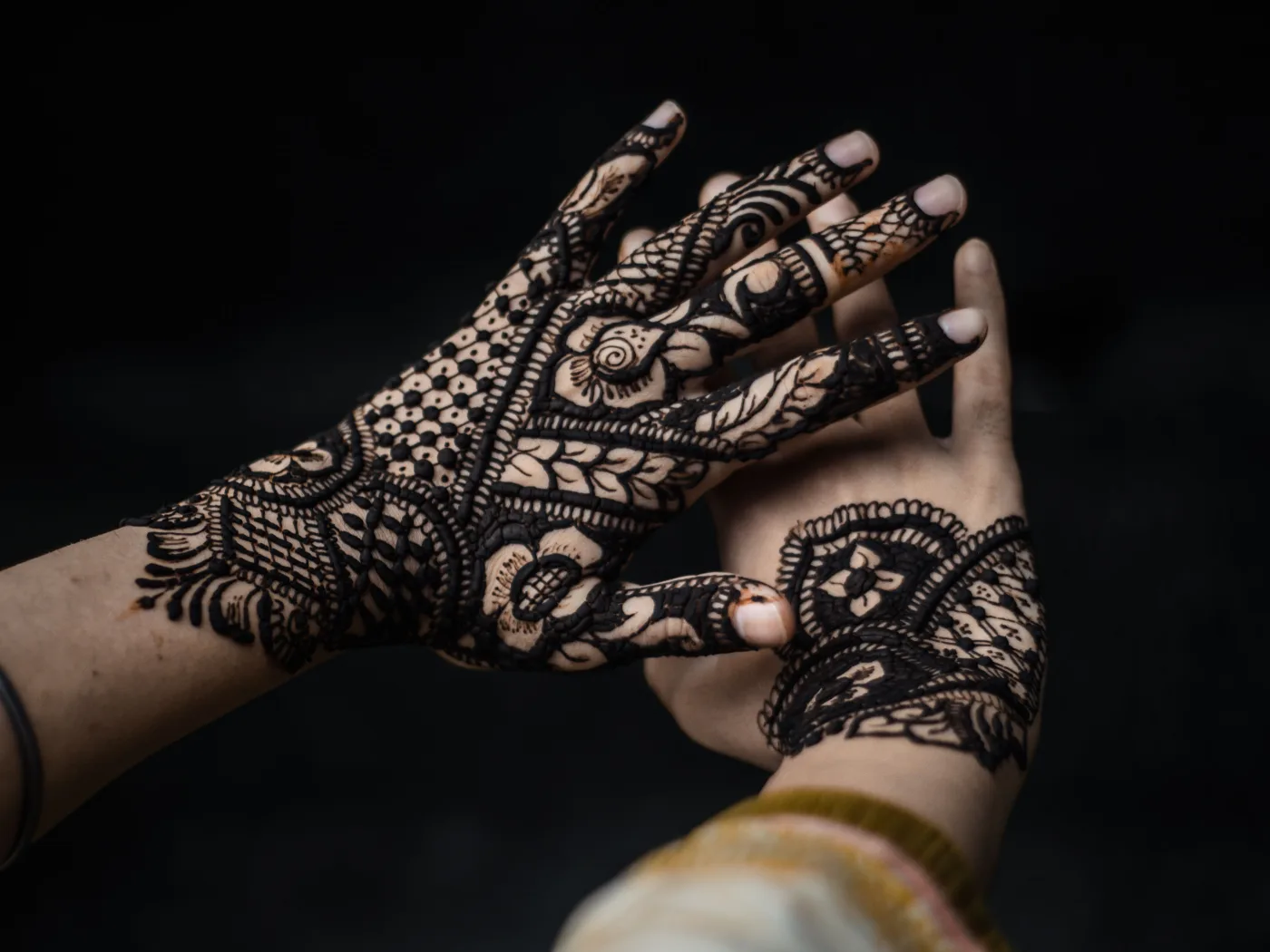
Photos provided by Pexels.
Frequently asked questions
Is natural henna safe for skin?
For most people, yes. Natural henna made from plain Lawsonia inermis powder stains only the dead outer layer of the skin and does not penetrate to living cells, so it is painless and temporary. Genuine allergy to the plant itself is rare. The serious risks come from "black henna" spiked with PPD, not from real henna, and from specific groups such as infants with G6PD deficiency. If you have very reactive skin, patch test a small spot 48 hours beforehand.
Is henna safe for kids?
Natural henna is widely and traditionally used on children and is generally considered safe for them, provided it is genuine henna and not a black-henna cone containing PPD, which can cause severe reactions. Because children's skin is thinner and more sensitive, patch test first, supervise the design, and never let a child near instant-black paste. Newborns and infants are a separate case and should avoid henna altogether, especially where G6PD deficiency may run in the family.
What is "black henna" and why is it dangerous?
"Black henna" is not henna. It is henna, or sometimes no henna at all, mixed with para-phenylenediamine (PPD), a hair-dye chemical added to produce a fast, jet-black stain. On skin at these concentrations PPD is a strong allergen that can cause blistering, intense itching, scarring in the shape of the design, and lifelong sensitisation. Reactions can be delayed by several days. The safe rule is simple: if a paste stains black within an hour, it has an added dye, so avoid it.
Can you be allergic to real henna?
Yes, but it is uncommon. True allergic contact dermatitis to natural henna does occur, more often in people who handle it frequently, and it usually shows as localised redness, itching or a rash where the paste sat, developing within a day or two. This is far milder than the blistering injury caused by PPD in black henna. A patch test 48 hours before a full design is the sensible way to check your own skin, especially if you are prone to contact allergies.
Why should babies with G6PD deficiency avoid henna?
Glucose-6-phosphate dehydrogenase (G6PD) deficiency is an inherited condition that makes red blood cells more fragile. Natural henna has been linked to haemolytic crises, a breakdown of red blood cells, in G6PD-deficient infants, and the risk is greatest in newborns. Because parents often do not know whether a baby carries the deficiency, the safe general guidance is to keep henna off the skin of newborns and infants and to ask a doctor first if G6PD deficiency runs in the family.
How do I patch test henna at home?
Dab a coin-sized spot of the paste on the inner forearm, let it dry, and leave it on as long as you would for a real design. Remove it and watch the site for a full 48 hours. A developing henna stain is normal and expected. What matters is any sign of trouble: redness spreading beyond the stain, swelling, itching, blisters or bumps. If any of those appear, do not go ahead. Remember that a PPD reaction can be delayed, so a clear test does not make an unknown cone safe.
Have a question or a topic to suggest?
We read every message. Tell us what you would like to see next on the blog.
Get in touchYou may also like
Black Henna Warning: PPD Dangers
Real henna is never jet black. Black henna that stains fast usually contains PPD, which can cause burns, scarring and lifelong allergy. How to stay safe.
The Chemistry of a Henna Stain
Henna stain science explained clearly: how lawsone bonds to keratin, why the stain starts orange then turns brown, and why palms stain the darkest.
Henna vs Mehndi: What's the Difference?
Henna vs mehndi: they are the same plant and the same dye, just two different words. Learn the etymology, the regional split and where the confusion begins.