Henna Science
The Chemistry of a Henna Stain
A clear, accurate explainer of how a henna stain actually forms, from lawsone dye release to the keratin bond that turns orange skin reddish brown.
A henna stain is not paint sitting on your skin. It is a chemical bond. When you crush the leaves of the henna plant and let them sit in a mild acid, they release a single dye molecule called lawsone, and that molecule latches permanently onto the keratin protein in the dead outer layer of your skin. That one reaction is the whole of henna stain science: it explains why the colour starts orange and matures to reddish brown over a day or two, why your palms stain darkest, and why pressing harder or leaving the paste on longer than needed does nothing. Here is exactly how it works.
The short version
- One molecule does everything: lawsone, a red-orange dye released from crushed henna leaves.
- It bonds to keratin in the stratum corneum, the dead top layer of your skin.
- Orange first, then brown. The fresh bond is orange; oxidation over 24 to 48 hours deepens it.
- Palms and soles stain darkest because their keratin layer is the thickest on the body.
- Time, heat and mild acid help. Pressure does not. The reaction is chemistry, not force.
The one molecule that matters: lawsone
Everything about how henna stains skin comes down to a compound called lawsone, known to chemists as 2-hydroxy-1,4-naphthoquinone. It is a small, red-orange dye molecule that the henna plant, Lawsonia inermis, stores in its leaves. The same molecule turns up in walnut hulls and water hyacinth, but henna is where people have harvested it for thousands of years.
In the intact, dried leaf, lawsone is mostly locked up as a precursor and cannot stain anything. It has to be freed first. That is why you cannot simply press a henna leaf to your skin and walk away with a design. The dye has to be released, brought into contact with your skin, and given time to react. Miss any one of those three steps and you get no colour.
Lawsone travels a short way down and bonds to keratin in the dead outer layer. It never reaches living cells, which is why the stain is temporary and painless.
Getting the dye out of the leaf: dye release
Freeing lawsone from the crushed leaf is called dye release, and it is the reason henna paste is mixed and then left to rest before it is used. When dried henna powder is wetted with a mildly acidic liquid, the plant tissue breaks down and the bound lawsone precursor converts into the free, reactive dye. Artists usually mix the powder with lemon juice, tea or another weak acid, then leave it covered for several hours until a faint orange tint bleeds to the surface. That tint is the signal that free lawsone is ready.
This is where the folk wisdom about lemon juice comes from, and for once the folk wisdom is broadly right. A mildly acidic mix helps dye release, though the effect has limits and very strong acid can actually harm the stain. We go into the practical version of this in our guide to the lemon and sugar henna method, which explains what the lemon is really doing and where the sugar fits in.
Why resting matters: a fresh paste that has not rested still has most of its lawsone locked up. Applied too early it stains weakly, because you are asking a molecule to bond to your skin before it has even been released from the leaf. The rest is not superstition. It is the chemistry catching up.
How henna stains skin: the bond to keratin
Once free lawsone meets your skin, it reacts with keratin, the tough fibrous protein that makes up hair, nails and the outer layer of skin. Chemists describe the reaction as a Michael addition: the lawsone molecule attaches itself to reactive sites on the keratin and stays there. It is not a coating that can be wiped off. It is a covalent link, which is why a henna stain survives washing, sweating and scrubbing in a way that ordinary surface dye never could.
Crucially, this bond only happens in the dead, keratin-rich cells at the very surface of your skin, a layer called the stratum corneum. Lawsone does not penetrate to the living cells beneath, which is exactly why a natural henna stain is painless, cannot cause a scar on its own, and is always temporary. The colour lasts only until those stained surface cells naturally flake away, which is also why exfoliation, swimming and constant hand washing make a design fade faster.
The depth of colour is simply a matter of numbers. The more lawsone-to-keratin bonds you form in a patch of skin, the darker that patch reads. There is no secret cone and no special technique that changes the chemistry. Everything that makes a stain darker is really just something that lets more bonds form, whether that is longer contact time, a warmer skin surface or a better dye-release in the paste.
Why henna stains orange first
Here is the part that confuses almost everyone the first time they take the paste off. The stain underneath is not the deep brown you were promised. It is bright orange, and it can look alarmingly pale. This is normal, and it is the single most misunderstood point in the whole subject.
The freshly formed lawsone-keratin bond is orange. That is its true starting colour. Over the next 24 to 48 hours the stain oxidises as it is exposed to air and body warmth, and the colour darkens and shifts from orange through rust to a deep reddish brown. Nothing is being added during this time. The molecule is simply maturing in place. A henna design is at its lightest the moment you remove the paste and at its darkest a day or two later.
This is why judging a stain immediately is a mistake, and why so many people wrongly conclude their henna "did not work". If you have ever asked why your mehndi did not go dark, the answer is very often that it was judged too early, before oxidation had done its work. Give a genuine natural stain its full two days before deciding anything.
The darkening is oxidation of the existing stain, not fresh dye. This is why "why henna stains orange first" has the same answer as "why it goes brown later": one bond, maturing over time.
Why palms and soles stain the darkest
Look at any set of bridal photos and the palms are always the richest colour on the body, often approaching near-black, while the same paste on a forearm gives a lighter, browner mark. This is not because artists work harder on the palms. It is keratin.
The stain lives in the stratum corneum, and that layer is far from uniform across the body. On the palms and the soles of the feet it is dramatically thicker, packed with many more layers of keratin-rich dead cells, because those areas take the most physical wear. More keratin means more binding sites for lawsone, which means more bonds, which means a darker stain. The thin skin on the back of the hand, the forearm or the upper arm has far less keratin to work with, so it can never reach the same depth no matter how long you leave the paste on.
Relative stain depth by body area
Same paste, same contact time. The difference is how thick the keratin layer is in each place.
The three things that genuinely change the result
Strip away the myths and only a handful of factors actually move the needle. Each one works by helping more lawsone bond to more keratin, or by protecting the bonds already formed.
Time
The bond forms gradually. Six to eight hours of contact lets far more lawsone react than a quick hour. Beyond that the returns flatten.
Heat
Gentle warmth speeds the reaction. Warm hands, a warm room or brief steam over the dried paste all nudge more bonds into place.
pH
A mildly acidic paste improves dye release. Too much acid backfires, so weak lemon or tea, not neat concentrate.
Aftercare
Keep water off for the first several hours so the young bonds can oxidise. Avoid scrubbing, which sheds stained cells early.
Notice what is not on that list: pressure. Pushing the cone down harder does not create more bonds, because the reaction depends on chemistry and contact, not force. The practical playbook that follows from all this is covered in our guide to darkening your mehndi safely, which is really just a list of ways to give lawsone more time, warmth and clean skin to work on.
Myth versus mechanism
Almost every piece of henna advice you will hear is either a restatement of the chemistry above or a misunderstanding of it. Here is how the common claims hold up.
| What people say | What is actually happening |
|---|---|
| "Press hard for a darker stain" | Pressure changes nothing. Contact time and keratin thickness set the depth. |
| "It should look dark straight away" | It cannot. The fresh bond is orange and only darkens over 24 to 48 hours. |
| "My henna failed, it came off orange" | Orange is the correct starting colour. Judge it after two days, not two minutes. |
| "Wash it off with water" | Scrape the dry paste off instead. Early water interrupts oxidation and can lift young bonds. |
| "Black henna is just stronger henna" | Lawsone physically cannot stain black on contact. An instant-black paste has an added dye. |
The safety line the chemistry draws
The science also settles the most important safety question. Because a natural henna stain has to build slowly through a lawsone-keratin bond, it always starts orange and takes a day or two to deepen. It simply cannot appear black within minutes. Any paste that stains dark black on contact is not doing this at all. It has been mixed with an additional dye, most often para-phenylenediamine, which can cause severe skin reactions and lasting sensitisation in some people. The wider issue is documented on the general Wikipedia entry for henna. The rule is simple and it comes straight from the chemistry: if it promises instant black, it is not the plant, so walk away.
If you want the human backstory to the plant behind all this chemistry, our piece on the history of mehndi traces how a single dye molecule ended up at the centre of weddings across three continents.
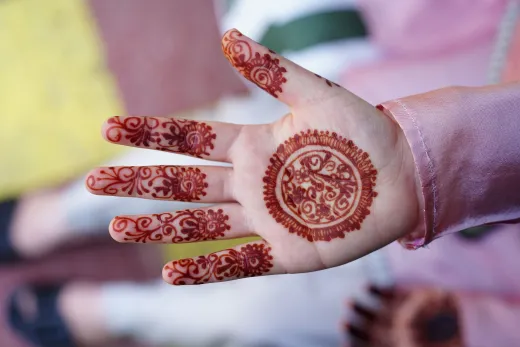
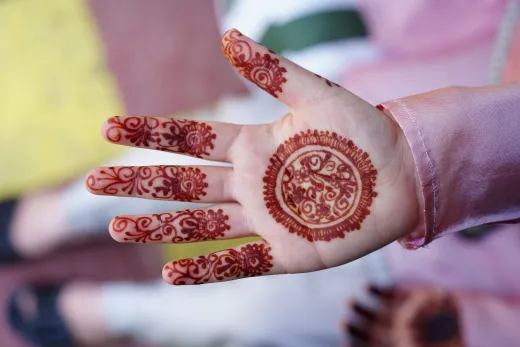
Henna staining in pictures
A few real examples worth saving. Screenshots communicate far better than words, so take the ones you like to your artist.
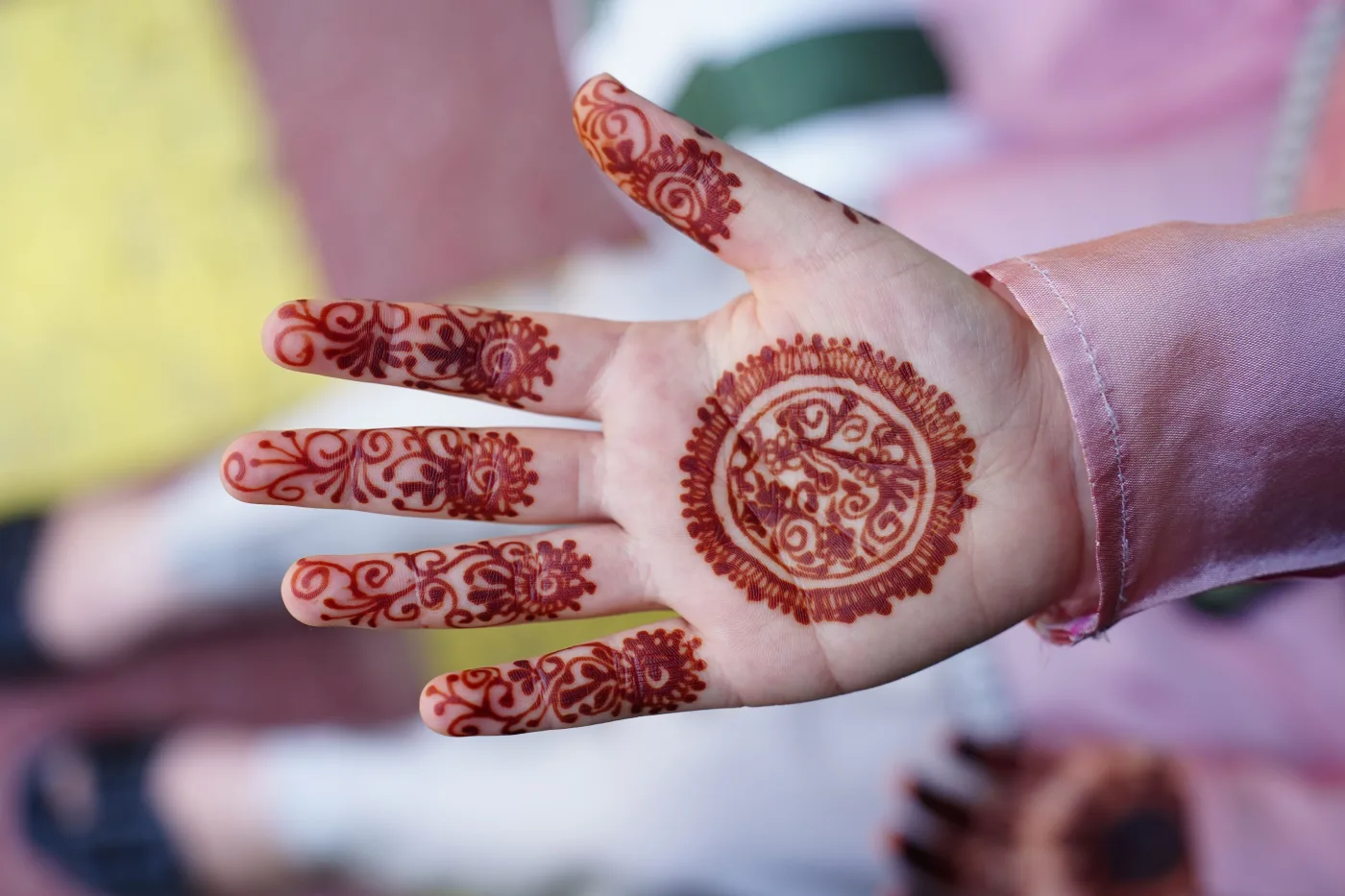
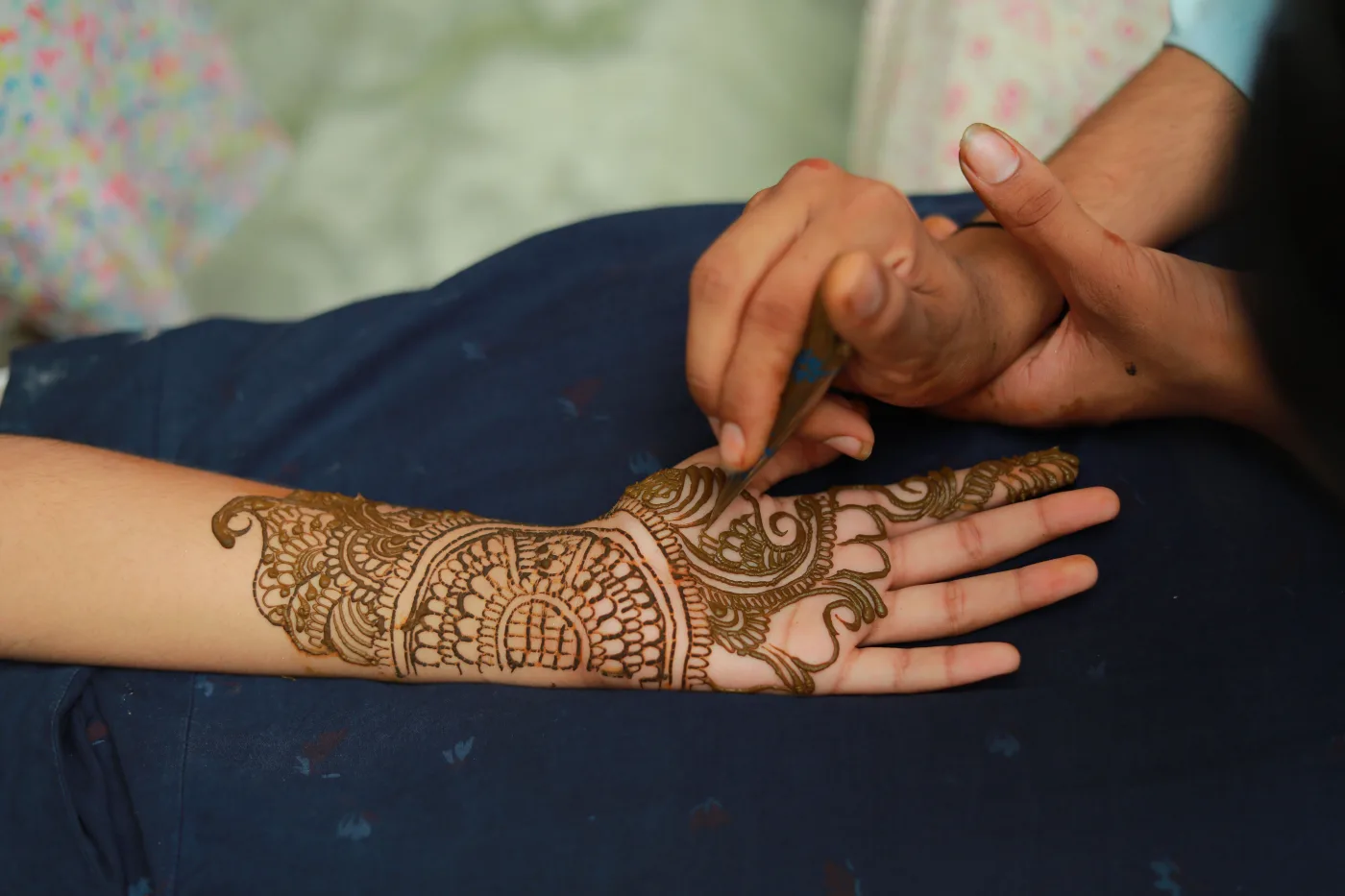
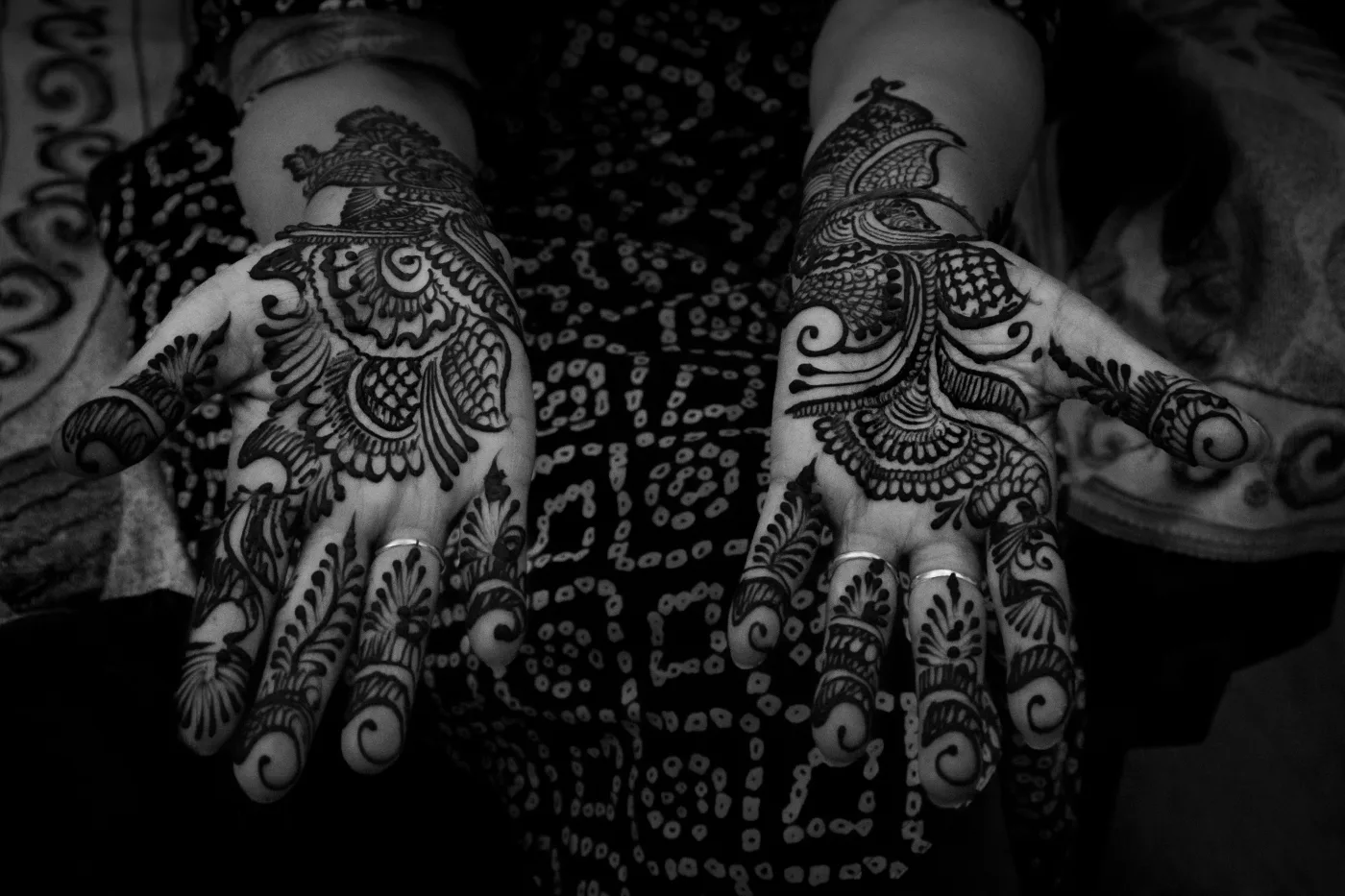
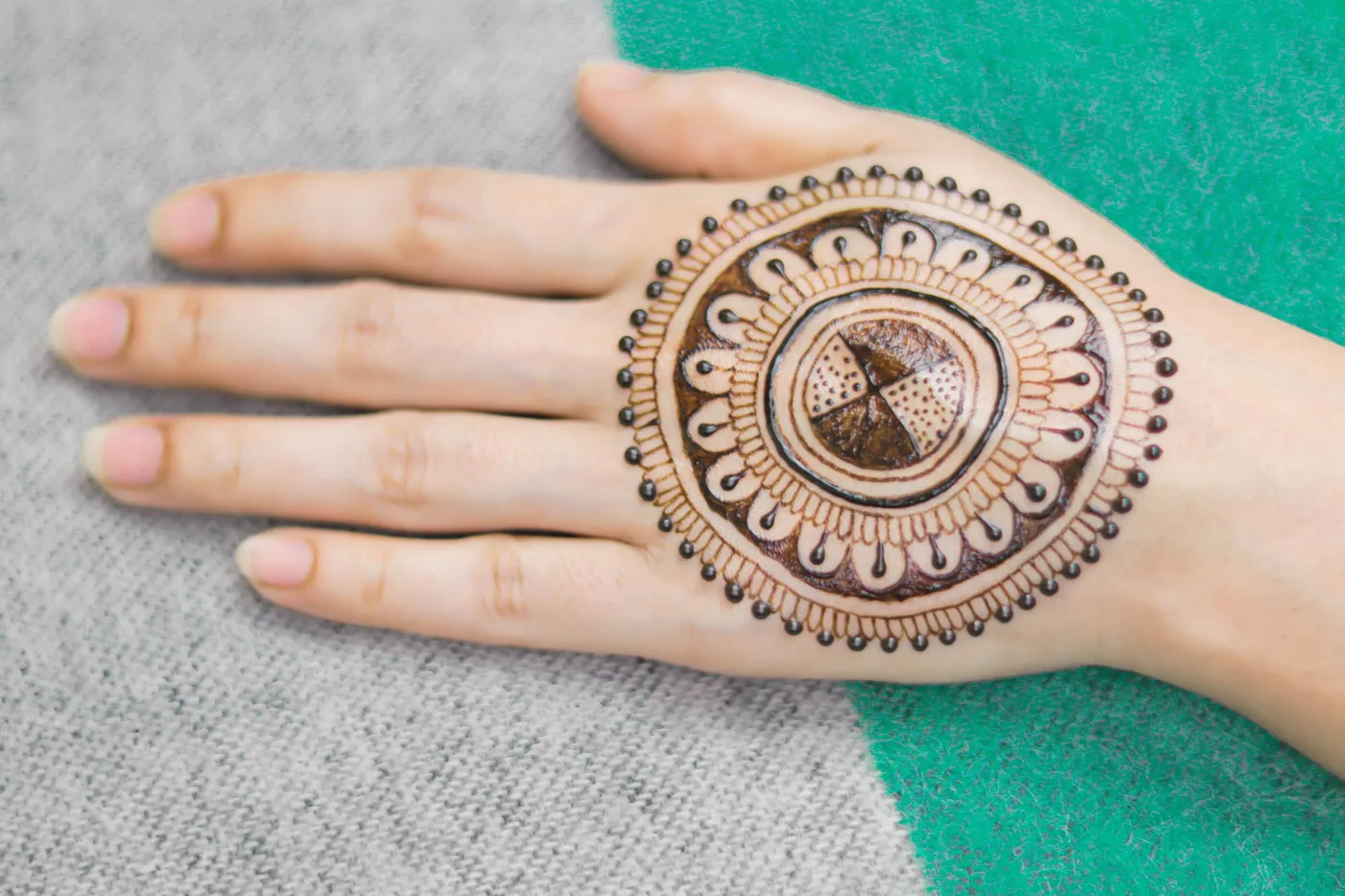
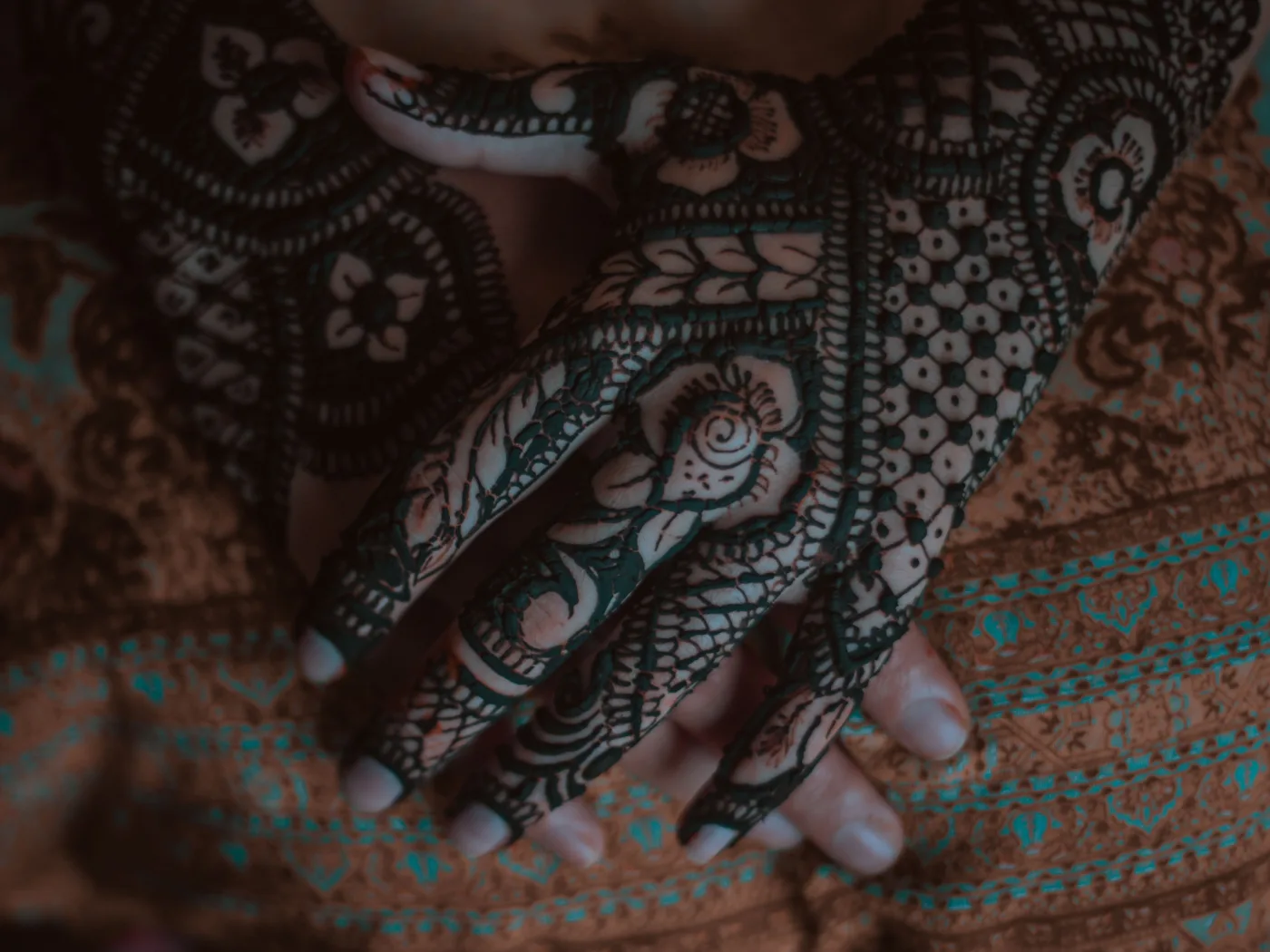
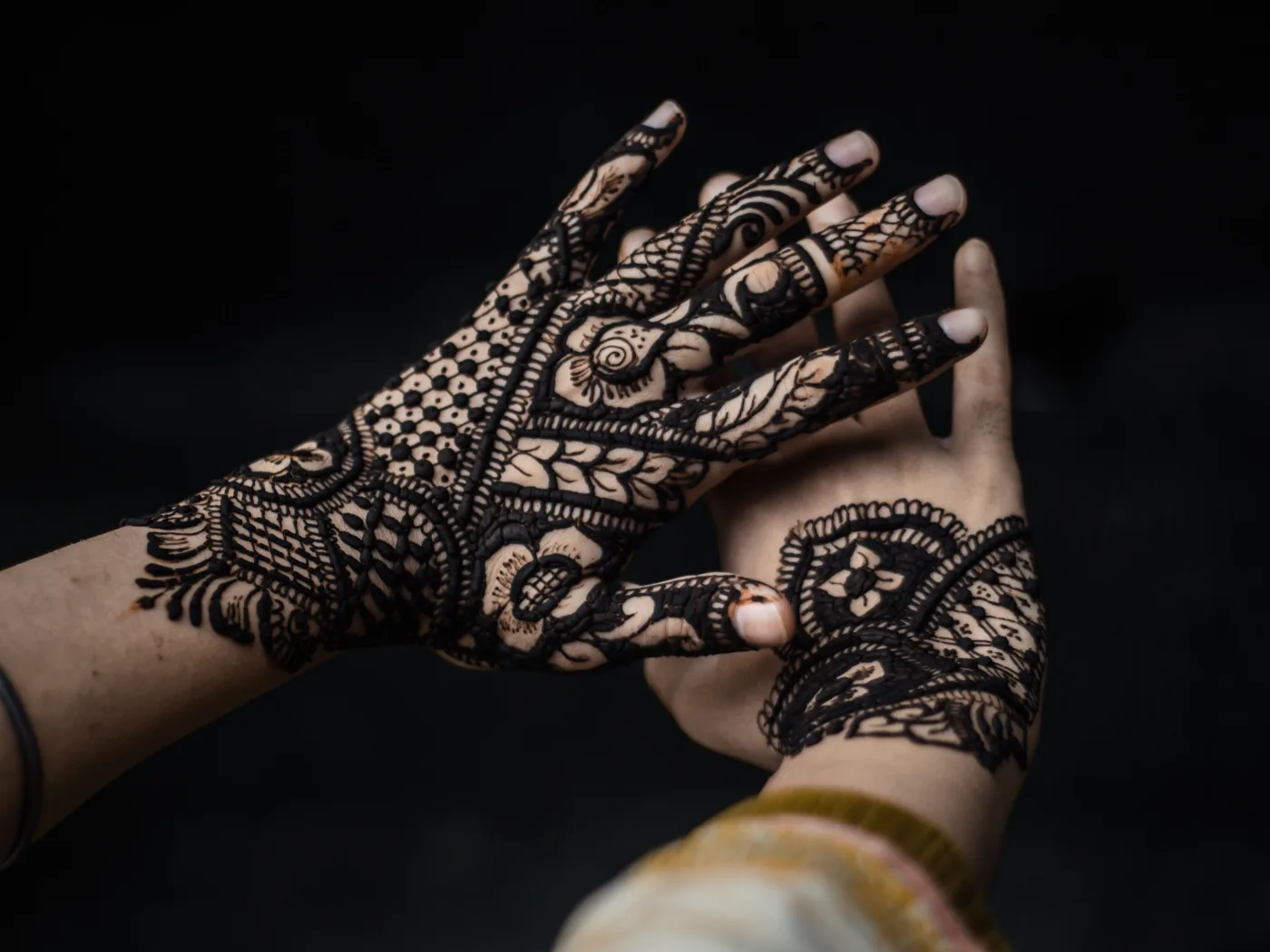
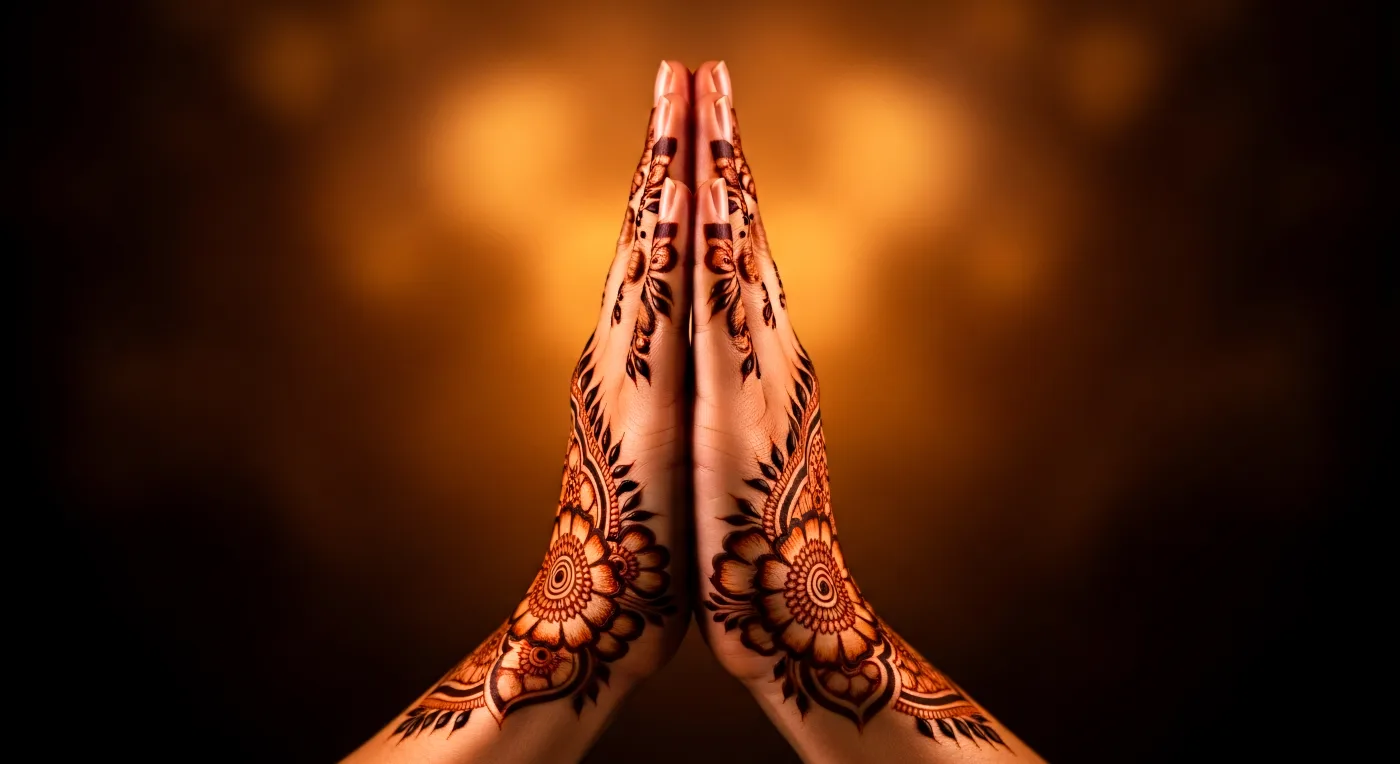
Photos provided by Pexels.
Frequently asked questions
What actually makes henna stain the skin?
A single dye molecule called lawsone, released from crushed henna leaves, forms a permanent chemical bond with keratin in the dead outer layer of your skin. The more of these bonds that form, the darker the stain. Nothing sits on top of the skin, so the colour cannot be wiped off, only shed as the surface cells naturally flake away.
Why does a henna stain start orange and then turn brown?
The fresh lawsone-keratin bond is genuinely orange. Over the following 24 to 48 hours it oxidises in air and body warmth, deepening through rust to a reddish brown. No new dye is added during this time. The stain is simply maturing, which is why it looks lightest right after the paste comes off and darkest a day or two later.
Why do palms and soles stain darker than the rest of the body?
Because the stain lives in the keratin of the stratum corneum, and that layer is far thicker on the palms and soles than anywhere else. More keratin means more binding sites for lawsone, so more bonds form and the colour reads much deeper. Thin skin such as the forearm has less keratin and can never reach the same intensity.
Does pressing harder or using lemon really darken henna?
Pressing harder does nothing, because the reaction depends on chemistry and contact time, not force. A mildly acidic mix such as weak lemon juice does help, but only by improving dye release from the leaf. Too much acid can harm the stain, so gentle is better than strong.
Why can natural henna never stain black instantly?
Because a lawsone-keratin bond has to build slowly and starts orange, natural henna physically cannot appear black on contact. Any paste that stains dark black within minutes has been mixed with an added dye, often para-phenylenediamine, which can cause severe skin reactions. Instant black is a warning sign, not a sign of quality.
How long does a henna stain last?
A natural stain lasts as long as the stained surface skin cells stay in place, typically one to three weeks. It fades as those cells naturally shed, so anything that speeds up exfoliation, frequent washing, scrubbing or swimming, shortens its life. There is no way to make it permanent, because only dead surface cells are stained.
Have a question or a topic to suggest?
We read every message. Tell us what you would like to see next on the blog.
Get in touchYou may also like
The History of Mehndi: 5,000 Years in 10 Minutes
The history of mehndi: what the archaeology actually shows, why it links to weddings, how lawsone stains skin, and how the regional styles separated.
Why Isn't My Mehndi Dark?
Weak henna stain? The real causes of a light mehndi colour, from short paste-on time to old powder and early washing, each with the fix.
How to Make Mehndi Darker: 12 Tricks
Want a deeper henna stain? Here are 12 evidence-based ways to darken mehndi, from fresh paste and terpene oils to 8-hour timing and warm aftercare.