Troubleshooting
Why Isn't My Mehndi Dark?
Judged too early, or genuinely faint? Work through the common reasons a henna stain stays light, from contact time and dead powder to body chemistry, and how to fix each.
If your mehndi came out pale, the single most common reason is that you judged it too early. A fresh henna stain is orange and looks disappointingly light the moment the paste comes off, then darkens on its own for another day or two. But if you have already waited 48 hours and the colour is still weak, the cause is almost always one of a short list of fixable things: the paste came off too soon, the powder was old, the hands stayed cold, water hit the design too early, or the paste itself was never properly mixed. This guide walks through each cause, tells you how to spot it, and gives you the fix so the next one turns out deep and rich.
The short version
- Judge at 48 hours, not 2 minutes. A new stain is orange and matures to brown on its own.
- Contact time is king. Under two hours of paste-on almost always means a faint stain.
- Old powder is dead powder. Low-lawsone or expired henna cannot go dark no matter what you do.
- Heat helps, cold hurts. Warm the area; a cold hand forms far fewer bonds.
- Water is the enemy early on. Keep the design dry for the first 12 hours.
First, make sure it really did fail
Before you troubleshoot anything, rule out the mistake that catches almost everyone. A genuine natural henna stain does not come off dark. It comes off orange, and it can look alarmingly pale. The colour then deepens for the next 24 to 48 hours as it oxidises in air and body warmth, moving from orange through rust to a deep reddish brown. A design is always at its lightest the moment you scrape the paste away and at its darkest a day or two later.
So if you took the paste off an hour ago and it looks orange, nothing has gone wrong yet. Wait. Keep it dry, keep it warm, and look again after two full days before you decide anything. We explain the underlying chemistry of that colour shift in our piece on how a henna stain actually works, but the practical rule is simple: the clock, not the mirror, tells you whether your mehndi failed.
Quick test: is it currently under 48 hours since paste removal? If yes, stop worrying and wait. Everything below is for stains that are still weak after a full two days, which is when a genuinely faint result has had every chance to develop and has not.
The seven reasons your mehndi stayed light
A weak stain almost always traces back to one of these, and often to two or three stacked together. The chemistry underneath is the same in every case: colour comes from a dye molecule called lawsone bonding to keratin in the dead top layer of your skin. Anything that lets fewer bonds form leaves you paler. Here is each culprit and how to fix it.
Paste came off too soon
The bond forms slowly. An hour of contact makes a fraction of the colour that six to eight hours does. This is the number one cause of a faint stain.
Old or low-lawsone powder
Henna loses potency with age and heat. Stale powder, or henna grown for hair rather than body art, simply has too little free dye to stain deeply.
Cold hands, cold room
The reaction is temperature sensitive. Cold skin slows bonding, so a design done with icy hands in a chilly room comes out lighter.
Washed too soon
Early water interrupts oxidation and can lift young bonds before they set. Rinsing the design in the first few hours robs it of depth.
Thin-skinned area
Forearms, upper arms and the backs of hands have far less keratin than palms, so they can never reach the same dark tone no matter what you do.
Poor paste recipe
Paste that never rested, was mixed with plain water, or sat too long has little usable dye. Bad paste cannot make a good stain.
Body chemistry
Skin pH, thickness and how fast you shed cells vary between people. Some skin simply holds henna less readily, and that is normal.
Cause 1: the paste did not stay on long enough
This is the reason more often than all the others put together. The lawsone-to-keratin bond builds gradually, so the longer the paste sits in contact with your skin, the more bonds form and the darker the final colour. Leave a cone on for forty minutes because you are impatient or in a hurry, and you are asking for a pale result no matter how good the henna is.
Aim for a minimum of two to three hours, and six to eight for a rich bridal-depth stain on the palms. Overnight is even better if you can wrap the design and sleep with it on. The returns do flatten eventually, so twelve hours is not twice as good as eight, but almost nobody leaves paste on too long. The mistake runs entirely in the other direction.
Stain intensity versus paste-on time
Same fresh paste on a palm, measured at 48 hours. Colour climbs fast, then levels off.
Cause 2: the henna powder was old or weak
Lawsone content is not the same in every bag of henna. It depends on the crop, the growing conditions, and above all on how old the powder is and how it was stored. Henna sitting open in a warm cupboard for a year has lost much of its dye. Powder sold cheaply for hair colouring is often lower in lawsone than body-art grade, because a hair application does not need to punch a deep stain into thick palm skin.
You can partly test powder before you commit a whole design to it. Mix a small amount, let it rest, and do a coin-sized dot on your palm. If that test dot does not go a strong orange within an hour of contact, the powder is weak and no aftercare trick will rescue it. Buy fresh, buy body-art quality, and store it sealed in the freezer if you are keeping it for a while. Good powder is the cheapest insurance a dark stain has.
Storage matters as much as source: lawsone degrades with heat, light and time. A fresh sealed pack kept cold can stay strong for a year or more; the same pack left open on a sunny shelf can be half dead in a couple of months. If your stain suddenly got weaker with a bag you have had a while, the powder ageing is the likely reason.
Cause 3: the hands and the room were cold
Henna is a chemical reaction, and like most reactions it runs faster when it is warm. Gentle heat at the skin encourages more lawsone to bond in the same window of time. This is why designs done in a cold room, or on someone with naturally cold hands, tend to come out lighter than the same paste applied somewhere warm.
The fix is easy and safe. Keep the room comfortably warm, and once the paste has dried on the skin, warm the area gently from time to time, holding your hands near a warm mug, over the steam rising off a pot, or near a heater for short spells. Do not bake the design or hold it against anything hot enough to burn. The aim is cosy warmth, not heat. Warm skin all through the paste-on period is one of the simplest ways to nudge a medium stain toward a rich one.
Two hands, same paste. Warmth and a long contact time build a dense stain; cold skin and an early paste-off leave a pale one.
Cause 4: the design got wet too early
The young stain needs air and time to oxidise into its full colour, and early water works against that on two fronts. It interrupts the oxidation that turns orange into brown, and while the bonds are still fresh it can physically lift some of them before they have set. Rinsing your hands under the tap an hour after the paste came off is one of the surest ways to keep a design pale.
Keep water off the design for at least the first twelve hours, and ideally the first twenty-four. Rather than washing the dried paste away, scrape or crumble it off dry and brush the bits away. When you finally do need to wash, be gentle and pat dry rather than scrubbing. Plan around this: do the henna at a time when you will not need to wash dishes, shower repeatedly or swim in the hours that follow.
Cause 5: you stained a thin-skinned area
Not every part of the body can go equally dark, and this one is not a mistake so much as a fact of anatomy. The stain lives in the keratin of the dead surface layer of skin, and that layer is dramatically thicker on the palms and soles than anywhere else. More keratin means more binding sites for lawsone, which means a darker stain. The thin skin on the back of the hand, the wrist, the forearm and the upper arm simply has less to work with.
So a wrist or forearm design that comes out a soft brown while the palm goes near-black has not failed. It has reached the natural ceiling for that skin. Set your expectations by location: aim your deepest, most intricate work at the palms and fingers where it will read richest, and treat lighter arm designs as the softer accent they will always be.
Cause 6: the paste itself was the problem
Even perfect powder makes a weak stain if the paste is wrong. The two big recipe faults are skipping the rest and getting the acidity wrong. Fresh powder still has most of its lawsone locked up as a precursor; it has to be released by mixing with a mildly acidic liquid and left to sit, usually several hours, until a faint orange tint bleeds to the surface. Apply paste that has not rested and you are asking a molecule to bond before it has even been freed from the leaf.
pH matters too. A mildly acidic mix, weak lemon juice or cooled tea, helps dye release, but neat lemon concentrate swings the paste too acidic and can actually harm the stain. And paste left far too long, or kept warm after its dye has peaked, goes flat as the free lawsone breaks down. Our full walkthrough of how to mix henna paste properly covers the ratios and the rest time, and the lemon and sugar method explains what the acid and the sugar are each doing.
The rest is not superstition: a paste that has not released its dye stains weakly for a reason that has nothing to do with luck. You are simply applying it before the chemistry is ready. Mix, cover, wait for the tint, then use it, and use it before it goes flat.
Cause 7: your own body chemistry
Finally, some of the difference is just you. Skin pH varies from person to person, as does skin thickness and how quickly you shed surface cells. Two people can use the same paste, the same contact time and the same aftercare and still end up a shade or two apart. Faster cell turnover also means a stain that both develops and fades a little differently.
You cannot change your body chemistry, but you can lean on everything else. If your skin tends to take henna lightly, stack the odds in your favour: fresh body-art powder, a well-rested paste, a long paste-on time, warm hands, and no water for a day. When every other variable is working for you, even less receptive skin lands a respectable colour. This is exactly the playbook in our guide to darkening your mehndi safely.
The cause-and-fix table
If you want the whole thing at a glance, here is each cause matched to its fix. Work down the list and you will usually find your answer in the first two rows.
| Why it stayed light | The fix next time |
|---|---|
| Judged it too early (under 48 hours) | Wait the full two days; the stain darkens on its own. |
| Paste came off too soon | Leave it on 6 to 8 hours, overnight for palms. |
| Old or low-lawsone powder | Use fresh body-art grade; store it sealed and cold. |
| Cold hands and room | Keep warm; gently warm the dried paste now and then. |
| Washed the design too soon | Scrape paste off dry; no water for 12 to 24 hours. |
| Thin-skinned area | Expect softer colour on arms; save detail for palms. |
| Paste not rested or too acidic | Rest until the tint bleeds; use weak, not neat, acid. |
| Individual body chemistry | Optimise every other factor to compensate. |
What will not help, and can hurt
Just as important is knowing what to ignore. Pressing the cone down harder does nothing, because the stain depends on chemistry and contact, not force. Chasing an instant black stain is worse than useless: natural henna physically cannot go black on contact, so any cone that promises it has been mixed with an added dye, most often para-phenylenediamine, which can cause severe skin reactions. A pale natural stain is a minor disappointment. A chemical burn from a fake black cone is not. If it promises instant black, it is not the plant, so walk away and let real henna take its day or two to mature.
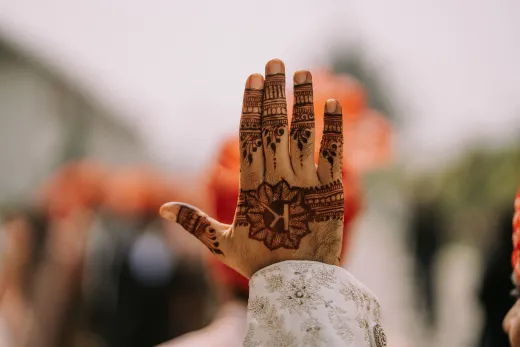
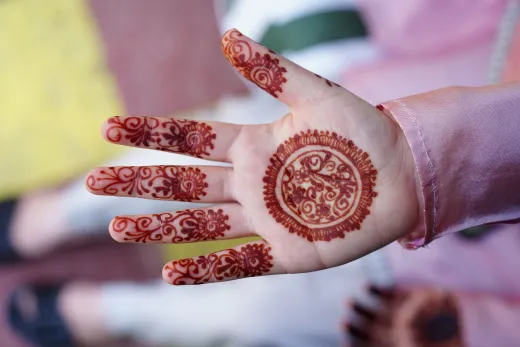
Henna stains in pictures
A few real examples worth saving. Screenshots communicate far better than words, so take the ones you like to your artist.
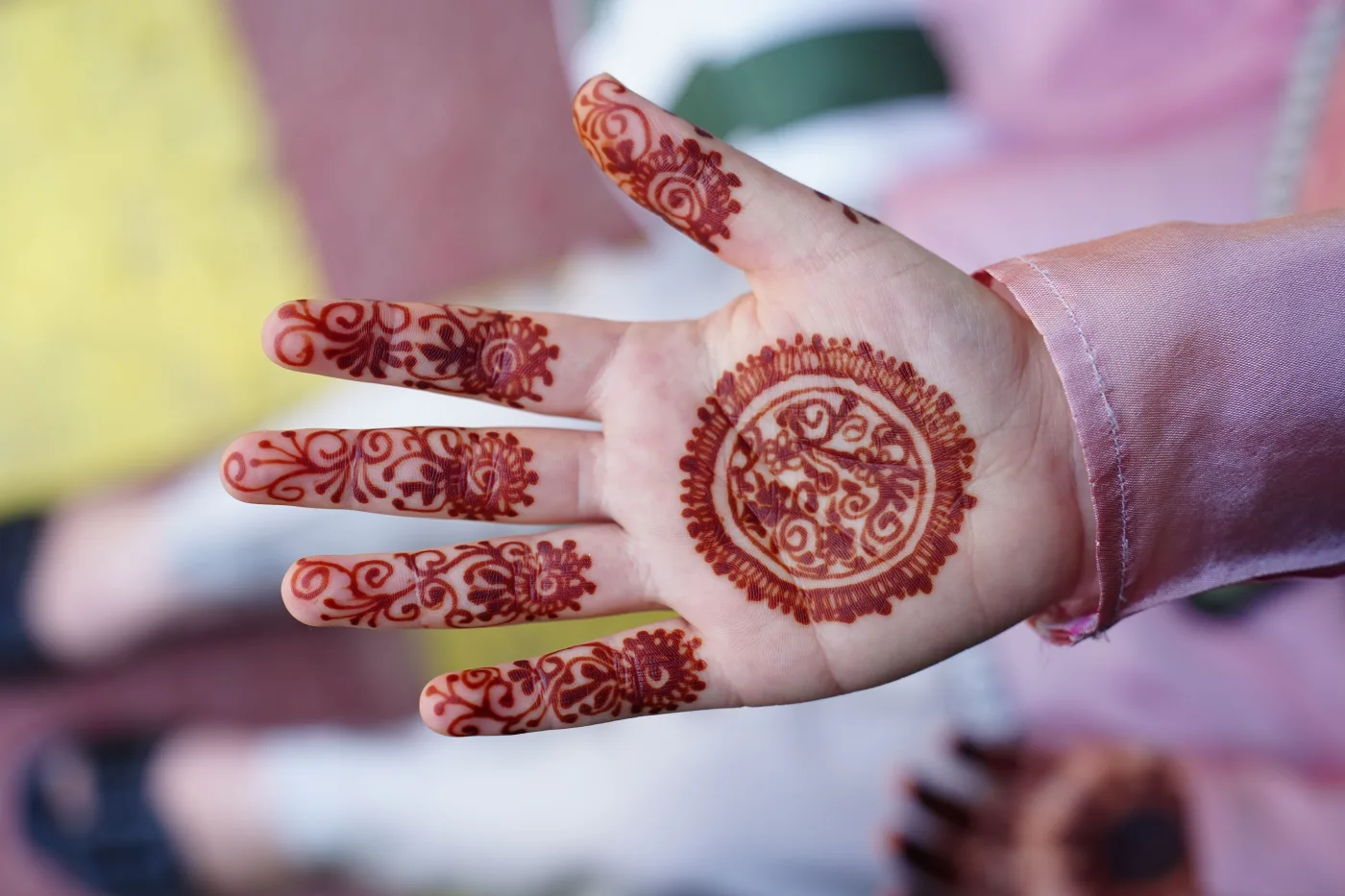
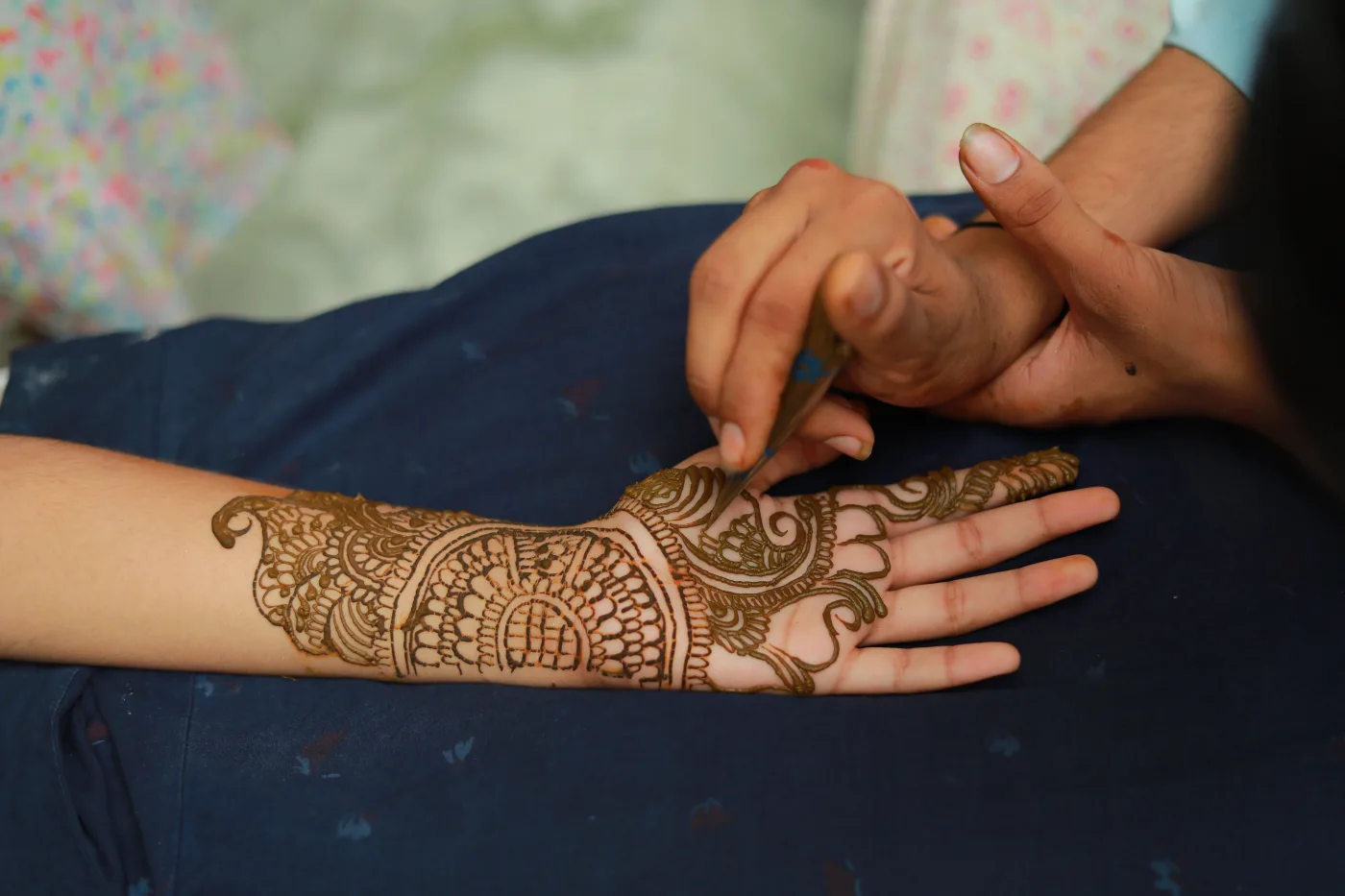
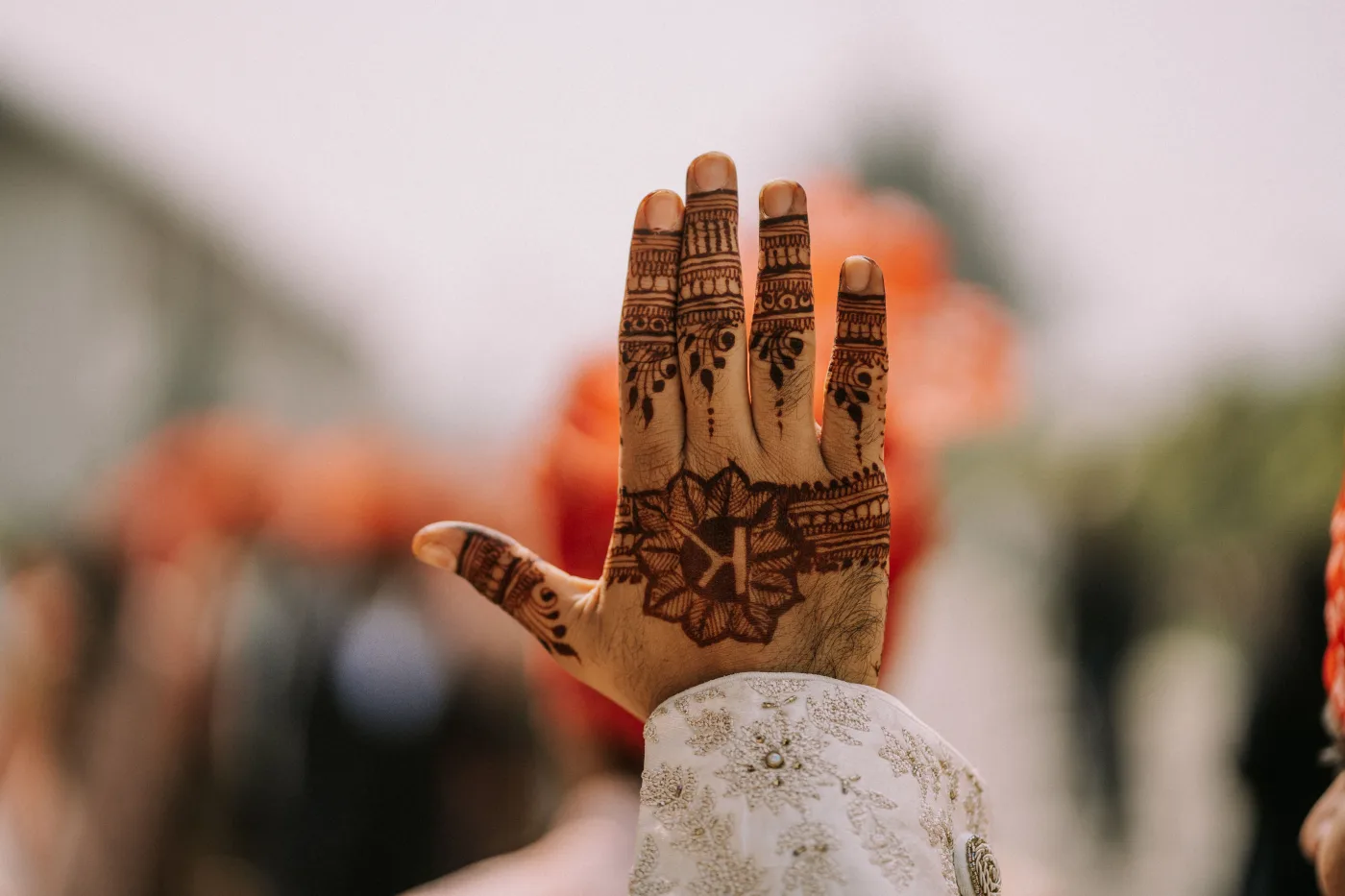
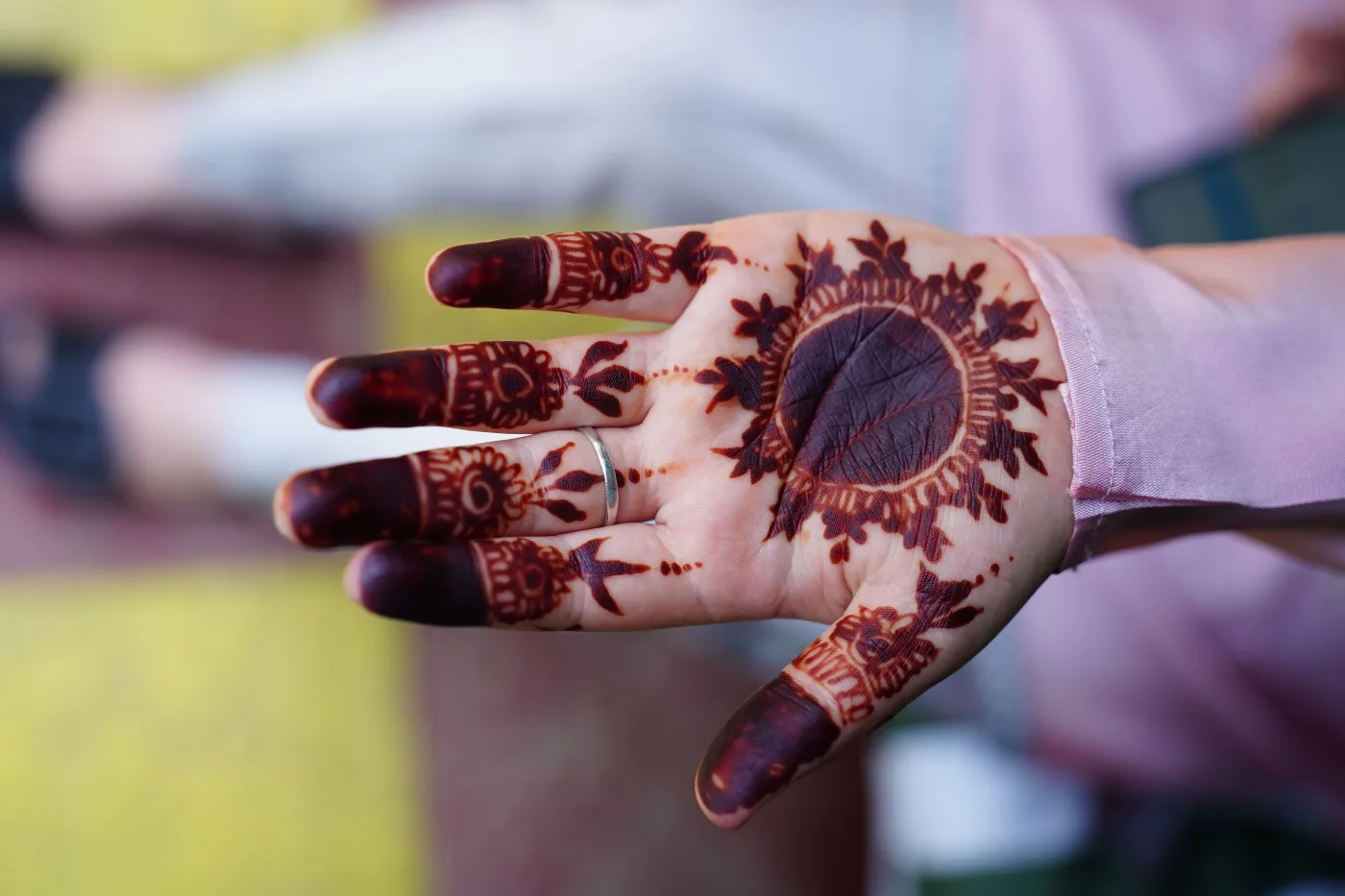
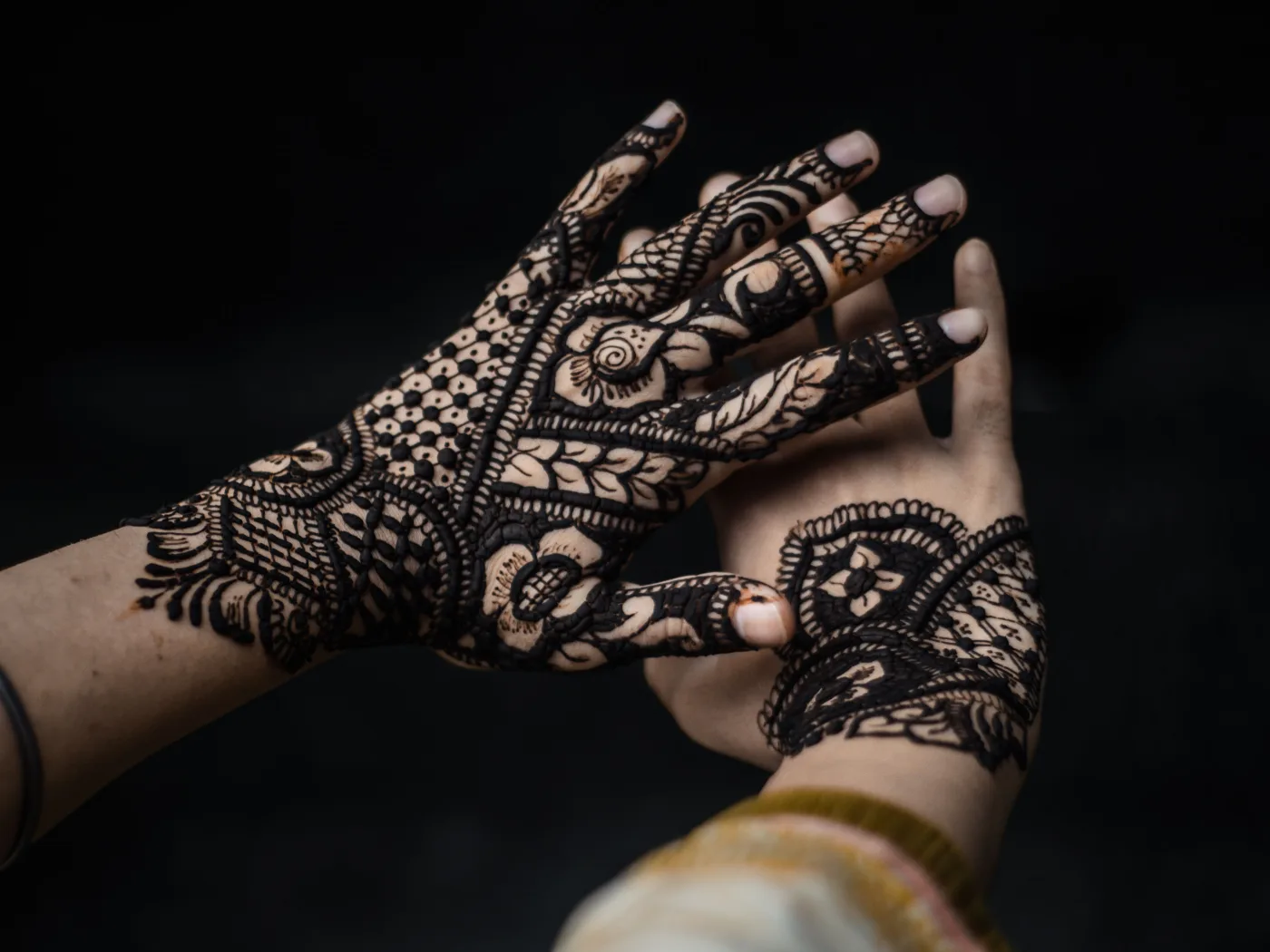
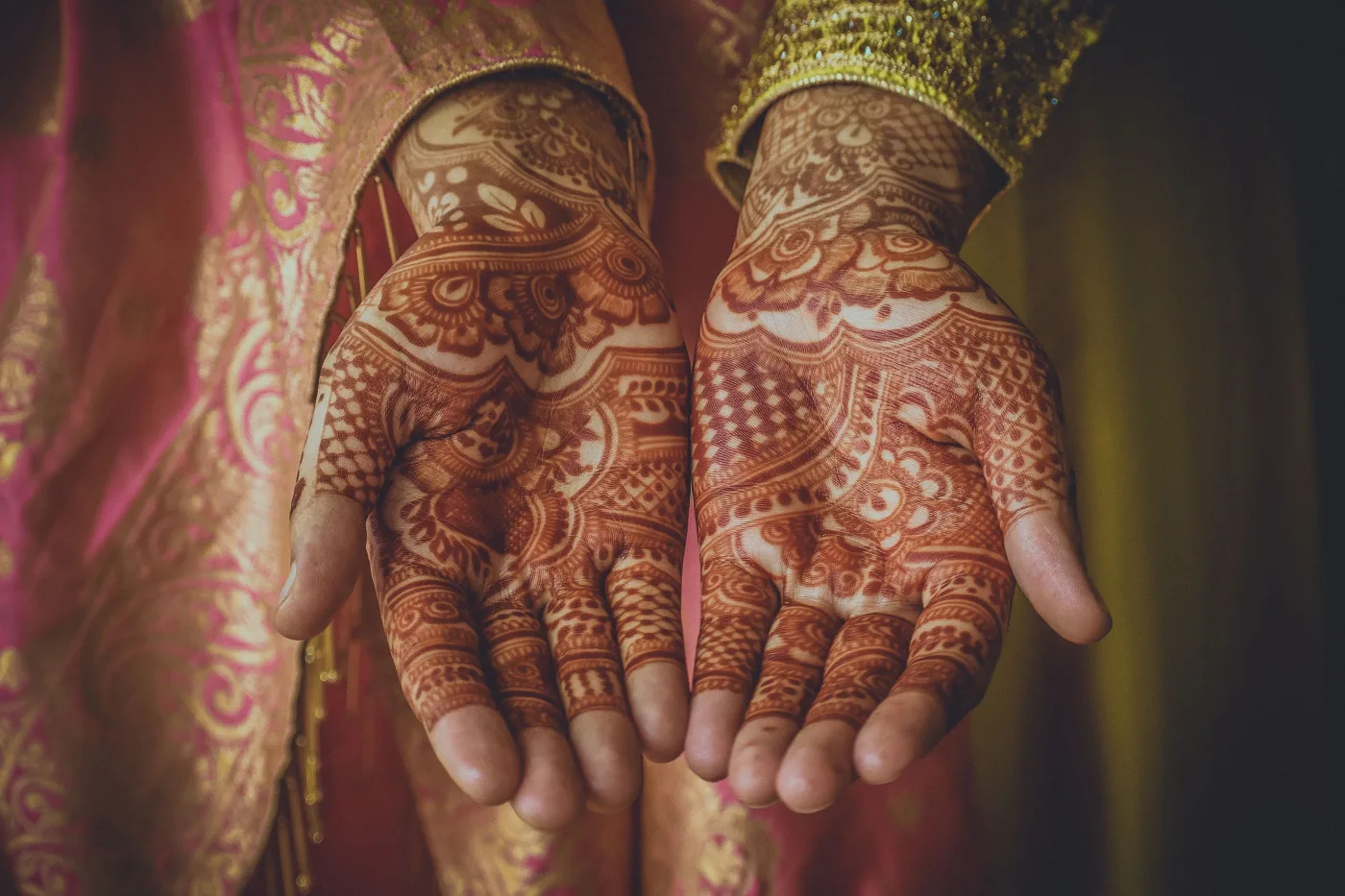
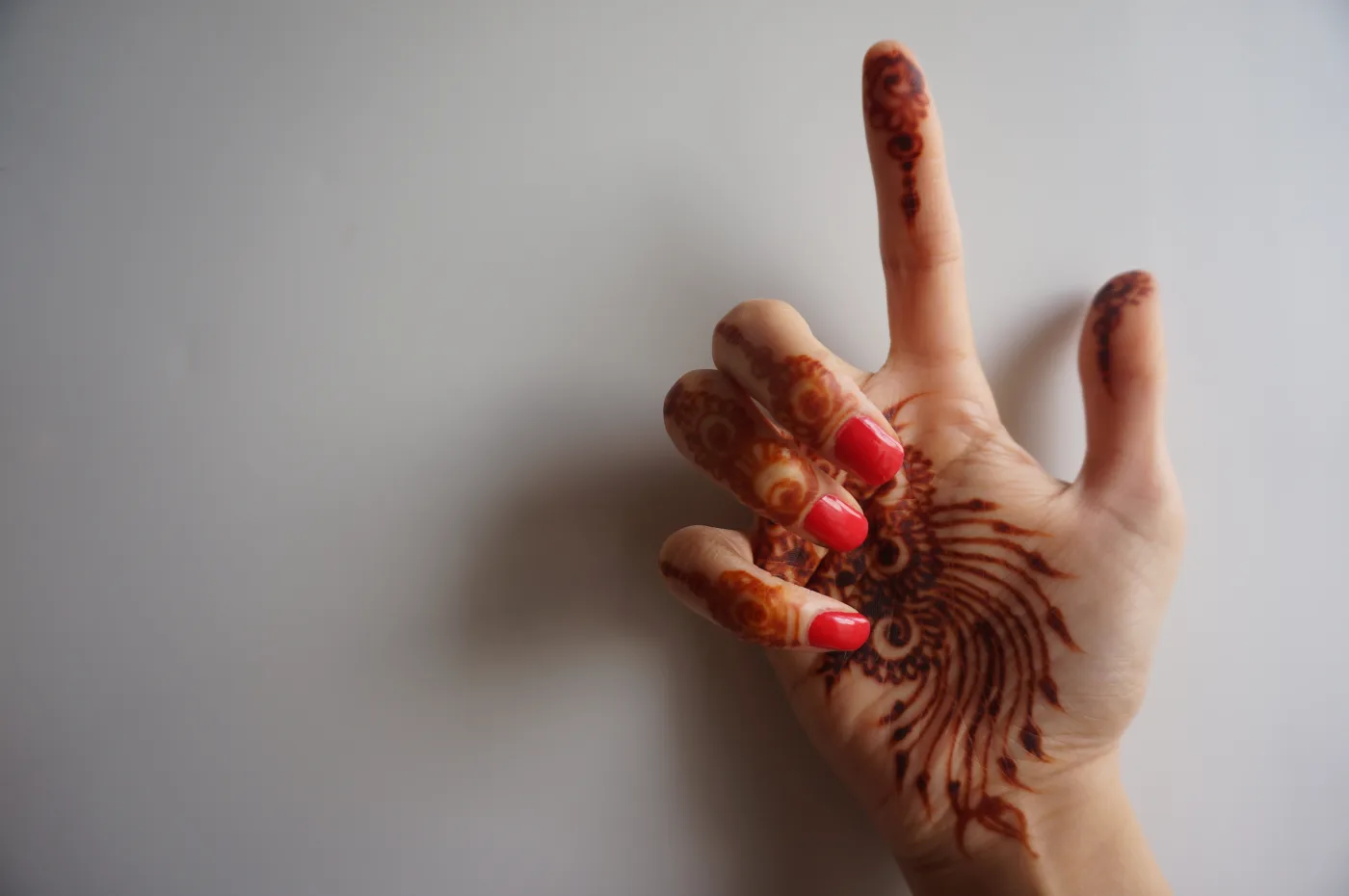
Photos provided by Pexels.
Frequently asked questions
Why is my mehndi not dark even after a full day?
If it is still pale at 48 hours, the usual reasons are that the paste came off too soon, the powder was old or low in lawsone, or water hit the design early. Contact time is the biggest single factor, so next time leave the paste on for six to eight hours, use fresh body-art grade powder, keep your hands warm, and keep water off the design for the first day.
How long does mehndi take to darken to its full colour?
A natural stain comes off orange and deepens over the next 24 to 48 hours as it oxidises in air and body warmth, moving from orange through rust to a reddish brown. It is at its lightest the moment the paste is removed and at its darkest a day or two later, so never judge the result immediately. Give it the full two days before deciding whether it worked.
Can I fix a light mehndi stain after the paste is off?
Once the paste is off you cannot add colour to a stain that has already set, because the bonds that were going to form have formed. You can only protect what is there by keeping the design warm and dry so it oxidises fully, and by avoiding scrubbing and swimming that shed the stained cells early. The real fix always happens next time, in the powder, the paste and the contact time.
Does old henna powder still stain?
It stains, but weakly. Lawsone, the dye in henna, degrades with age, heat and light, so old or poorly stored powder has far less usable dye and gives a pale result. Test a small dot before committing to a full design, buy fresh body-art quality powder, and store it sealed and cold to keep it strong.
Why did my mehndi stain orange and not brown?
Because orange is the correct starting colour of a fresh henna stain. The new lawsone-keratin bond is genuinely orange and only darkens to brown over the following one to two days as it oxidises. If it stays orange well past 48 hours, the likely causes are a short paste-on time, weak powder or early washing, all of which leave you with fewer bonds and a lighter final colour.
Does everyone get the same depth of colour from henna?
No. Skin pH, thickness and cell turnover vary between people, so the same paste and routine can land a shade or two apart on different hands. The palms and soles always take the deepest colour because their keratin layer is thickest, while thin skin on the arms stays lighter for everyone. You cannot change your skin, but optimising powder, paste, time and warmth gets the most from it.
Have a question or a topic to suggest?
We read every message. Tell us what you would like to see next on the blog.
Get in touchYou may also like
How to Make Mehndi Darker: 12 Tricks
Want a deeper henna stain? Here are 12 evidence-based ways to darken mehndi, from fresh paste and terpene oils to 8-hour timing and warm aftercare.
Why Lemon-Sugar? Sealing Henna
The lemon sugar henna sealant does not add dye. See what the sugar and lemon really do, how to make and apply it, when it helps, and gentler options.
The Chemistry of a Henna Stain
Henna stain science explained clearly: how lawsone bonds to keratin, why the stain starts orange then turns brown, and why palms stain the darkest.