Mehndi 101
The History of Mehndi: 5,000 Years in 10 Minutes
Older than almost every country that celebrates it. The trail from Akrotiri to your wedding day.
Mehndi is older than almost every country that celebrates it. Long before it was a wedding ritual in Lahore or Delhi, henna was staining fingernails around the Mediterranean and the Nile. The plant travelled with trade, marriage and empire, and the tradition you know today is what settled after five thousand years of borrowing. Here is the short version, with the parts people usually get wrong.
The short version
- Nobody knows exactly where it started. The origins are genuinely uncertain.
- The evidence is old: wall paintings from before 1680 BCE show hennaed palms.
- It reached South Asia late compared with Egypt and the Mediterranean.
- One molecule does all the work: lawsone, binding to keratin in your skin.
Where mehndi actually began
The honest answer is that we do not know. The origins of the first human uses of henna are uncertain, and the plant grows across a wide band of hot, dry country from North Africa through the Middle East to South Asia, so several peoples may have discovered it independently. What we have is a trail of evidence rather than a birthplace.
The earliest hard clues are visual. Wall paintings at Akrotiri, made before the eruption of Thera around 1680 BCE, show women with markings on their nails, palms and soles consistent with henna. Statuettes of young women from between 1500 and 500 BCE along the Mediterranean coast show the same thing: raised hands, marked palms. The plant was also marketed in Babylonia, and in Ancient Egypt it was used on some mummies to dye hair, skin, nails and funeral wrappings.
A trail, not a origin story. The dashed line is everything we cannot document.
The wedding connection is ancient too
Henna has been used to adorn young women's bodies as part of social and holiday celebrations since the late Bronze Age in the Eastern Mediterranean. The earliest textual reference is striking for anyone planning a mehndi night: the Ugaritic legend of Baal and Anath mentions women marking themselves with henna in preparation for marriage.
That is the thread worth noticing. The link between henna and weddings is not a recent South Asian invention layered onto an old plant. It appears to be almost as old as the documented use of the plant itself.
The myth worth dropping: mehndi was not "invented in India". South Asia gave the tradition its density, its bridal scale and much of its visual language, but the plant and the practice arrived there from further west, and were already old when they did.
Why it stains: one molecule
Every argument about lemon juice, sugar, steam and "secret" cones comes down to helping a single compound do its job. Henna leaves contain lawsone, a red-orange dye, chemically 2-hydroxy-1,4-naphthoquinone. It comes from Lawsonia inermis, the henna plant, and also occurs in walnut and water hyacinth.
Lawsone reacts with keratin, the protein in your skin and hair, through what chemists call a Michael addition. The stain lasts until the stained skin or hair naturally sheds. The intensity depends simply on how many lawsone-keratin reactions happen. That is the whole mechanism, and it explains everything practical about mehndi.
| What people believe | What is actually happening |
|---|---|
| "Press harder for darker colour" | Pressure does nothing. Contact time does. |
| "It should go dark immediately" | It cannot. The reaction needs hours, then days to mature. |
| "Colour lasts until it fades away" | It leaves when the stained skin cells shed. Exfoliation is the enemy. |
| "Black henna is stronger henna" | It is not henna behaving differently. Something else was added. |
That last row is the one that matters for your skin. Because lawsone physically cannot stain black on contact, any paste that does has been mixed with an additional dye, and the usual additive causes severe reactions in some people. If it turns black in minutes, it is not the plant doing it.
How the regional styles separated
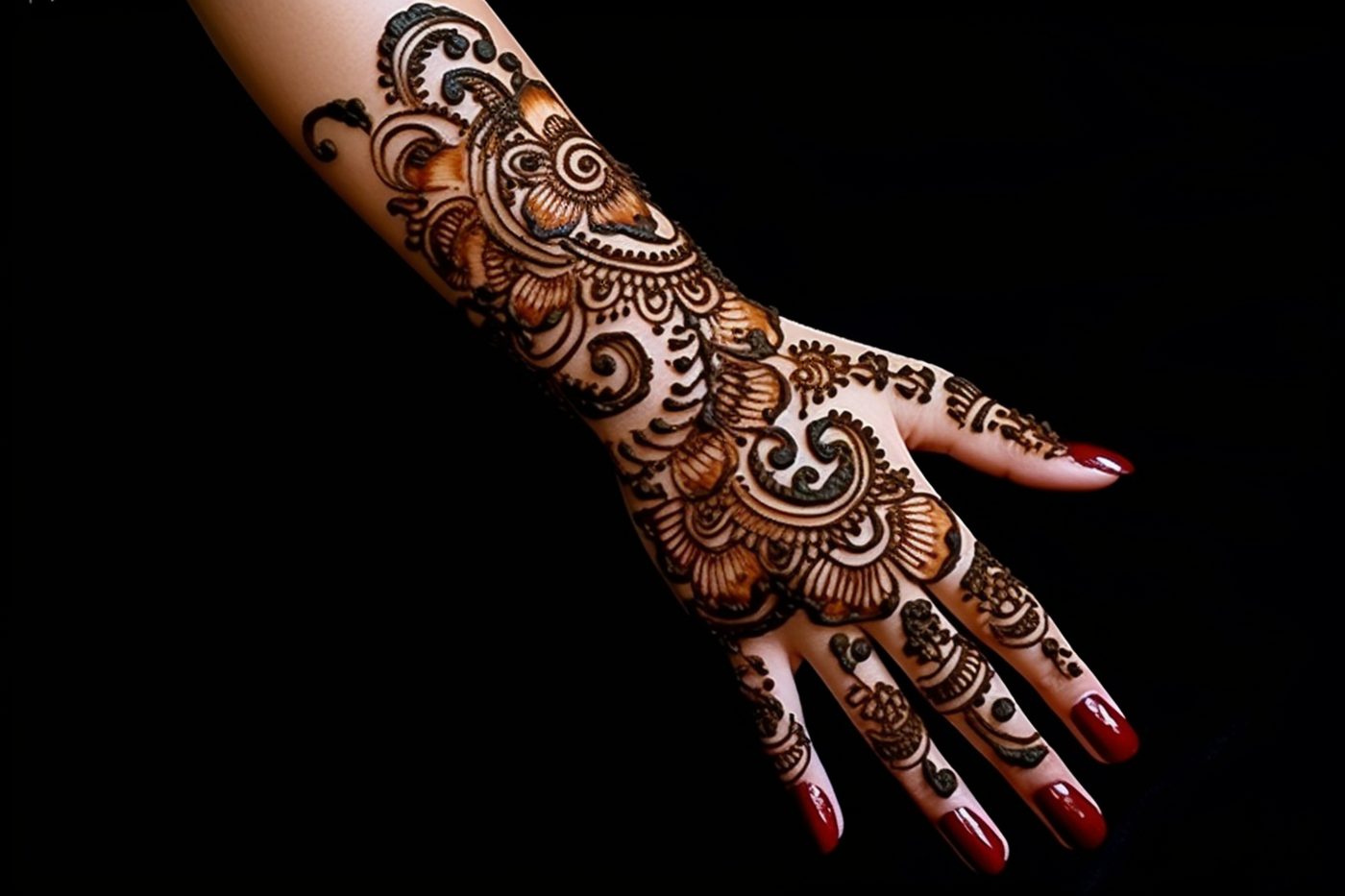
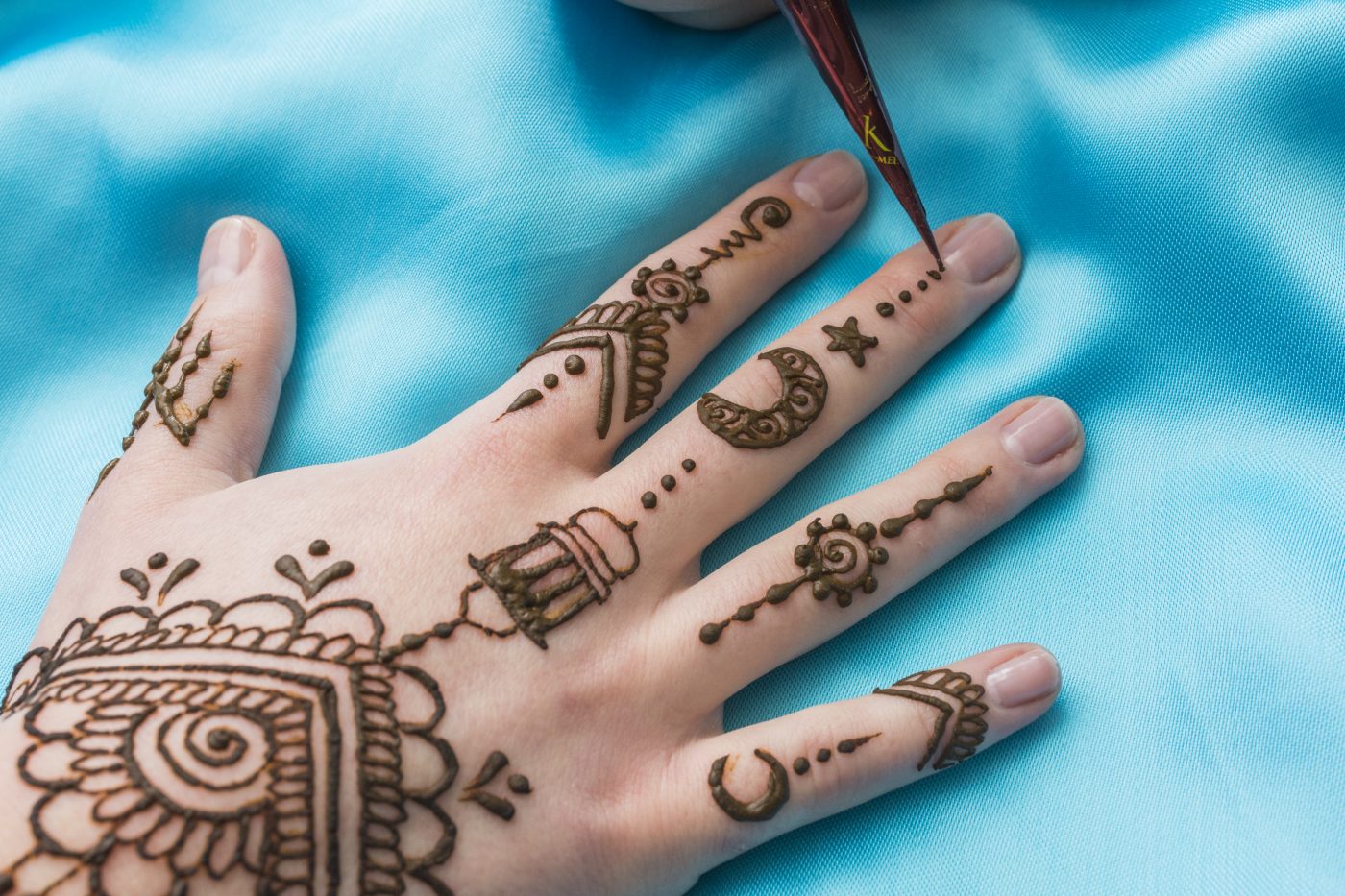
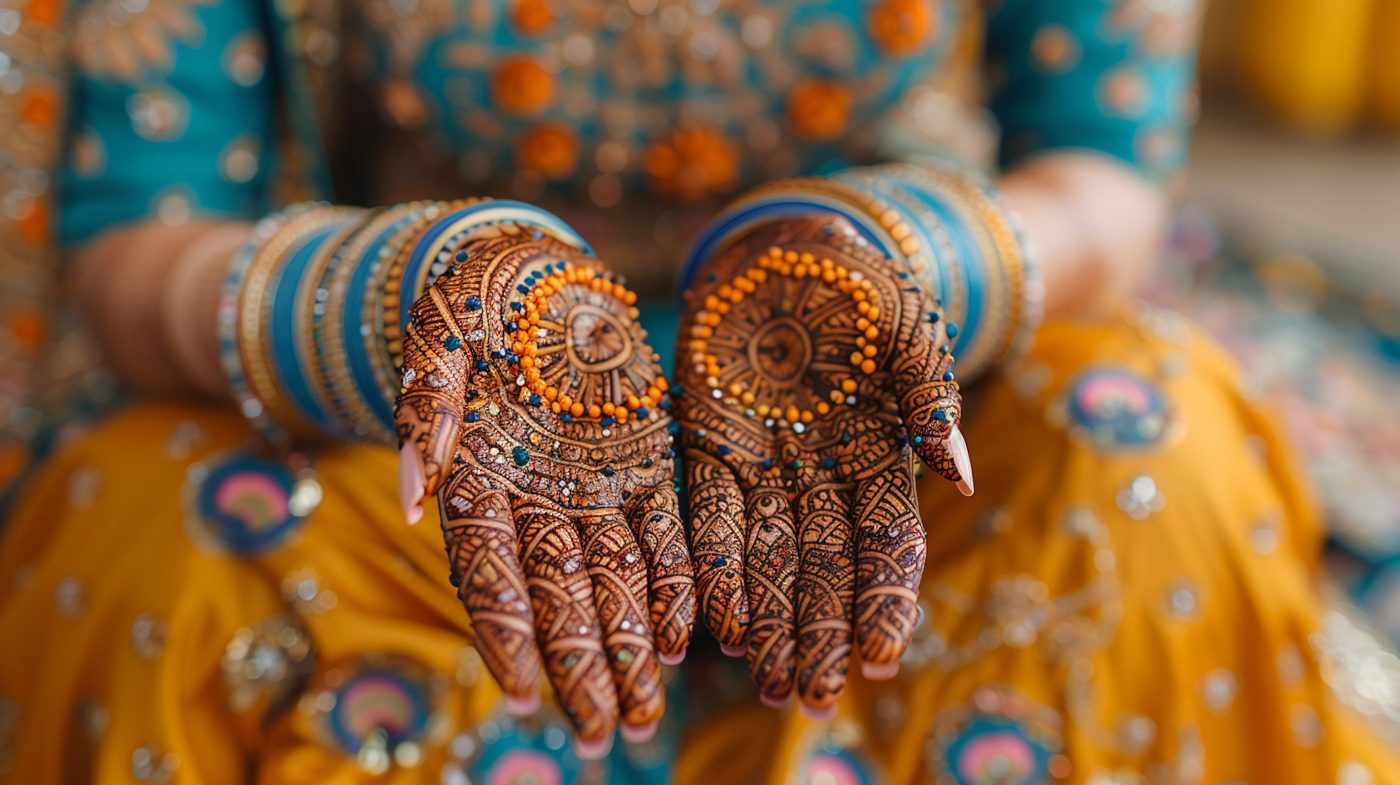
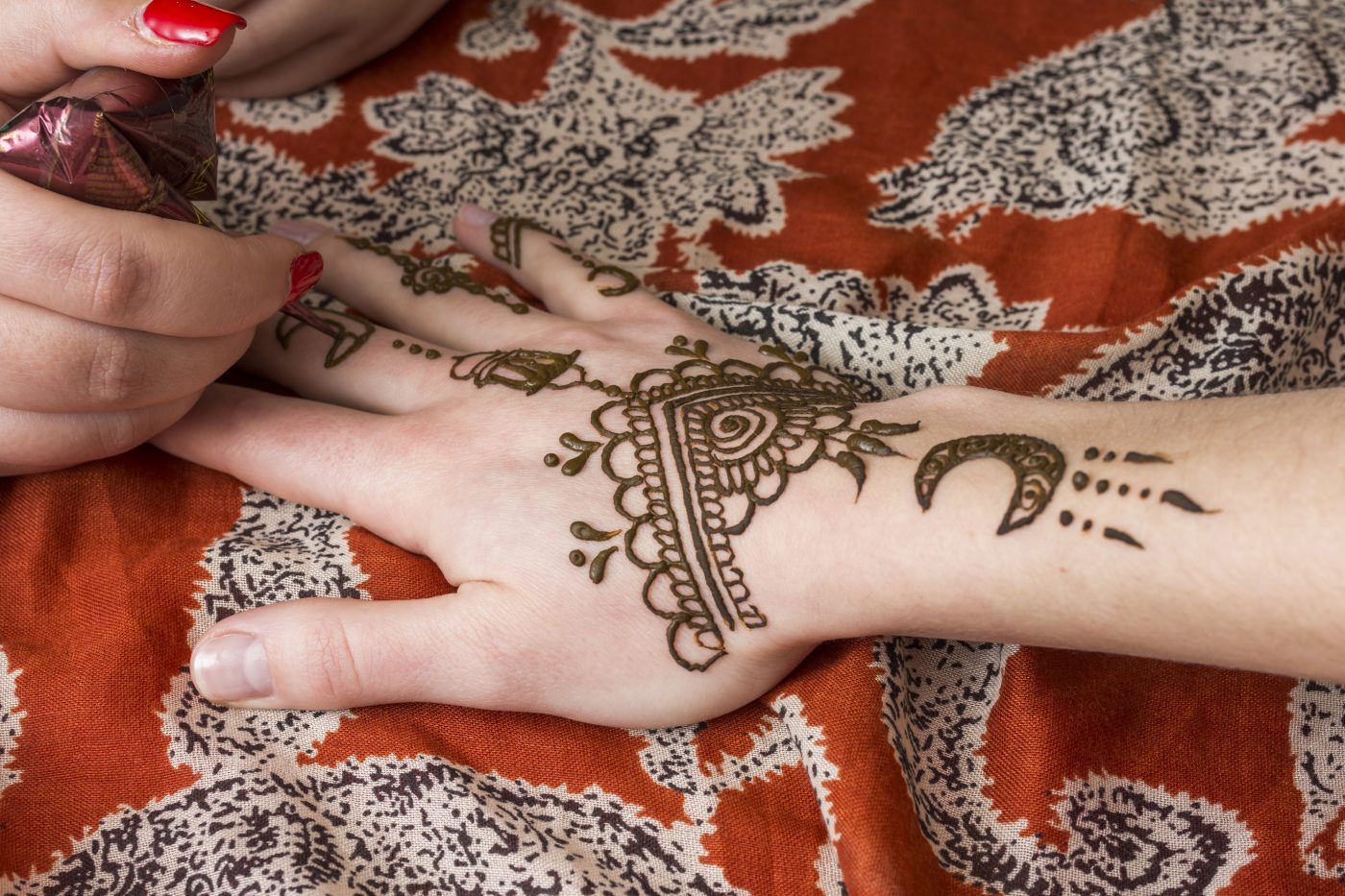
One plant, many grammars. As henna travelled, each region kept what suited its taste and occasions.
Arabic
Flowing vines and open skin. Reads from a distance.
Indian
Dense fill, fine jaali, figures and portraits.
Pakistani
Indian density carried on Arabic flow.
Moroccan
Geometry over botany. Angular and architectural.
If you want to see that difference drawn rather than described, our guide to simple Arabic mehndi designs puts the Arabic and Indian approaches side by side on the same hand.
The tradition as it looks today
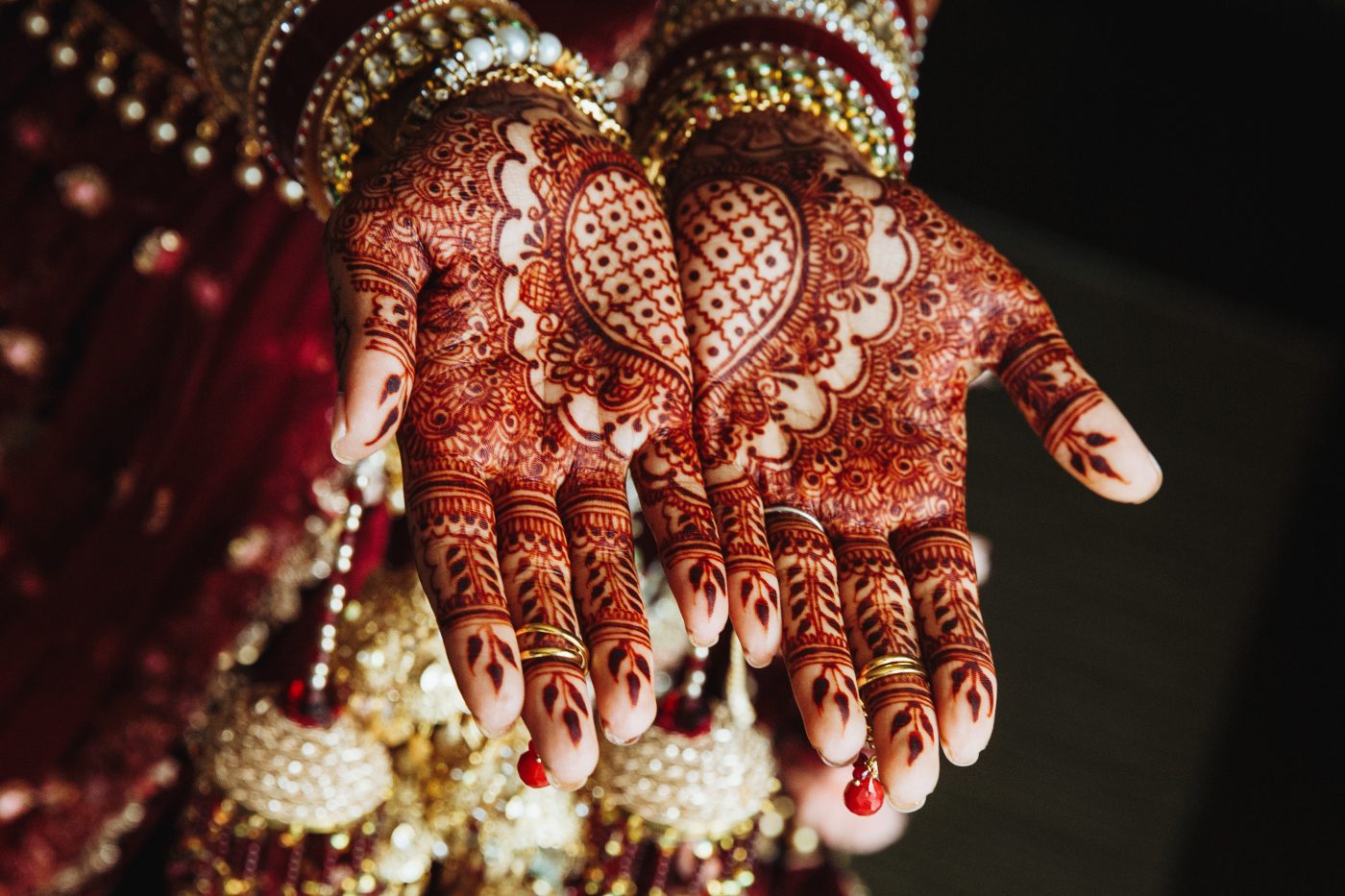
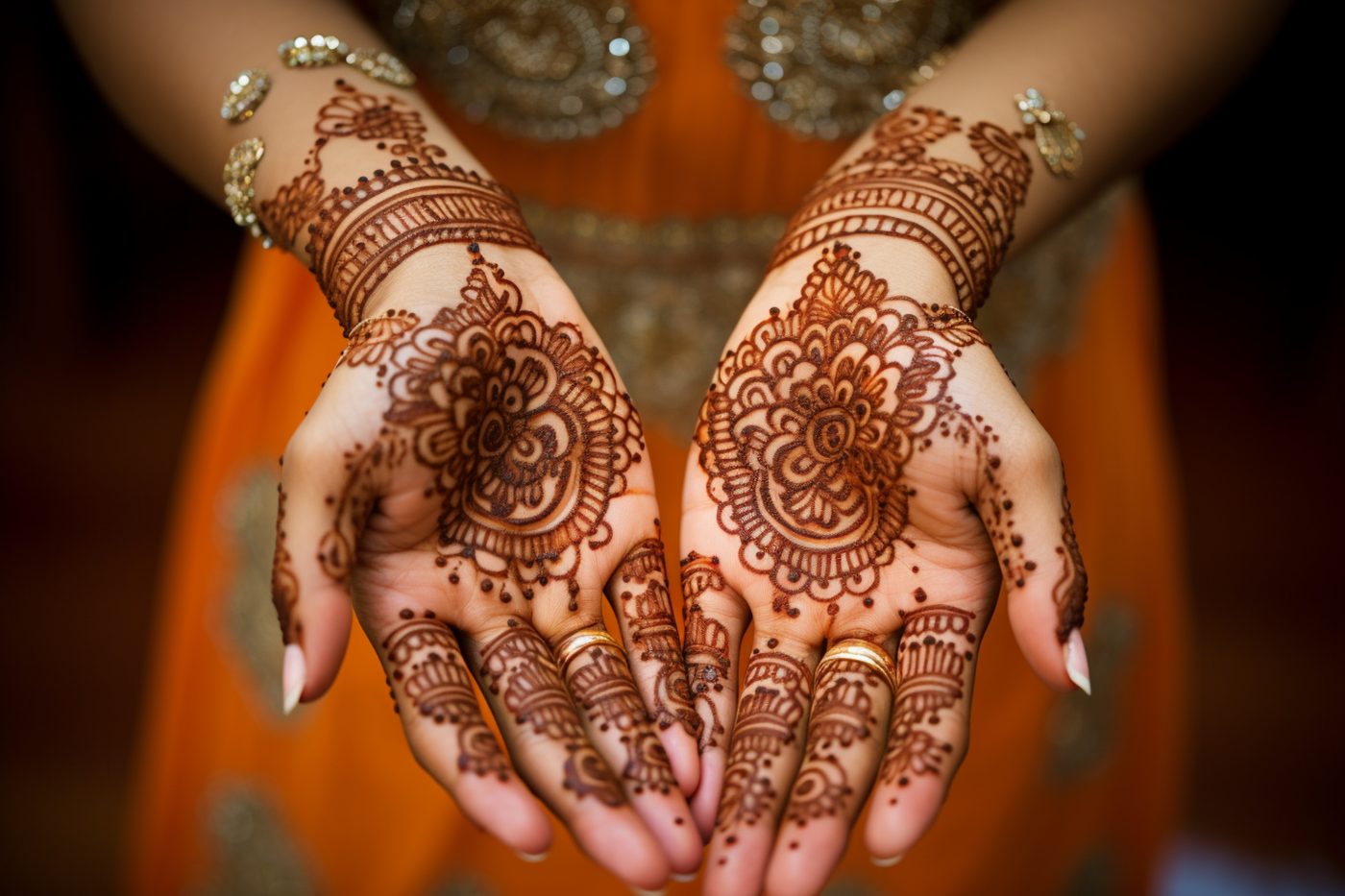
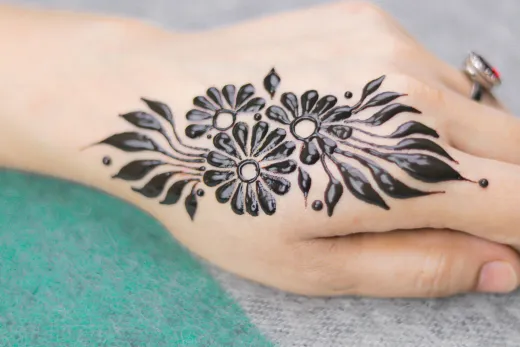
Five thousand years later, the same plant, the same reaction, the same afternoon spent sitting still. The tools changed; almost nothing else did.
Why the tradition survived
Plenty of ancient cosmetics disappeared. Mehndi did not, and the reasons are practical. It is cheap, the plant grows where the people are, it is temporary enough to be low-risk and permanent enough to feel like commitment, and it takes hours to apply. That last one is not a drawback, it is the point. The application is the ritual: a room full of women, a bride who cannot use her hands, and an afternoon that has to be spent together.
You can read more about the plant, its spread and its cultural range on the Wikipedia entry for henna, which collects the archaeological references well.
Taking part in it today
Knowing the history changes how the day feels. When a bride sits down for five hours, she is doing something that women were doing around the Mediterranean before the Thera eruption. That is a rare thing to be able to say about any part of a modern wedding.
If you are planning yours, the practical next step is understanding what you are paying for: our bridal mehndi price guide explains why quotes vary so widely, and what to lock down in writing before you pay a deposit.
Have a question or a topic to suggest?
We read every message. Tell us what you would like to see next on the blog.
Get in touchYou may also like
The Chemistry of a Henna Stain
Henna stain science explained clearly: how lawsone bonds to keratin, why the stain starts orange then turns brown, and why palms stain the darkest.
Henna vs Mehndi: What's the Difference?
Henna vs mehndi: they are the same plant and the same dye, just two different words. Learn the etymology, the regional split and where the confusion begins.
How Long Does a Henna Tattoo Last?
Henna lasts about 1 to 3 weeks, peaking on days 2 to 5. See a day-by-day fade timeline, how body location changes longevity, and how to make it last.