Pillar Guide · Arabic Mehndi
Simple Arabic Mehndi Designs
Bold flowing vines, open space, and a handful of motifs. The style that looks full in fifteen minutes.
Arabic mehndi is the style most people mean when they say they want something "simple but full". It uses bold flowing vines, generous negative space and a handful of repeated motifs, which is exactly why a simple Arabic mehndi design can look finished in fifteen minutes while an Indian bridal hand takes four hours. This guide covers what makes the style Arabic, the motifs worth learning first, and how to pick a layout that suits your event.
The short version
- Arabic = flow plus space. Bold trailing vines, not dense all-over fill.
- Five motifs cover most designs: petal, paisley, leaf-vine, dot cluster, net.
- Diagonal layouts are the fastest route to a design that looks intentional.
- Colour comes from time, not pressure. Leave the paste on for 6 to 8 hours.
What actually makes a design "Arabic"
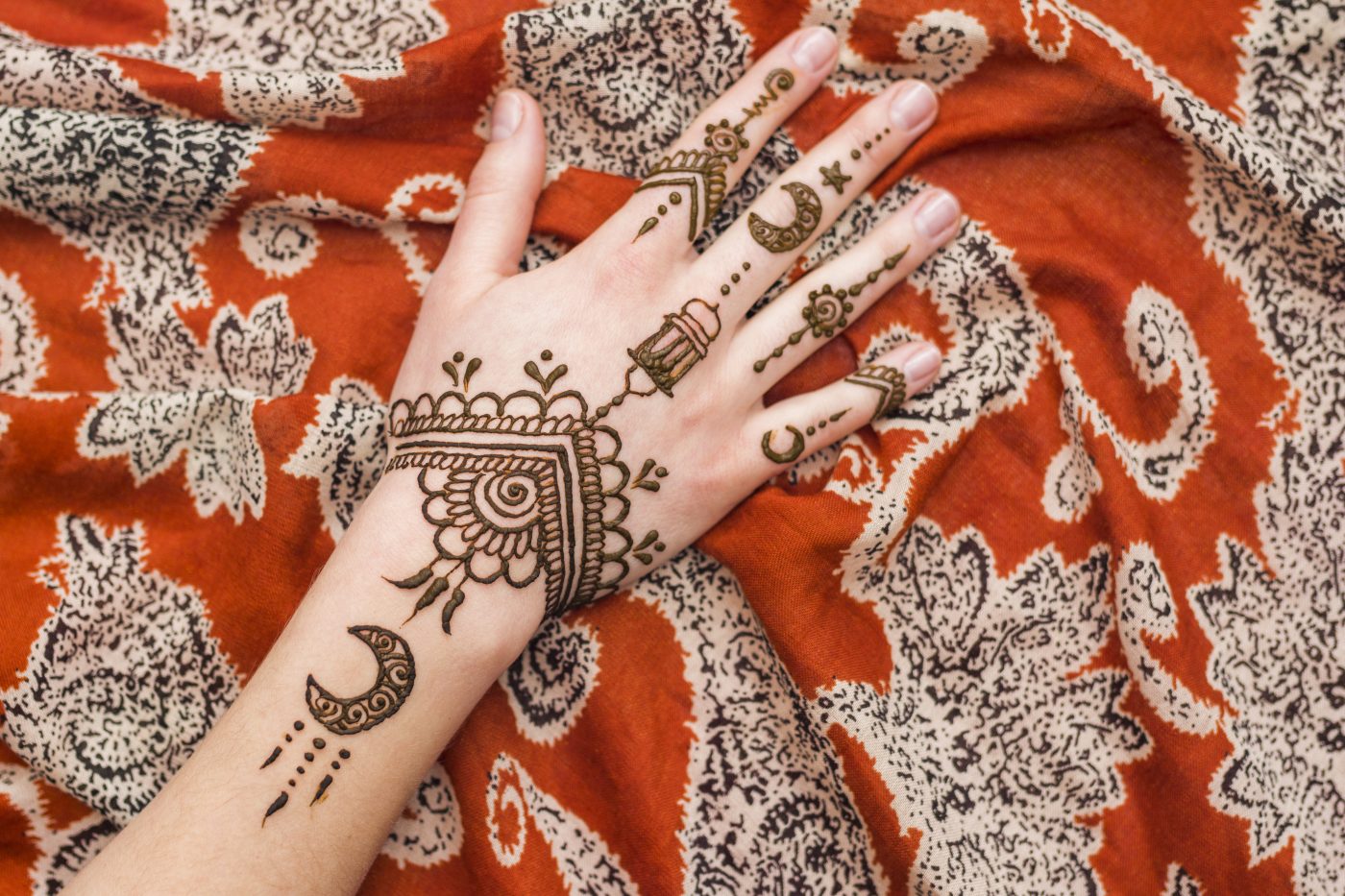
The label is about composition rather than geography. Arabic designs are built from a continuous trailing vine that travels across the hand, with motifs hanging off it and clear skin left between them. Indian and Pakistani work tends to fill the whole surface with fine detail, so the eye reads texture; Arabic work leaves gaps, so the eye reads shape.
That single difference explains almost everything else about the style: the lines are thicker, the cone moves faster, mistakes are easier to hide, and the design still reads clearly from across a room. It is also why it photographs so well.
The same hand, two philosophies. Arabic leads the eye along one path and lets skin breathe; Indian fills the field.
The five motifs that build almost everything
You do not need a hundred shapes. Nearly every simple Arabic mehndi design is these five repeated at different sizes.
Petal
A teardrop pulled to a point. Cluster five around a dot and you have a flower.
Paisley
The bent teardrop. Outline it, then fill one half and leave the other empty.
Leaf vine
The spine of the design. One long curve with leaves alternating off it.
Dot cluster
Fills awkward gaps and softens hard edges. The cheapest detail there is.
Net / jaali
Fine crosshatch inside a shape. Use sparingly or the design stops being Arabic.
Mandala
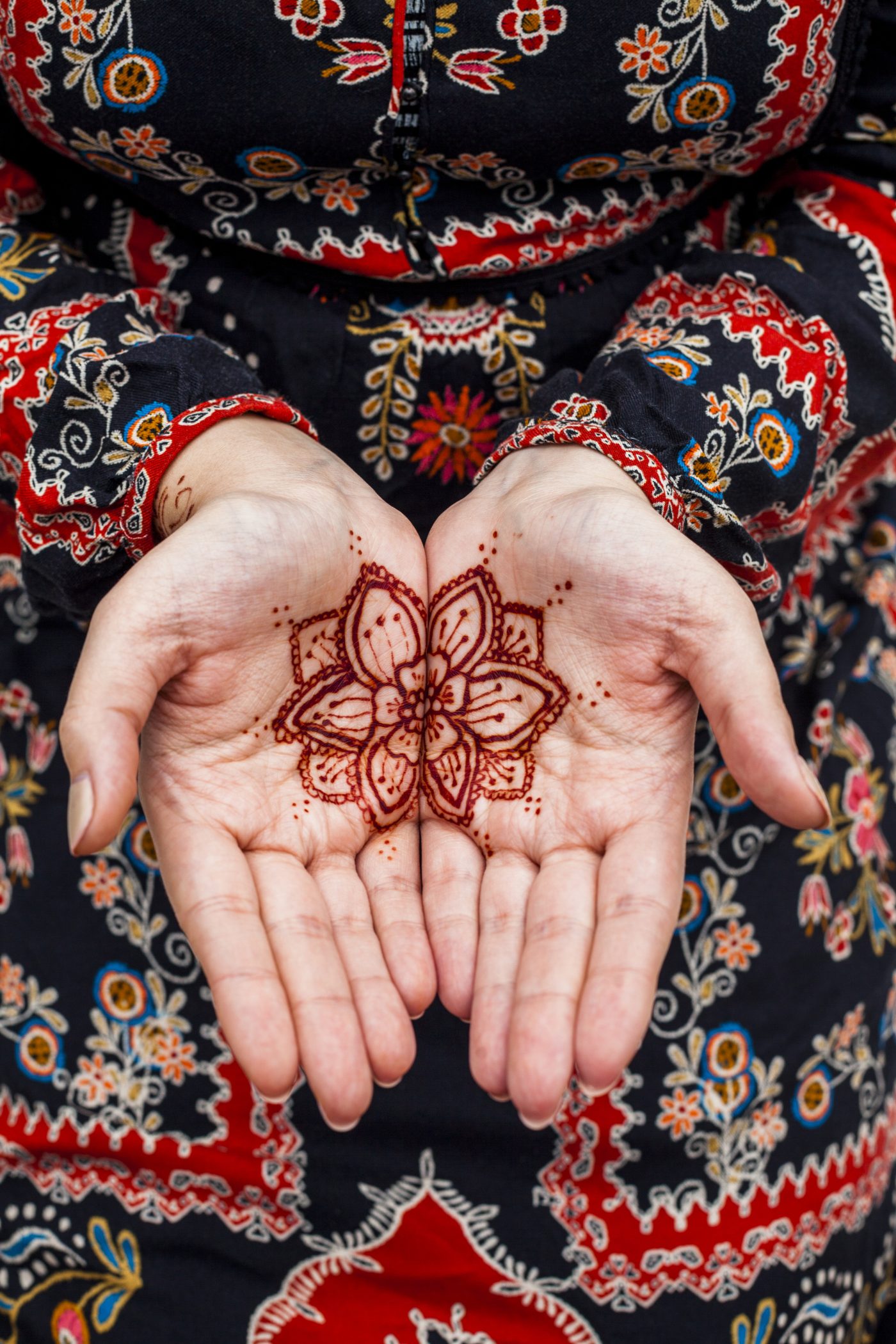
A round anchor for the palm centre. Optional, but it makes a design look planned.
Choosing a layout
Layout matters more than motif quality. A clean diagonal with three shapes beats a crowded hand with twenty. Pick by how much time you have and how much attention you want.
| Layout | Time | Difficulty | Best for |
|---|---|---|---|
| Single diagonal vine | 10-15 min | Beginner | Eid, work parties, first attempts |
| Finger strips only | 5-10 min | Beginner | Office-friendly, very quick |
| Palm mandala + vine | 25-35 min | Intermediate | Guests at a mehndi night |
| Wrist band + trail | 20-30 min | Intermediate | Photos, jewellery pairing |
| Full back-hand vine | 45-60 min | Confident | Close family, engagement |
Where the time actually goes
Typical single-hand Arabic design, start to paste-off. Most people underestimate drying.
Design gallery
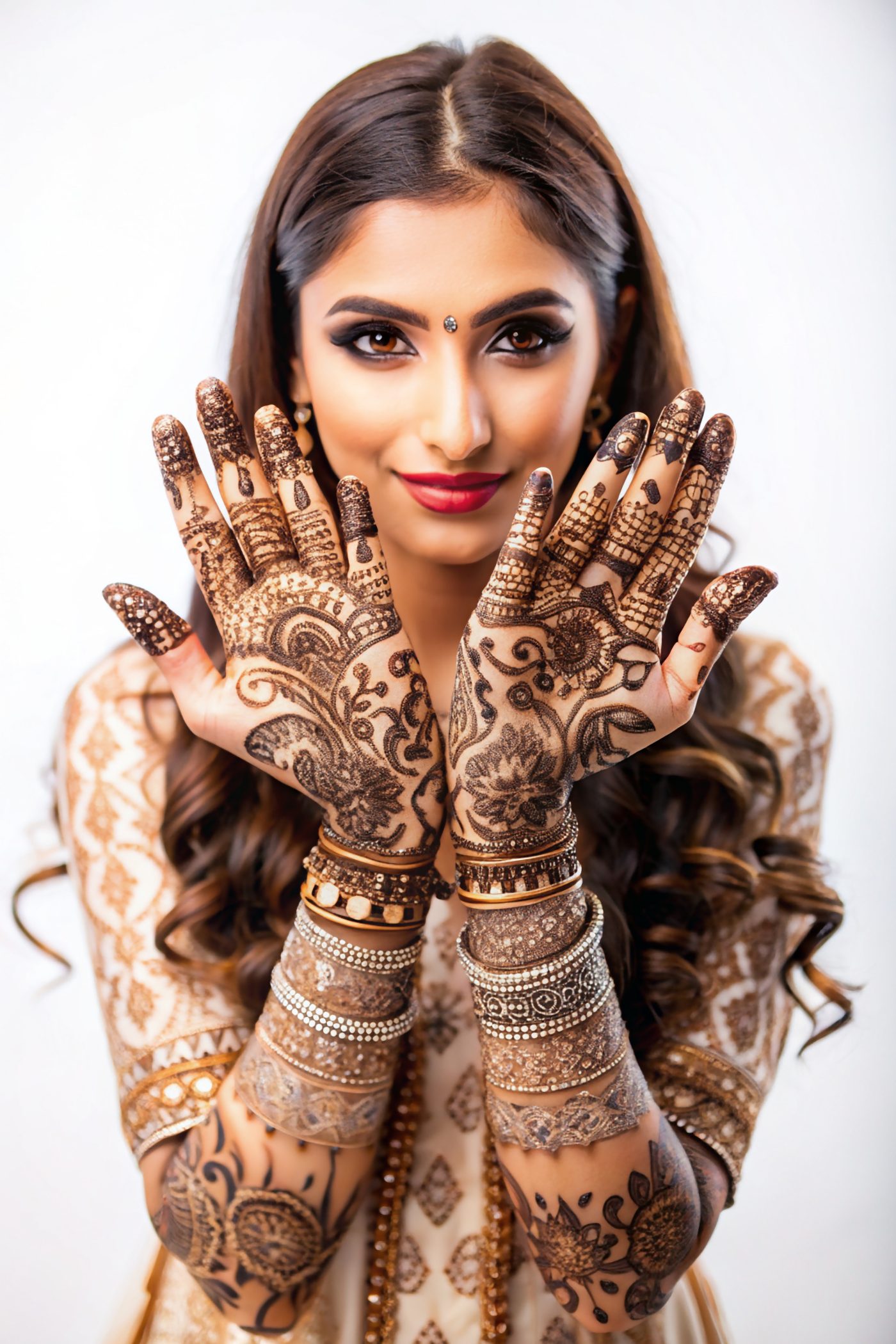
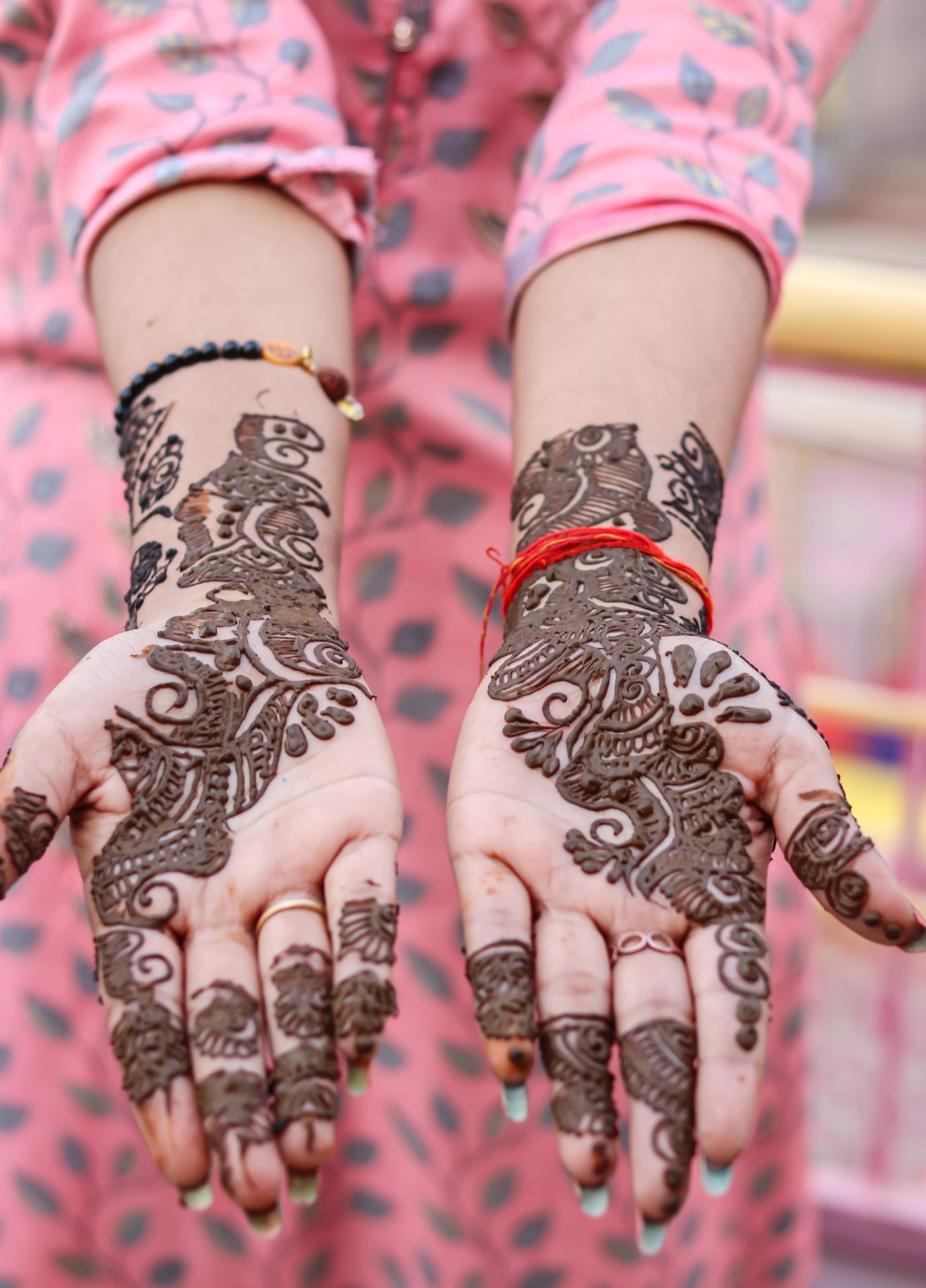
Save the ones you like and take them to your artist. Screenshots communicate far better than descriptions, and every artist would rather see a picture than hear "something simple but full".
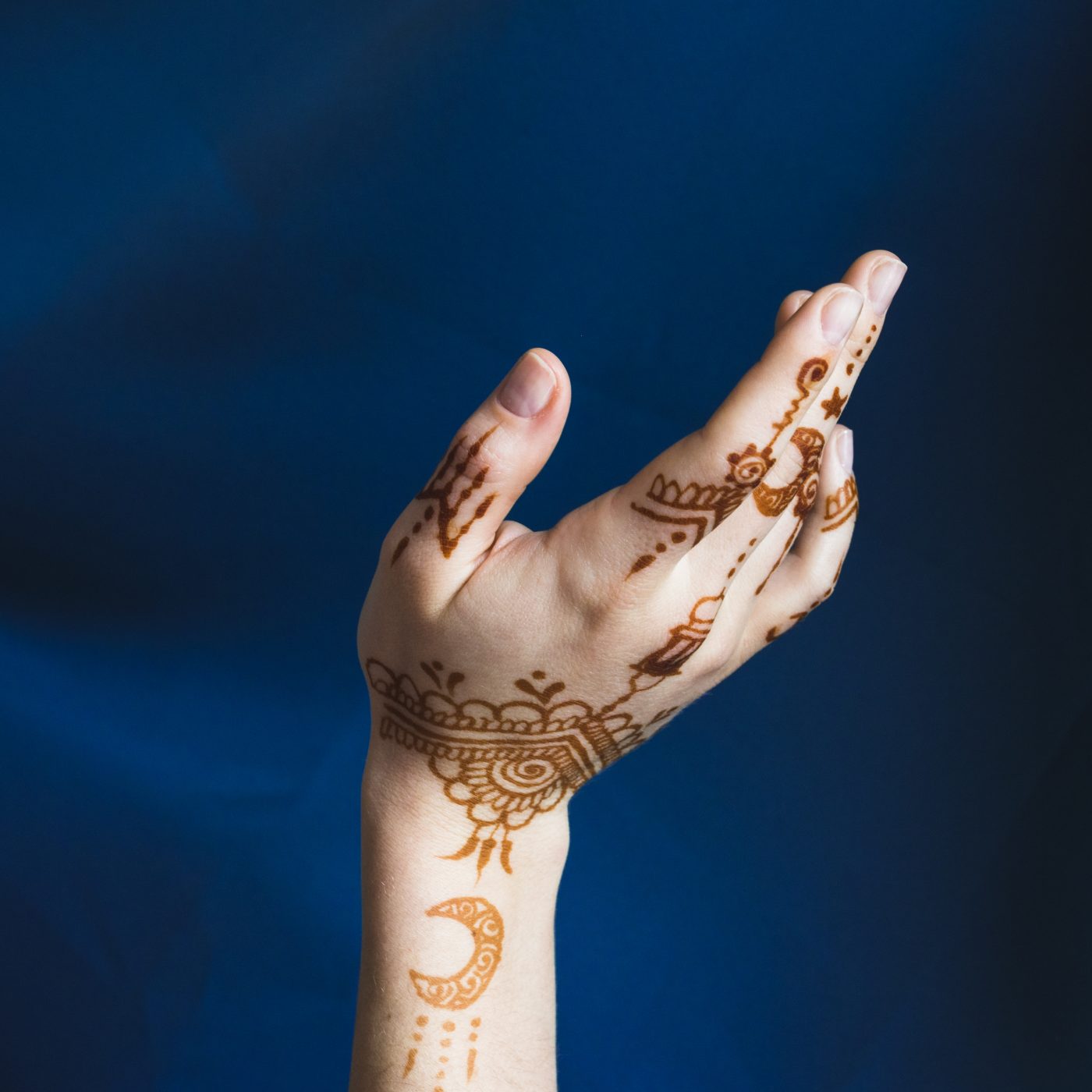
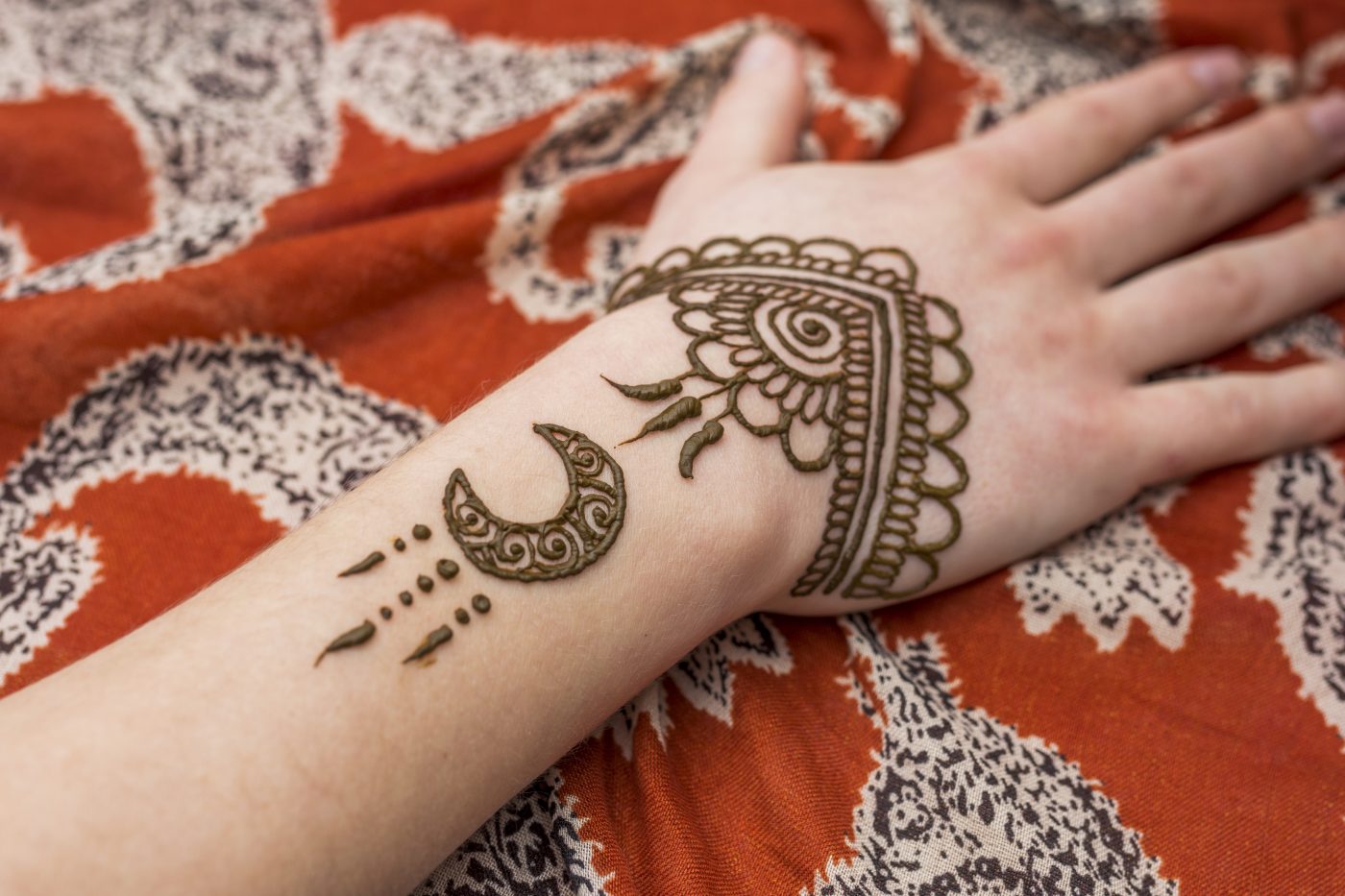
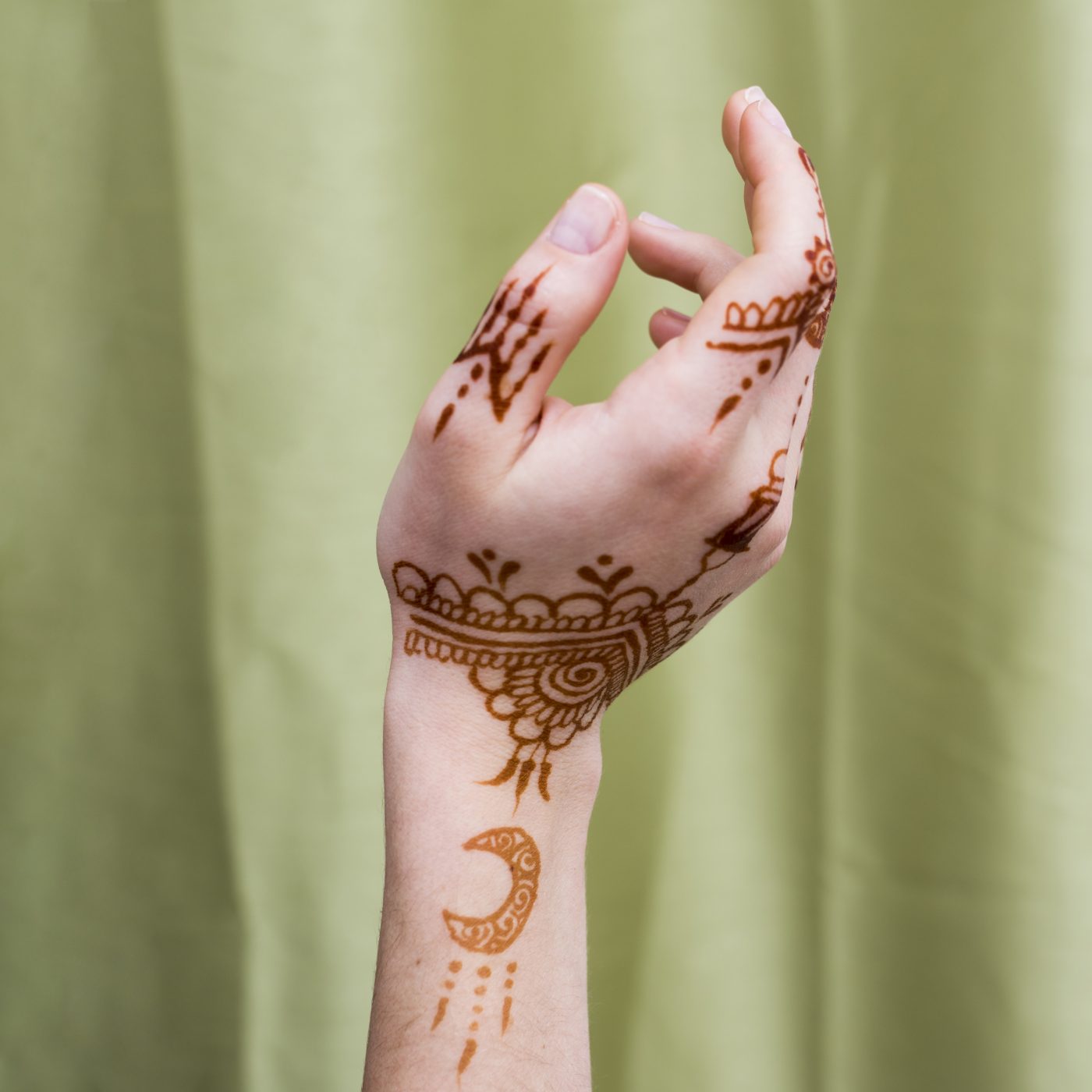
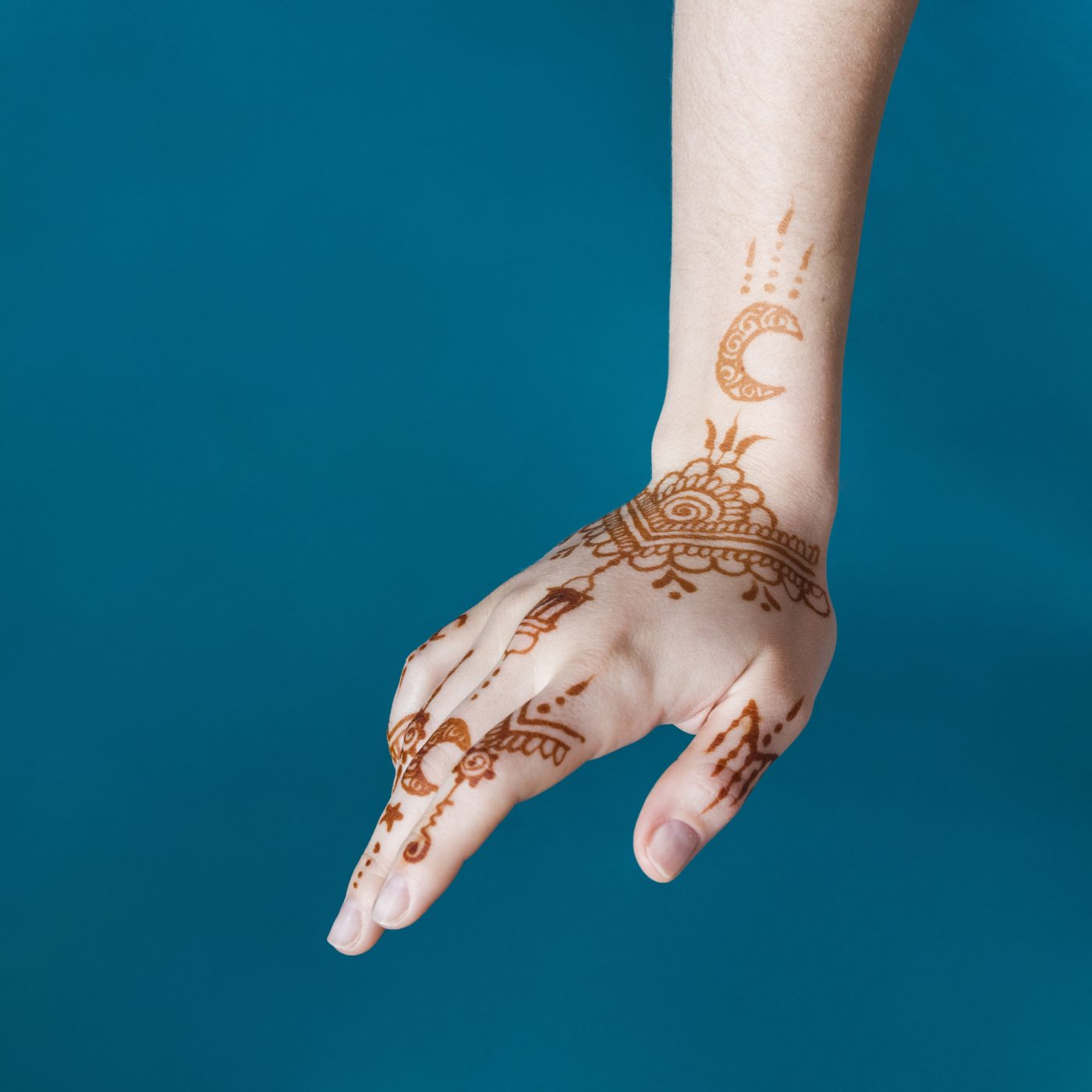
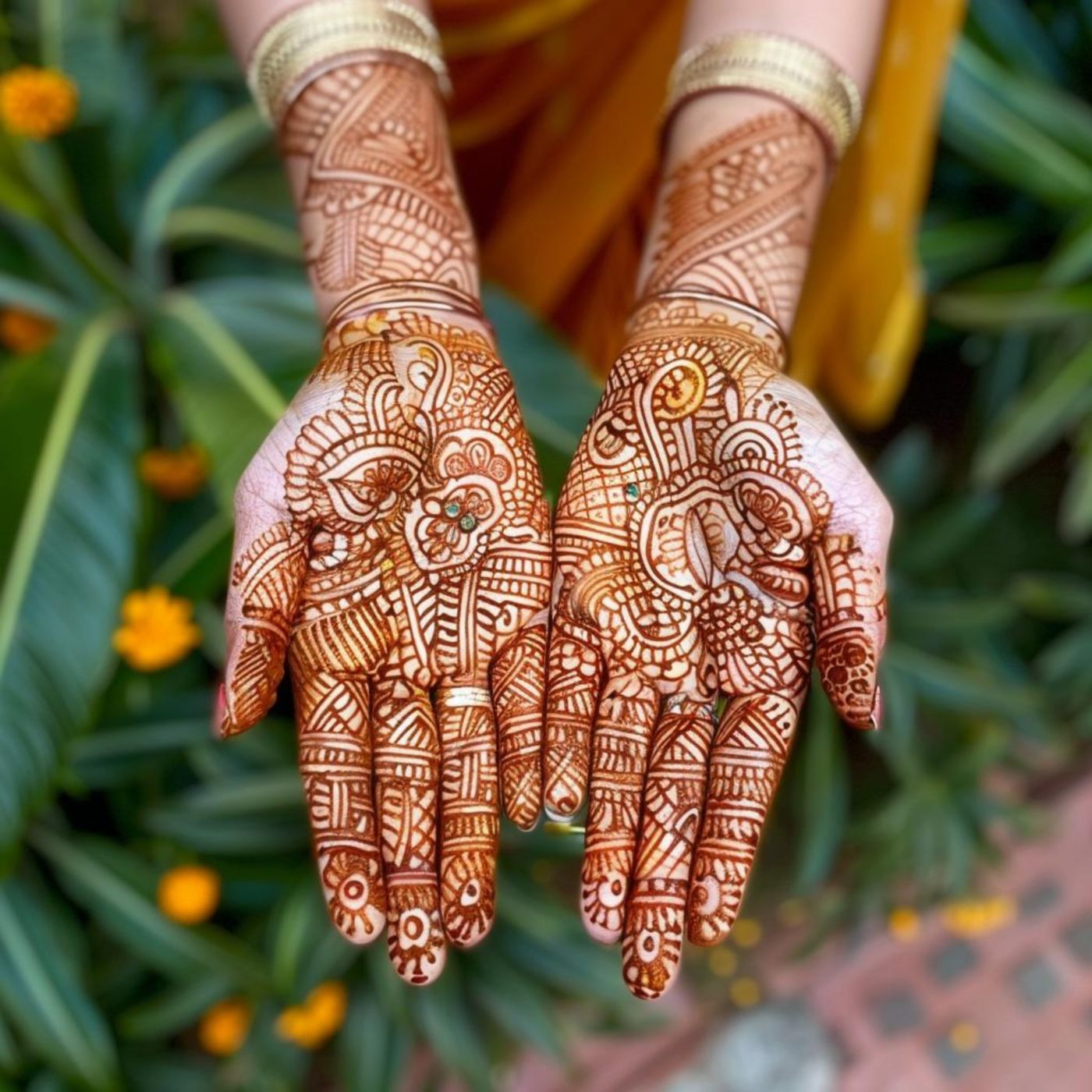
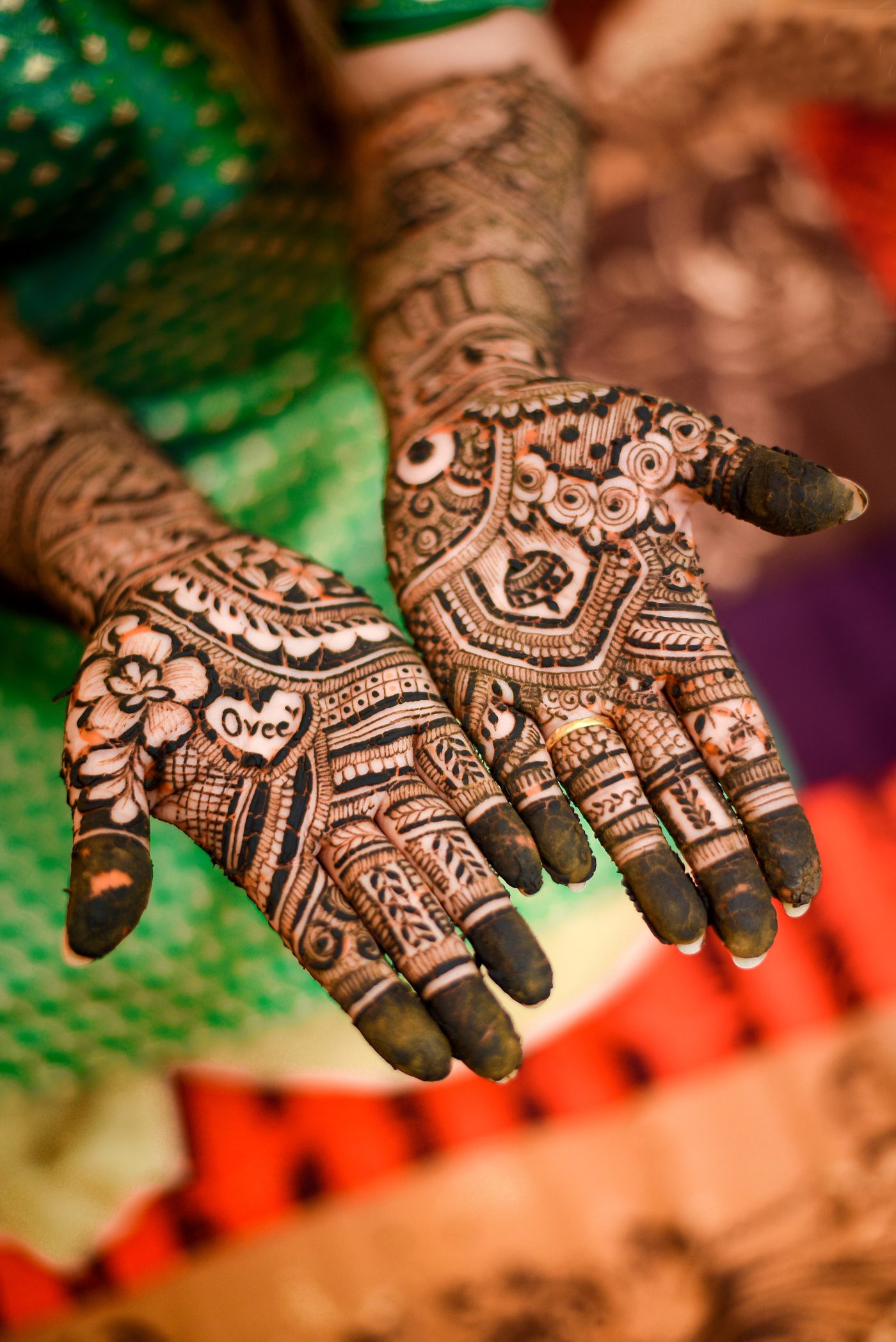
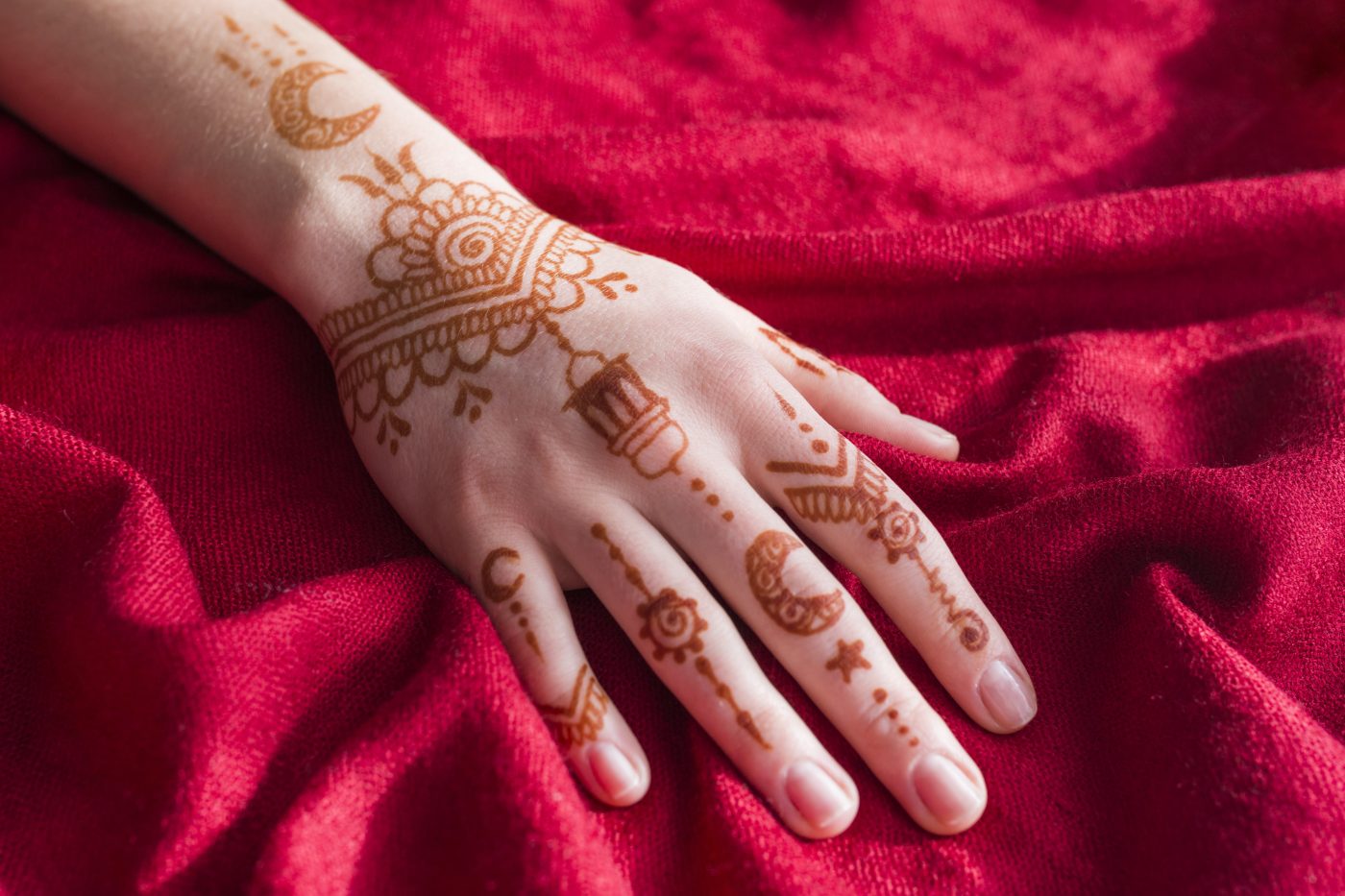
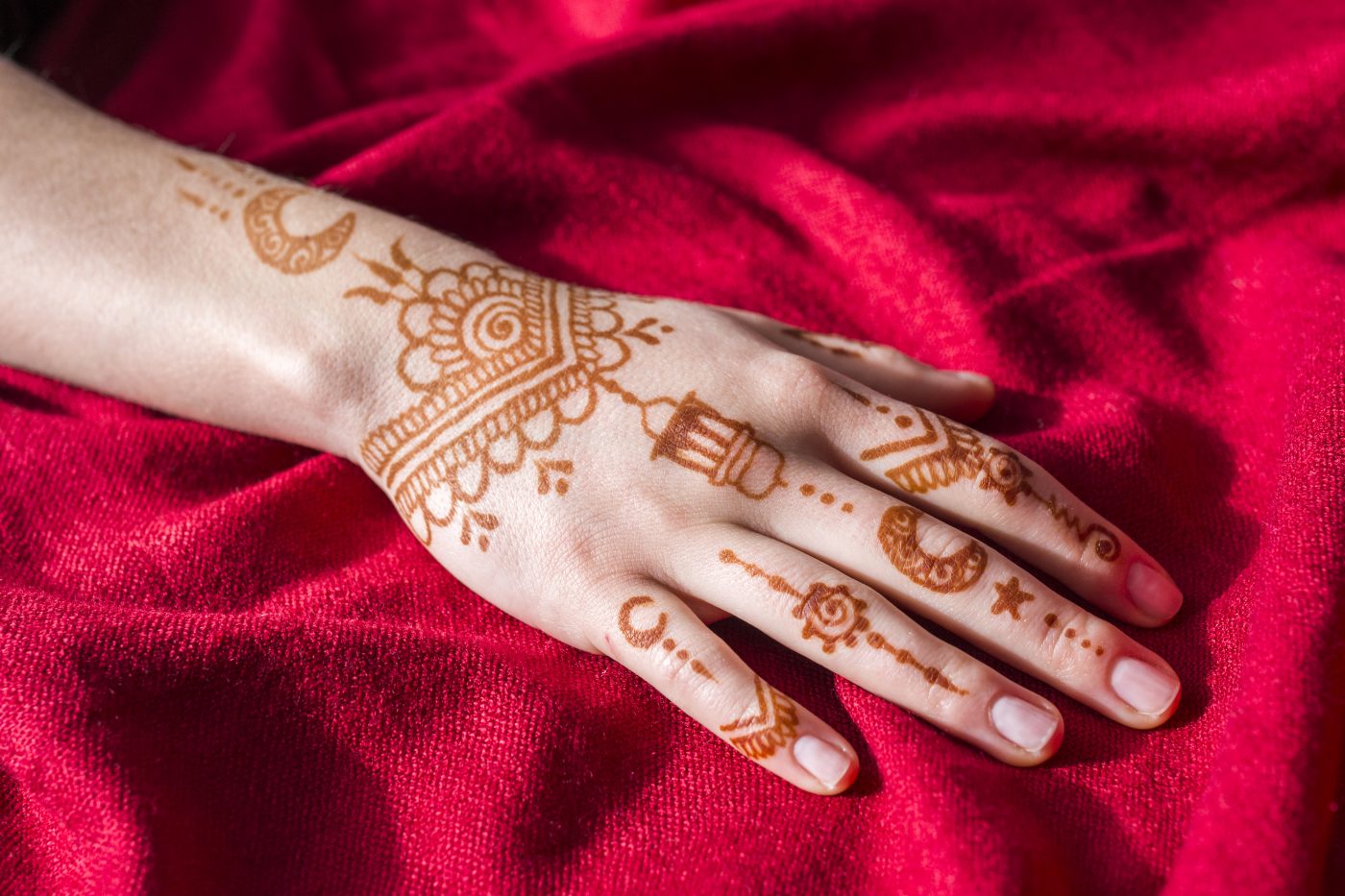
Getting the colour right: the stain comes from lawsone, the dye molecule in the leaf of the henna plant, binding to keratin in the top layer of your skin. That reaction needs time, not pressure. Leave the paste on for six to eight hours, scrape it off rather than washing, and keep water away for the first twelve. The colour deepens for another 48 hours on its own.
How Arabic compares to the other styles
Most brides end up mixing styles rather than picking one. It helps to know what each is good at.
| Style | Look | Coverage | Typical time |
|---|---|---|---|
| Arabic | Bold vines, open space | Partial | 15-60 min |
| Indian | Fine detail, figures, jaali | Full, dense | 3-5 hrs |
| Pakistani | Indian density with Arabic flow | Full | 2-4 hrs |
| Moroccan | Geometric, angular | Partial | 30-60 min |
| Minimal / modern | Line work, single motifs | Sparse | 5-20 min |
If you are booking someone for a wedding rather than doing it yourself, the style you choose is the single biggest driver of what you pay. Our bridal mehndi price guide breaks down what artists actually charge and why the quotes vary so much.
A word on safety
Natural henna is a plant paste. It stains orange first and matures to deep reddish brown over a day or two, and it never stains black on contact. Anything sold as "black henna" that stains instantly has been mixed with something else, and the usual additive can cause severe skin reactions. If a cone promises instant black, walk away. Real henna is worth the wait.
Where to go next
If you want the background to the tradition you are taking part in, read the history of mehndi. If you are planning a wedding, start with pricing, then book early: good artists in any city are gone months before the season.
Have a question or a topic to suggest?
We read every message. Tell us what you would like to see next on the blog.
Get in touchYou may also like
The Chemistry of a Henna Stain
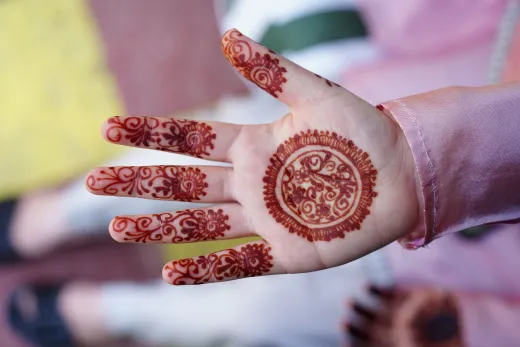
Henna stain science explained clearly: how lawsone bonds to keratin, why the stain starts orange then turns brown, and why palms stain the darkest.
Henna vs Mehndi: What's the Difference?
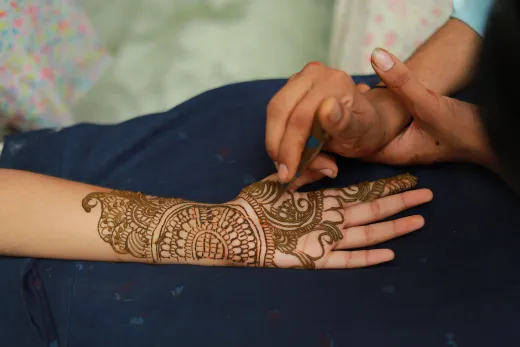
Henna vs mehndi: they are the same plant and the same dye, just two different words. Learn the etymology, the regional split and where the confusion begins.
How Long Does a Henna Tattoo Last?
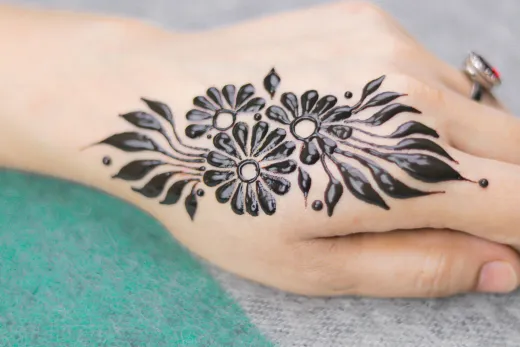
Henna lasts about 1 to 3 weeks, peaking on days 2 to 5. See a day-by-day fade timeline, how body location changes longevity, and how to make it last.