Henna longevity
How Long Does a Henna Tattoo Last?
How long does henna last? Typically one to three weeks, with peak colour on days two to five. A plain-English guide to the fade timeline, location and aftercare.
A henna tattoo lasts roughly one to three weeks on skin. The colour peaks between days two and five, holds for a few days, then fades as the stained surface cells shed. That is the honest answer, and it is the same whether you call it henna, mehndi or a temporary tattoo. What makes the range so wide, from a barely visible week to a stubborn three, is not the paste. It is where the stain sits on your body and how you treat it in the first two days. This guide covers the full timeline, why location changes everything, and how henna differs from a real tattoo.
The short version
- Typical lifespan is one to three weeks. Peak colour lands on days two to five.
- Location decides longevity. Palms and soles last longest; tops of hands and arms fade fastest.
- Fading is exfoliation, not washing out. The stain leaves when the stained skin cells shed.
- Aftercare buys days, not weeks. The first 12 to 24 hours set the ceiling on how dark and how long.
- It is not permanent. Henna stains only the dead outer layer, so it always leaves on its own.
The direct answer, and why it is a range
Natural henna stains for one to three weeks. Wikipedia's summary of the science puts it plainly: after a henna stain reaches its peak colour, it holds for a few days and then gradually wears off by way of exfoliation, typically within one to three weeks. That single sentence contains the whole story. The stain does not wash out, dissolve or evaporate. It leaves when the skin it lives in falls off.
Understanding that one fact tells you everything about how to predict your own result. A stain on thick, slow-shedding skin lasts longer. A stain on thin skin that you scrub, wash and rub all day lasts a fraction of the time. Same cone, same artist, wildly different lifespan, because the variable was never the henna.
What actually determines how long henna lasts
Four things move the needle, roughly in order of importance. Get the first two right and the stain lasts; ignore them and no aftercare will save it.
Skin thickness
Thicker skin holds more stain in more layers, so it survives longer as the surface sheds. Palms win.
Contact time
How long the paste stayed on. More hours means the dye penetrates deeper layers, which take longer to reach the surface and shed.
Water exposure
Early and frequent washing softens and lifts surface cells faster. Water is the quiet enemy of longevity.
Friction and exfoliation
Scrubbing, sanitiser, dishwashing and gym chalk all speed up shedding. Every rub removes a little colour.
Notice what is missing from that list: pressing the cone harder, the brand of paste, or how dark it looked on day one. Depth of penetration and rate of shedding are the only real levers. Everything a good artist and good aftercare does is aimed at those two things.
Why it fades and never just "wears thin": henna colours the stratum corneum, the outermost layer of dead, flattened skin cells. Those cells are constantly being pushed up and shed in a process called desquamation. You lose them whether you notice or not, around 1,300 cells per square centimetre every hour on the forearm. Your henna is riding on cells with a countdown already running.
The day-by-day fade timeline
Here is how a typical stain behaves over two weeks, assuming natural henna left on for a good few hours and sensible aftercare. Your mileage varies by location, but the shape of the curve is always the same: a rise for a couple of days, a plateau, then a slow decline.
Stain intensity over 14 days
Relative colour depth on the back of the hand. Colour climbs after paste-off, peaks around days two to five, then fades with each round of shedding.
The counterintuitive part is the start. Your henna is at its lightest the moment you scrape the paste off, not its darkest. The colour you see on day one is orange, and it deepens on its own for the next two to three days as the stain oxidises into a reddish brown. That means the design you photograph an hour after removal is not the design you will have at the wedding two days later. It gets better before it gets worse.
The stain climbs for a few days, plateaus, then declines as each layer of skin sheds. It is a slope, not a switch.
How location changes longevity
This is the biggest single factor, and it comes down to keratin, the tough protein that lawsone actually binds to. Skin that is thick and rich in keratin holds more dye across more layers, so the stain both looks darker and outlives the shedding of the surface. Skin that is thin has fewer layers to lose before the colour is gone. Desquamation is also slower on palms and soles and faster on thin areas, which stacks the odds even further.
| Location | Typical lifespan | Why |
|---|---|---|
| Palms and soles | 2 to 3+ weeks | Thickest, most keratin-rich skin; slowest to shed. Deepest colour too. |
| Fingers and toes | 2 to 3 weeks | Thick skin, but constant handling and washing chips at the tips first. |
| Wrists and inner forearm | 1 to 2 weeks | Thinner skin, moderate friction. A middling result. |
| Tops of hands | 1 to 2 weeks | Thin skin plus heavy washing and sanitiser exposure. Fades unevenly. |
| Arms, shoulders, back | 5 to 10 days | Thin skin, clothing friction, and faster cell turnover. Shortest lived. |
| Face and neck | 3 to 7 days | Very thin, oily, fast-shedding skin. Rarely recommended for this reason. |
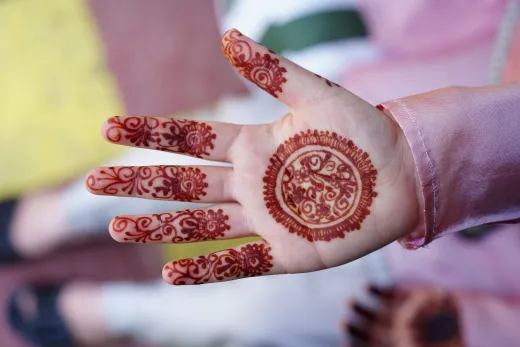
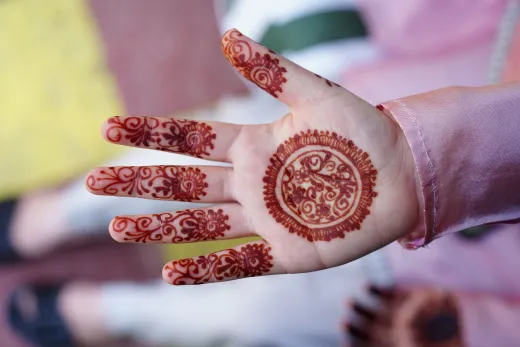
This is exactly why traditional bridal mehndi concentrates on palms, fingertips and the soles of the feet. Those are not only the most visible surfaces during ceremonies; they are the surfaces that give the deepest colour and hold it the longest. A design placed on the forearm for the same wedding will have noticeably faded before the one on the palm has even started to lighten.
Colour concentrates and lasts on the palm and fingertips, where skin is thickest. The back of the hand and wrist give up their stain first.
How a henna tattoo differs from a real tattoo
People reach for the word tattoo because the visual is similar, but the two could not be more different underneath. A real tattoo is a wound. A henna tattoo is a stain on skin that is already on its way out the door.
| Henna tattoo | Permanent tattoo | |
|---|---|---|
| How it works | Dye binds to dead cells in the surface layer | Ink deposited into the living dermis with a needle |
| Depth | Stratum corneum only, no broken skin | Below the epidermis, into the dermis |
| Lifespan | 1 to 3 weeks | Lifetime |
| Colour | Orange to reddish brown, never true black naturally | Any colour of ink |
| Pain and risk | Painless; no wound, minimal risk with pure henna | Painful; needle, healing, infection risk |
| Removal | Fades on its own as skin sheds | Requires laser or surgery |
The reason a henna tattoo is temporary at all is that it never reaches living tissue. It lives entirely in cells your body has already retired and scheduled to shed. A real tattoo is permanent for the opposite reason: the ink is locked into the dermis, below the layer that renews itself. Same word, two entirely different depths.
About "black henna": if someone offers a henna tattoo that stains jet black within minutes and lasts like ink, that is not henna. Natural henna is physically incapable of staining black on contact; it starts orange and matures to brown over days. Instant-black paste has been mixed with a chemical dye that causes serious skin reactions in some people. If it promises the look of a real tattoo, walk away.
How to make a henna tattoo last longer
You cannot change your skin thickness, but you control almost everything else. The goal is simple: let the dye penetrate as deep as possible, then protect the stained surface from early shedding.
Leave the paste on longer
Six to eight hours beats one or two. Deeper penetration means more layers stained and a longer fade.
Scrape, do not wash
Flake the dried paste off. Rinsing with water on day one lifts surface cells before the colour has set.
Keep water off for 12-24 hours
The colour is still deepening. Early water blunts both the final shade and the lifespan.
Seal and moisturise
A balm or natural oil over the design slows drying and shedding. Skip harsh soaps and sanitiser gels.
Two of these deserve their own guides. If your stain came out weak or orange and you want to know what actually darkens it, our explainer on how to darken mehndi the right way walks through the balm, warmth and sealing tricks that genuinely help, and the ones that do nothing. And if you are curious about the chemistry behind all of this, from lawsone to keratin binding, the science of how henna stains your skin explains the reaction in plain language.
On the flip side, if you booked henna for an event and now need it gone faster than nature intends, there are safe ways to speed up the fade. Our guide on how to remove mehndi quickly covers what works, from exfoliation to oils, and what only irritates your skin without shifting the stain.
Why some stains barely last a week
If your henna vanished in five or six days, one of a short list of things went wrong, and none of them are mysterious. The paste came off too early, so only the top layer took colour. The design sat on thin, high-friction skin. Water hit it within the first few hours. Or the paste itself was old, poorly mixed or not fully releasing its dye. Longevity and darkness are two sides of the same coin: the things that make a stain deep are the same things that make it last, because both depend on how much dye reached how many layers of skin.
If darkness rather than lifespan is your real complaint, that has its own diagnosis. Our guide to why your mehndi did not turn out dark runs through the usual culprits and how to fix them next time.
Henna tattoos in pictures
A few real examples worth saving. Screenshots communicate far better than words, so take the ones you like to your artist.
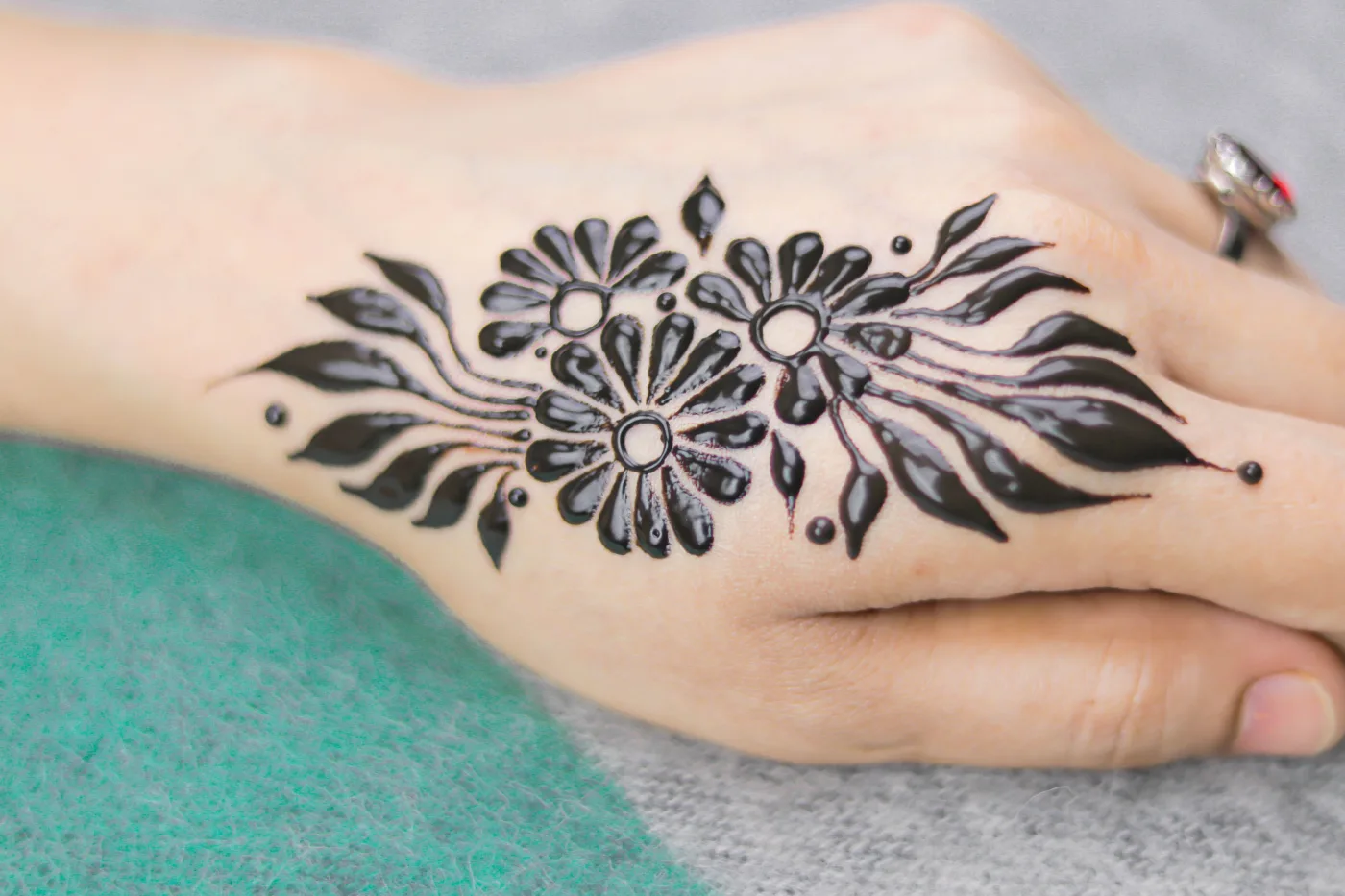
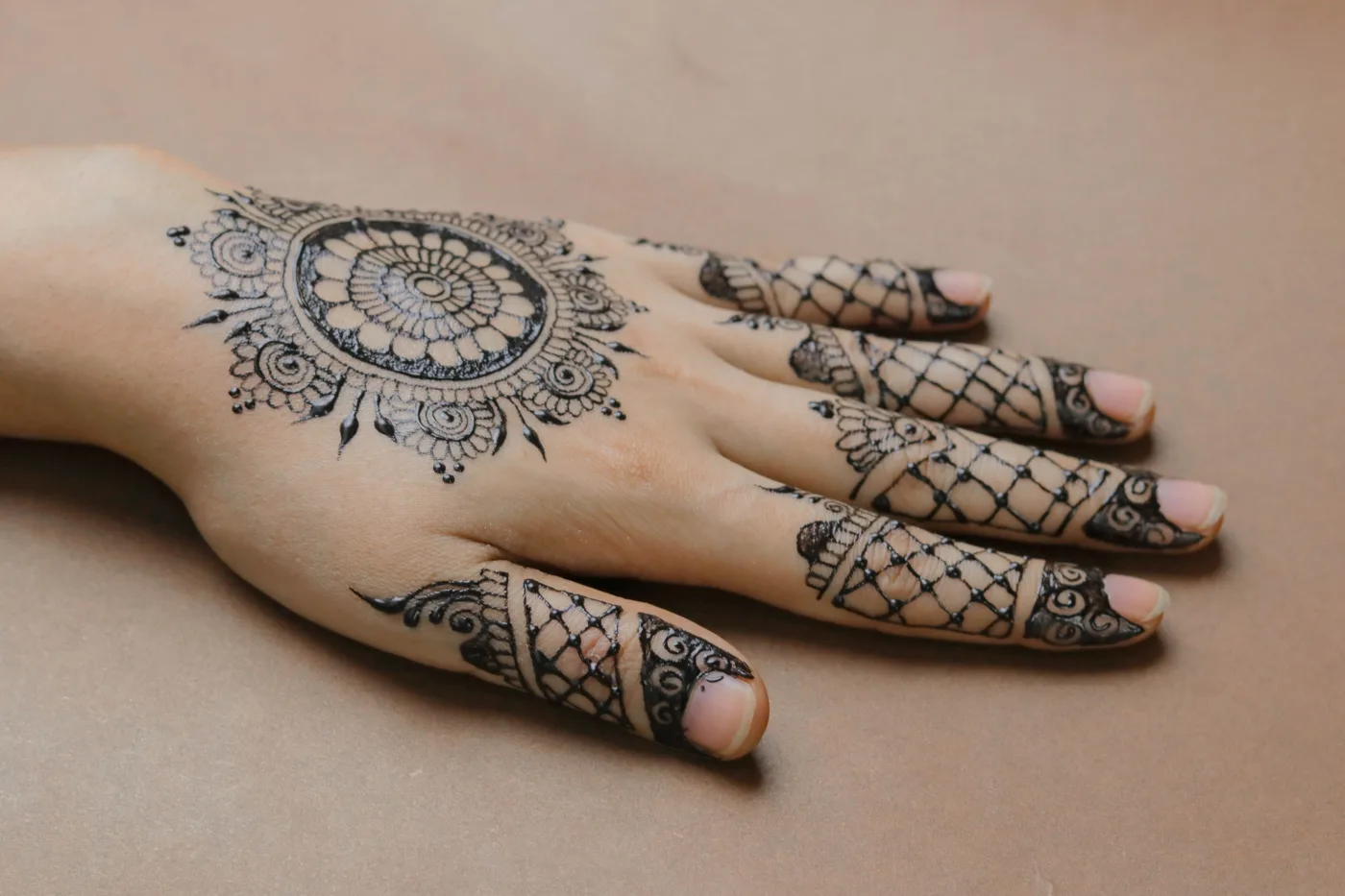
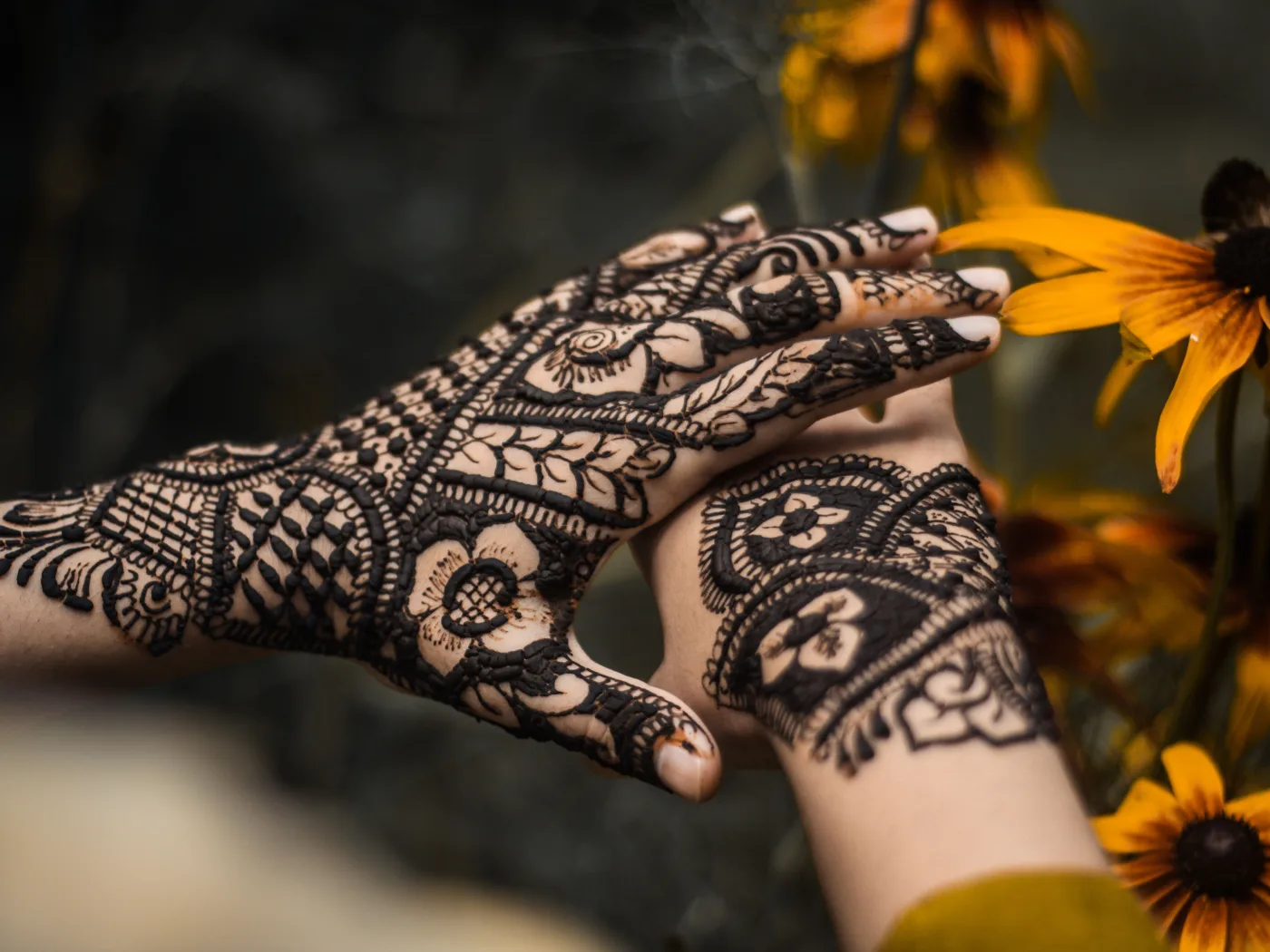
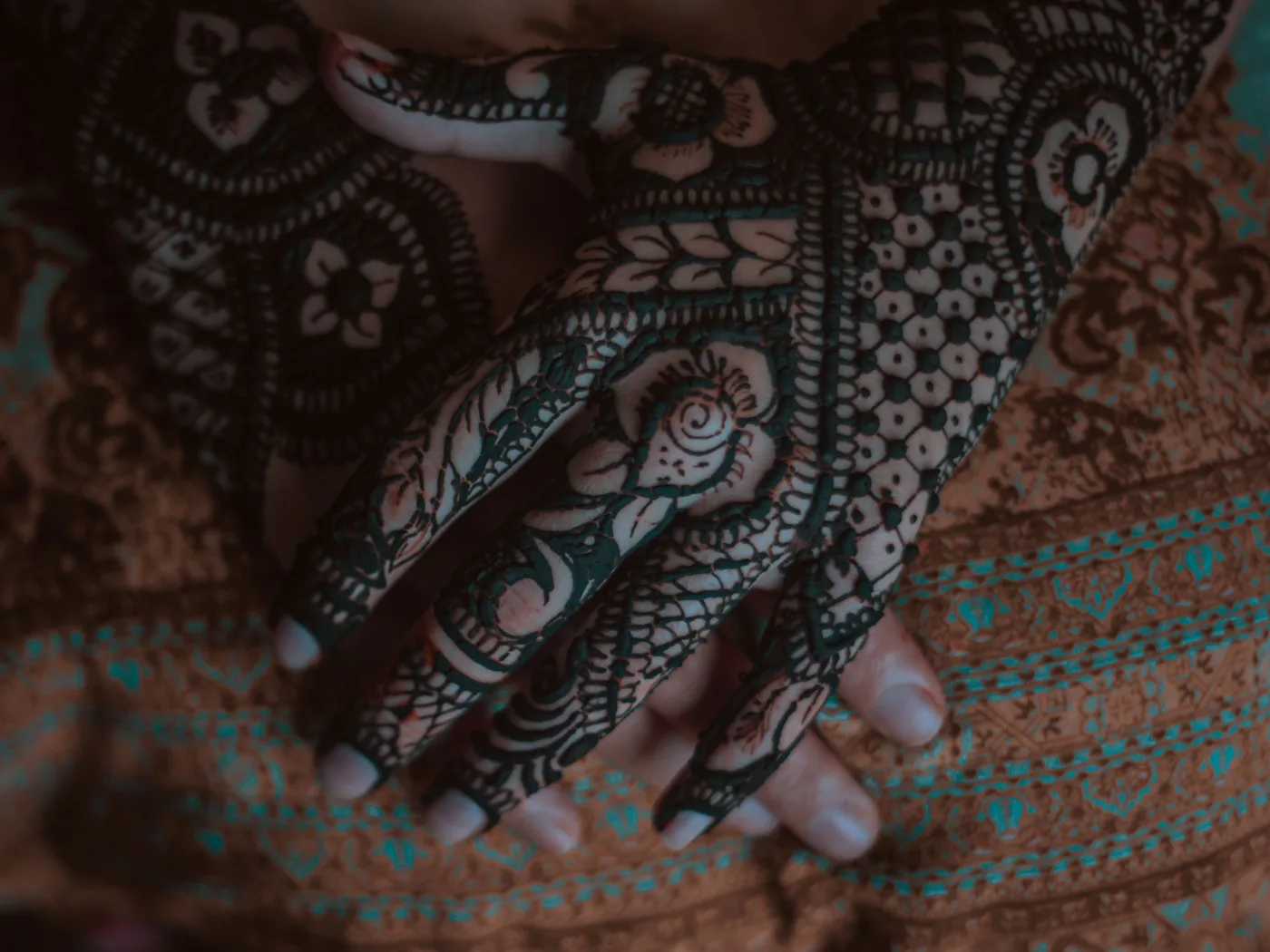
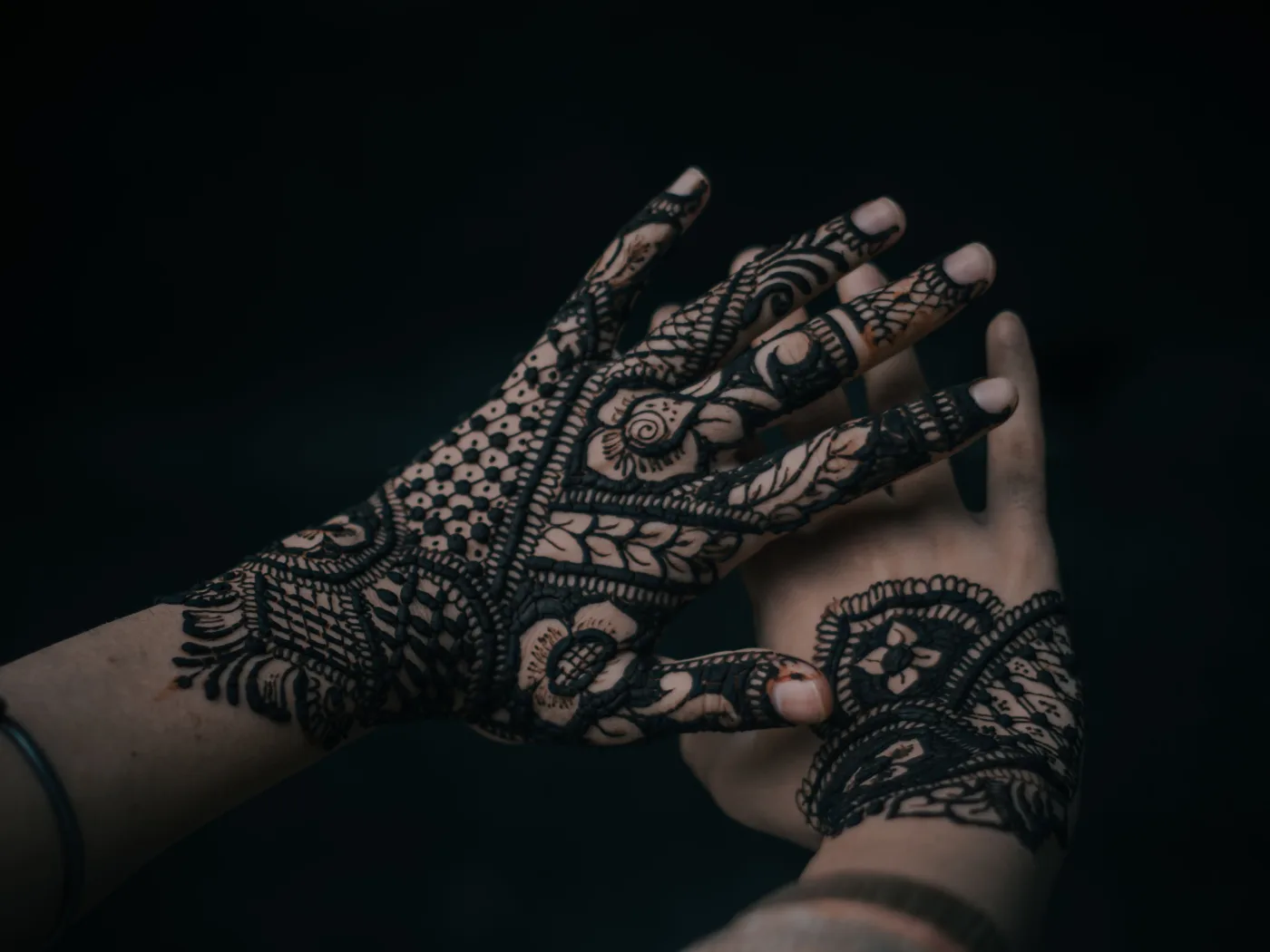
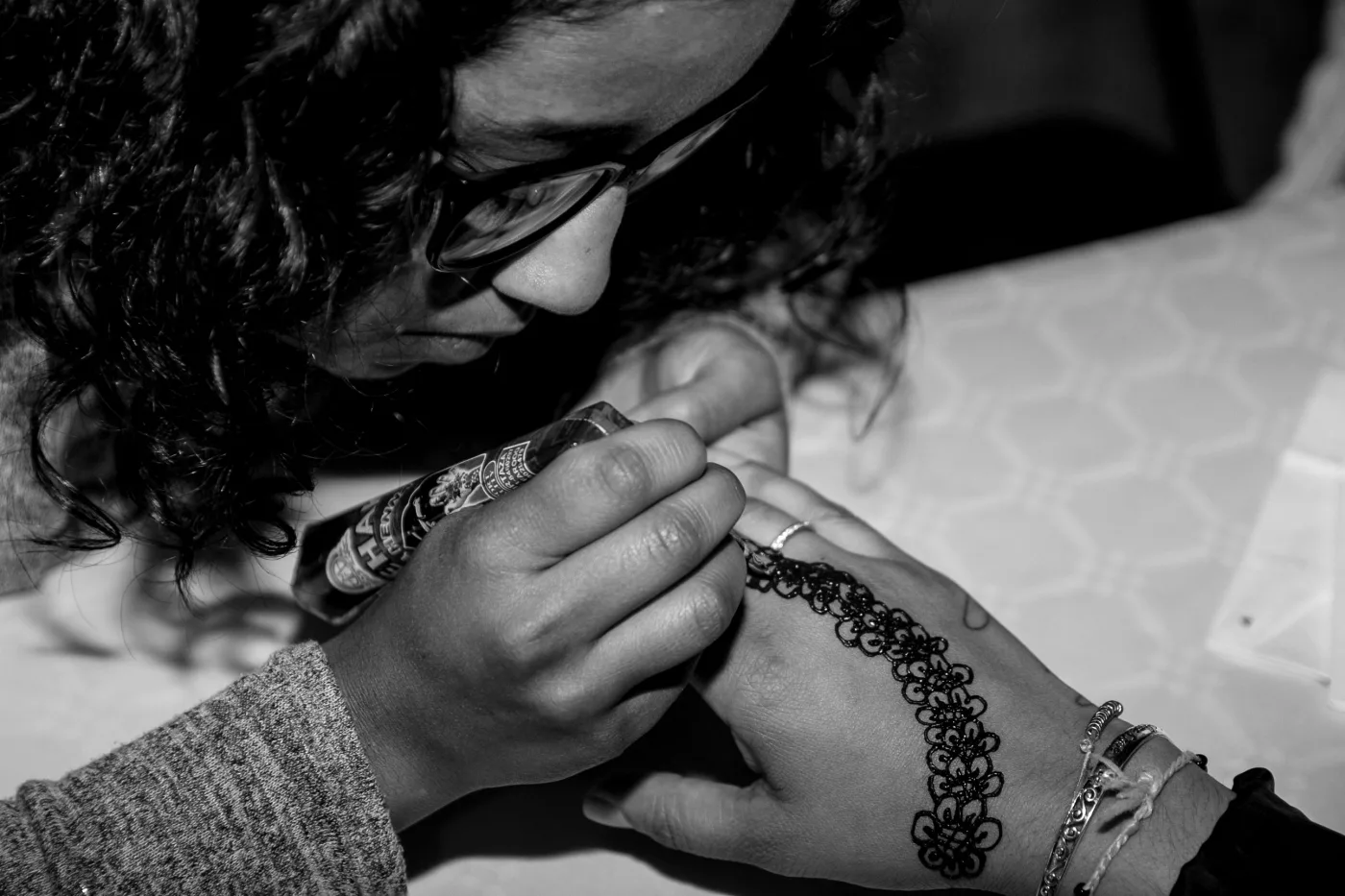
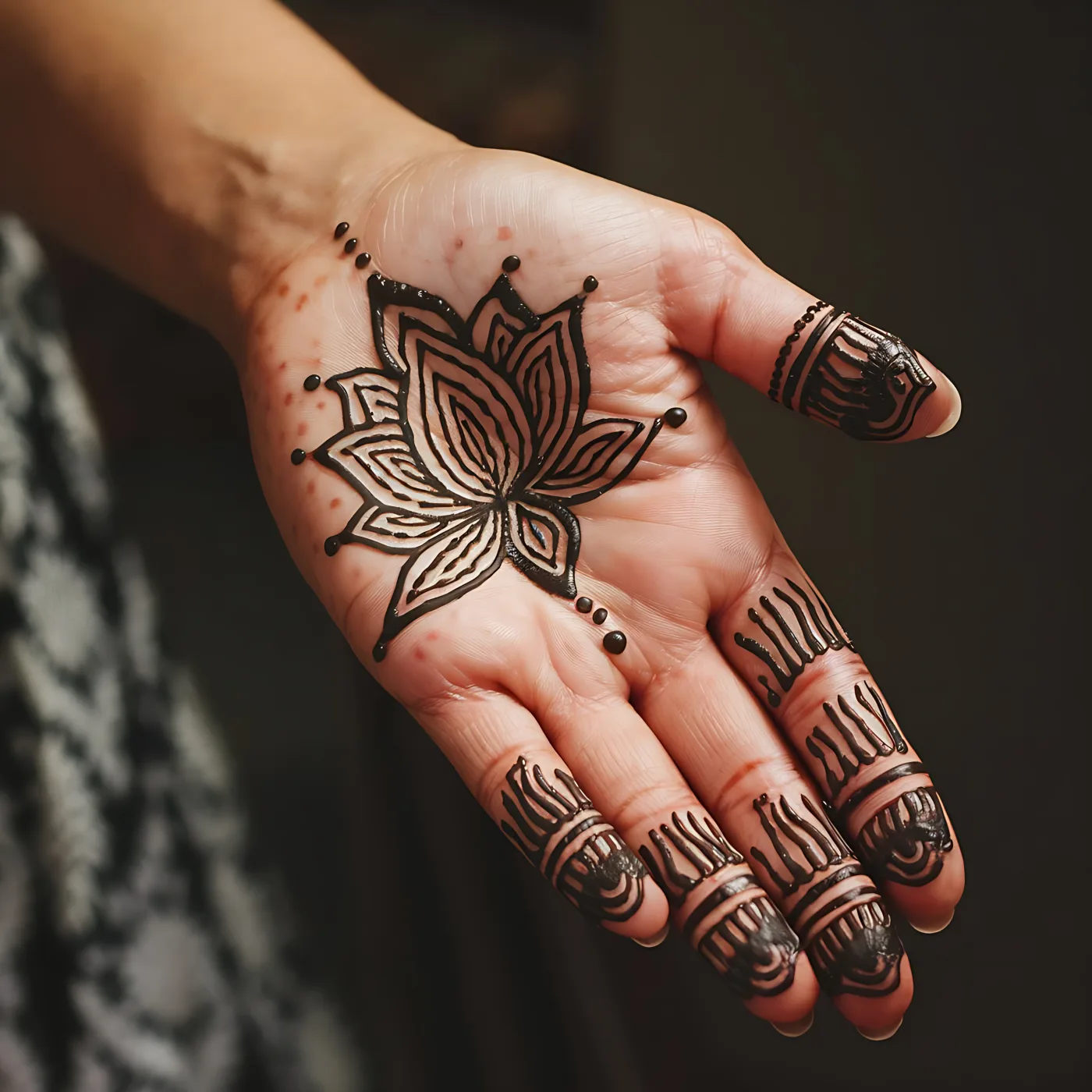
Photos provided by Pexels.
Frequently asked questions
How long does henna last on skin?
Natural henna lasts about one to three weeks. The colour peaks between days two and five, holds for a few days, then fades gradually as the stained surface skin cells shed. The exact lifespan depends mostly on where it is placed and how you cared for it in the first day.
Where does henna last the longest?
On the palms and soles of the feet, where skin is thickest and richest in keratin. Fingers and toes come next. Thin-skinned areas like the tops of the hands, arms and face fade fastest, sometimes in under a week. This is why bridal mehndi focuses on palms and fingertips.
When does henna reach its darkest colour?
Not on day one. Henna is bright orange when you first remove the paste and darkens on its own over the next two to three days as it oxidises into a deep reddish brown. Peak colour usually lands around days two to five, then holds before it begins to fade.
Does washing remove henna faster?
Yes, especially early on. Henna does not wash out like ink, but water softens and lifts the surface skin cells that carry the stain, so frequent washing speeds up the fade. Keeping water off for the first 12 to 24 hours, then moisturising rather than scrubbing, helps it last longer.
Is a henna tattoo permanent?
No. Henna stains only the outermost layer of dead skin cells, which your body sheds naturally within one to three weeks. It never reaches the living tissue where permanent tattoo ink sits, so it always fades on its own with no removal needed.
Can I make my henna last more than three weeks?
Rarely much beyond that on most skin, because the surface layer simply sheds on its own schedule. On palms and soles a strong stain can push past three weeks, but for hands and arms, two to three weeks is the realistic ceiling. Good aftercare protects the upper end of the range rather than breaking past it.
Have a question or a topic to suggest?
We read every message. Tell us what you would like to see next on the blog.
Get in touchYou may also like
How to Remove Mehndi Fast
The honest, safe way to remove mehndi: the stain sheds with your dead skin, so speed it up with warm soaks, oils and gentle exfoliation, never bleach.
How to Make Mehndi Darker: 12 Tricks
Want a deeper henna stain? Here are 12 evidence-based ways to darken mehndi, from fresh paste and terpene oils to 8-hour timing and warm aftercare.
The Chemistry of a Henna Stain
Henna stain science explained clearly: how lawsone bonds to keratin, why the stain starts orange then turns brown, and why palms stain the darkest.