Safe removal
How to Remove Mehndi Fast
You cannot wash a mehndi stain off, because it lives in dead skin cells. Here is how to fade it fast and safely, ranked by gentleness, plus what to never try.
Here is the honest answer before anything else: you cannot truly wash a mehndi stain off, because it is not sitting on top of your skin. The colour is a dye bonded inside the dead surface cells, so it only leaves as those cells naturally shed. That takes days, not minutes. What you can do is speed the fading safely, using warm soaks, cleansing oils, gentle exfoliation and mild salt scrubs to shed the stained layer a little faster. What you must not do is reach for bleach or a hard scrubbing brush, because those damage living skin without removing the stain any quicker. This guide ranks every method by how gentle and how effective it really is, and sets expectations you can actually meet.
The short version
- The stain is inside dead skin cells. It goes as those cells shed, which is why there is no instant fix.
- Think days, not minutes. Gentle methods lift a fresh stain over three to seven days, not in one wash.
- Warmth, oil and mild exfoliation work. They loosen and shed the stained surface layer faster.
- Bleach and hard scrubbing do not. They irritate living skin and can leave you worse off than the stain.
- Palms and soles hold longest, because their dead skin layer is thickest and stains deepest.
Why mehndi cannot simply be washed off
To remove a stain sensibly you have to know where it lives. A mehndi stain is not a layer of colour resting on your skin like paint or marker ink. The dye molecule in henna, lawsone, forms a genuine chemical bond with keratin, the tough fibrous protein packed into the dead cells at the very surface of your skin. Because the colour is locked inside those cells rather than sitting on them, there is nothing to wipe away. Soap and water run straight over it. We cover the full chemistry in our explainer on henna stain science, but the one fact that matters here is simple: the stain is embedded, not superficial.
That single fact decides your whole strategy. You are not trying to dissolve or lift a coating. You are trying to shed the stained cells themselves and let fresh, unstained skin come up from below. Everything that genuinely works does exactly that, and everything that fails is fighting the wrong battle.
How your skin removes the stain on its own
Your skin is already removing the mehndi for you, whether you help it or not. The outer layer of skin, the stratum corneum, constantly renews itself. Old dead cells at the surface flake away in a quiet, continuous process called desquamation, while new cells push up from beneath to replace them. A henna stain is a passenger on the cells at the top of that queue. As they shed, the colour leaves with them.
This is why a mehndi stain fades from the edges and the most-washed areas first, and why it lingers on palms and soles where the dead layer is thickest. It is also why no method can be truly instant. You are working with a biological timeline. The most you can do is nudge the shedding along, and the honest ceiling on that is measured in days. A fresh, deep stain that would naturally last two to three weeks can often be pushed down to under a week with consistent gentle care, but you will not make it vanish overnight without hurting your skin.
Removing mehndi means shedding the stained surface cells, not scrubbing the colour out. Gentle methods speed that shedding; harsh ones only injure the living skin beneath.
The methods that actually work, ranked by gentleness
Every effective method does one of two things: it softens and loosens the dead surface cells so they shed sooner, or it lightly abrades that top layer away. Start with the gentlest and only step up if you need to. Combining a warm soak with a little oil and mild exfoliation, repeated daily, does more than any single aggressive attempt.
Warm water soak
The kindest step. A ten to fifteen minute soak in warm, soapy water softens the dead layer so it sheds faster. Repeat a few times a day.
Cleansing oil
Olive, coconut or any cleansing oil massaged in loosens surface cells and lifts a little colour with each pass. Gentle enough for daily use.
Salt or sugar scrub
A mild scrub, ideally oil-bound, is light mechanical exfoliation. Circular motions, no pressure. Once a day at most on the same spot.
Exfoliating glove or loofah
A soft exfoliating mitt in the shower sheds the top layer steadily. Effective on hands and feet, but stop if the skin turns pink.
Baking soda and lemon paste
A mild acid plus mild abrasive. It can help, but it is the harshest gentle option. Patch test, use sparingly, and rinse well.
Swimming and daily washing
Chlorinated water and frequent hand washing quietly speed fading. Not a plan on their own, but they add up over a few days.
None of these is dramatic on its own, and that is the point. Removing a stain safely is the sum of small, repeated, gentle actions. The relevant idea from skincare is exfoliation: mechanical scrubs and mild chemical acids both work by loosening the bond between dead cells so they shed sooner. Dermatologists are also clear that exfoliation is never medically necessary and that overdoing it damages the skin barrier, which is exactly why the gentle end of the scale is where you should live.
Method comparison: speed against skin-kindness
The best method is the one that fades your stain acceptably fast while treating your skin well. Fast and harsh is a bad trade, because irritated skin looks worse than a fading design and takes longer to recover. Use this table to pick, then combine two or three of the kind options rather than escalating to the rough ones.
| Method | Fade speed | Skin-kindness | Best for |
|---|---|---|---|
| Warm soapy soak | Slow and steady | Very kind | Everyone, every day, any body area |
| Cleansing oil massage | Slow and steady | Very kind | Dry or sensitive skin, faces |
| Oil-bound salt or sugar scrub | Moderate | Kind if gentle | Hands and feet, once daily |
| Exfoliating glove or loofah | Moderate | Kind if gentle | Palms, soles, thicker skin |
| Baking soda and lemon | Moderate to fast | Use with care | Small stubborn patches, patch tested |
| Hard brush or pumice scrubbing | Feels fast | Harsh, avoid | Nothing, it injures more than it removes |
| Bleach or hydrogen peroxide | Unreliable | Harsh, avoid | Nothing, real irritation risk |
How fast a fresh stain fades with daily gentle care
Rough guide for a deep hand stain given warm soaks, oil and mild exfoliation each day. Palms and soles sit at the slow end of every band.
What not to do, ever: do not reach for household henna removal shortcuts that rely on bleach, hydrogen peroxide, nail polish remover or hard mechanical force. Bleach and peroxide do not selectively lift the stain; they attack living skin and can leave chemical burns, dryness and lasting sensitivity while the stain, locked in dead cells, barely budges. Scrubbing with a stiff brush or pumice until the skin reddens does the same damage mechanically. If skin turns pink, stings or feels raw, you have gone too far. Stop, moisturise, and let time do the rest. A fading design never justifies an injury.
Why some stains fight you harder than others
Two people can follow the same routine and see very different results, and it is not about effort. It comes down to how deep the stain went and where it sits. A rich, dark stain has simply formed more dye bonds in more layers of dead cells, so there is more colour to shed before it clears. The body area matters just as much. Palms and the soles of the feet carry the thickest layer of keratin-packed dead skin on the body, which is why they stain darkest and hold colour longest.
The flip side is worth knowing before you booked the appointment. If you want a design that leaves quickly, the same factors work in reverse: a lighter stain on thinner skin, such as the forearm, fades on its own within days. For a fuller picture of how long different placements and stain depths naturally last, our guide to how long a henna tattoo lasts breaks it down by body area and lifestyle. And if your goal is the opposite, a deeper, longer lasting colour rather than a quick exit, that is really the same chemistry run the other way, which we cover in how to darken mehndi safely.
A safe seven day fade routine
If you have an event, a job requirement or a change of heart and you want the stain gone as fast as is sensible, here is a routine that stacks the gentle methods without crossing into skin damage. Consistency beats intensity every time.
| When | Do this | Why it helps |
|---|---|---|
| Morning | Warm soapy soak, then oil massage | Softens the dead layer and loosens surface cells for the day |
| Midday | Wash hands often, swim if you can | Frequent water contact quietly speeds shedding |
| Evening | Mild oil-bound scrub or exfoliating glove | Light mechanical exfoliation of the softened top layer |
| Before bed | Moisturise well | Keeps skin healthy so it can shed and renew without cracking |
| Any day skin turns pink | Stop exfoliating, soak and moisturise only | Recovery first; irritated skin fades nothing faster |
Follow that for a few days and a fresh stain will lighten steadily. It will not disappear on day one, and anyone promising that is selling you either a myth or a chemical burn. Manage the timeline, protect the skin, and let your body finish the job it already started.
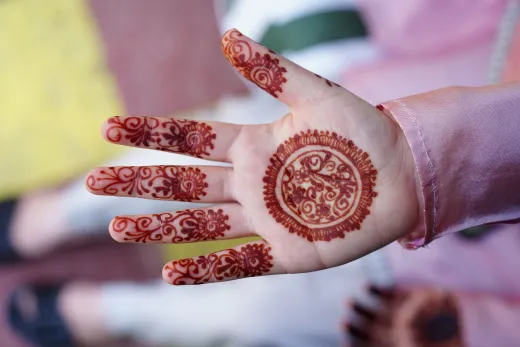
Henna on skin in pictures
A few real examples worth saving. Screenshots communicate far better than words, so take the ones you like to your artist.
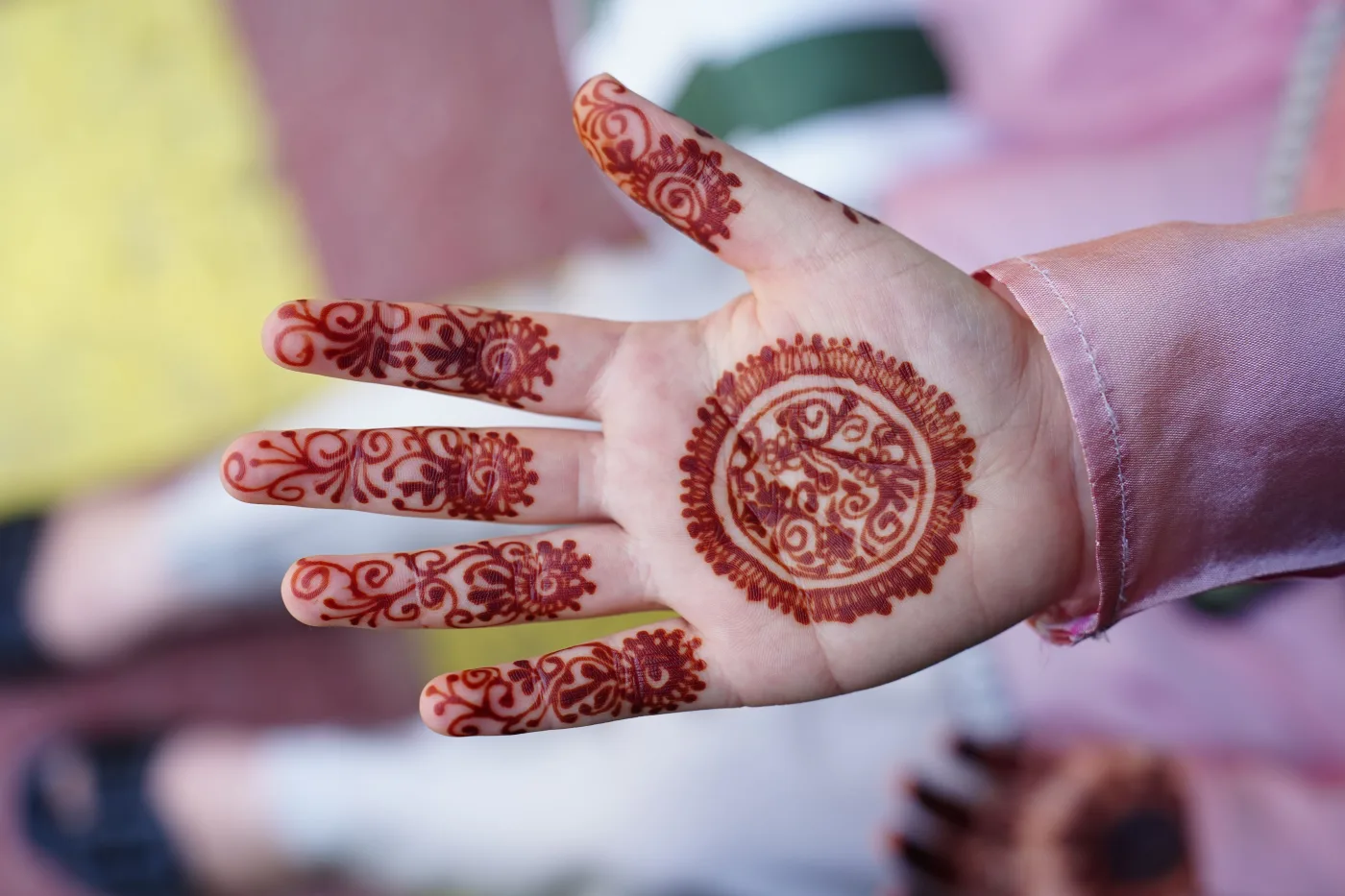

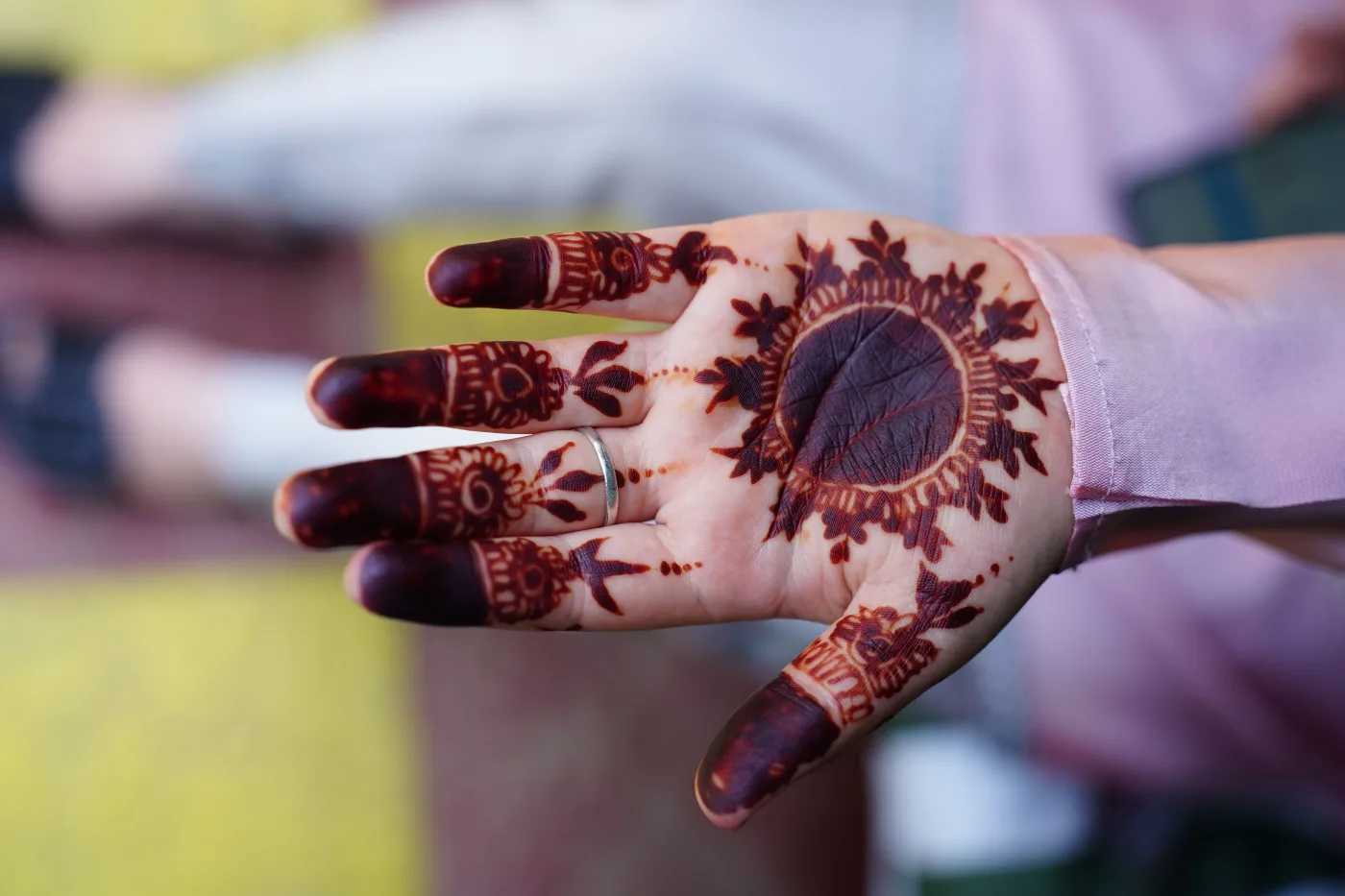
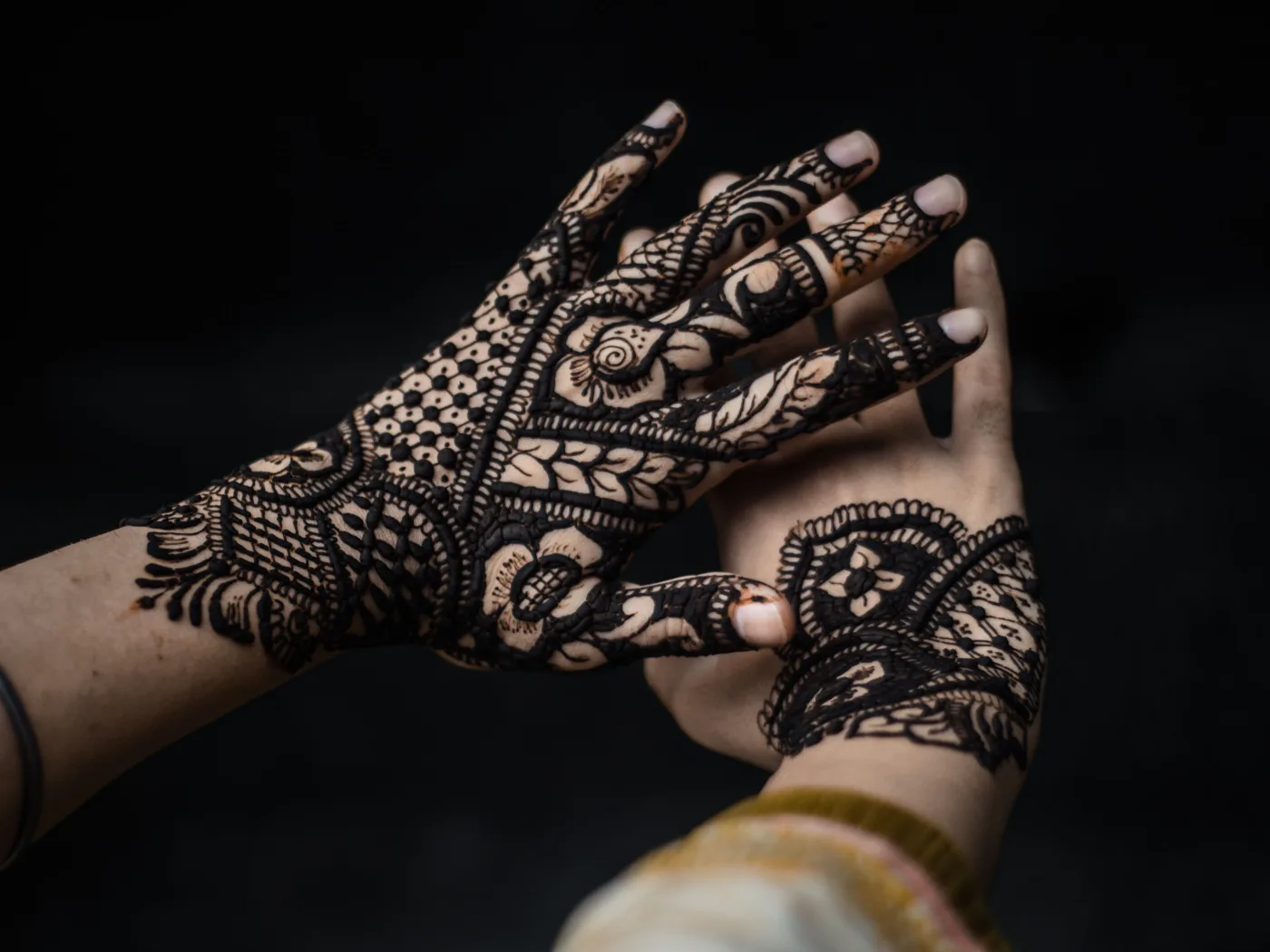
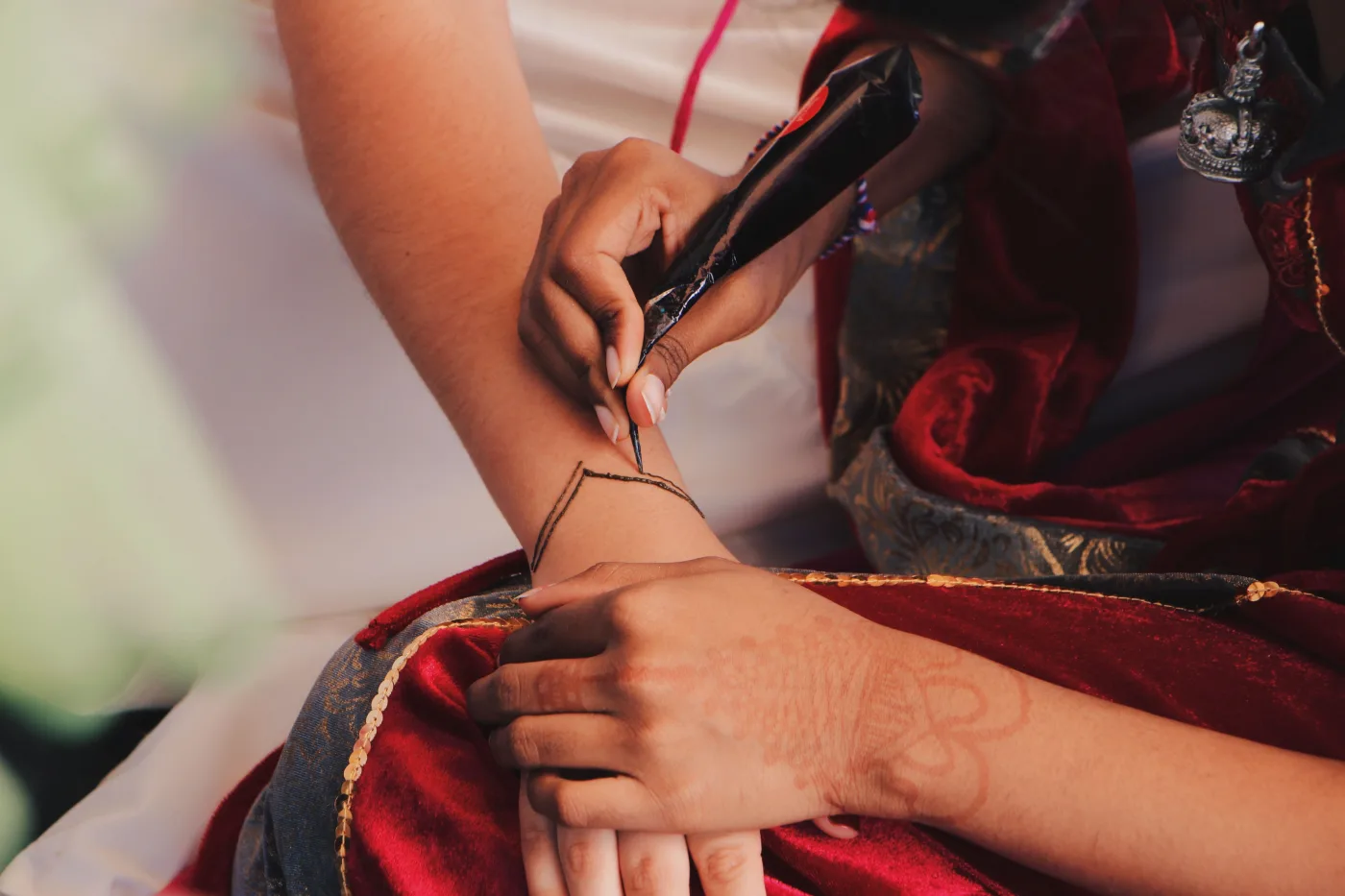
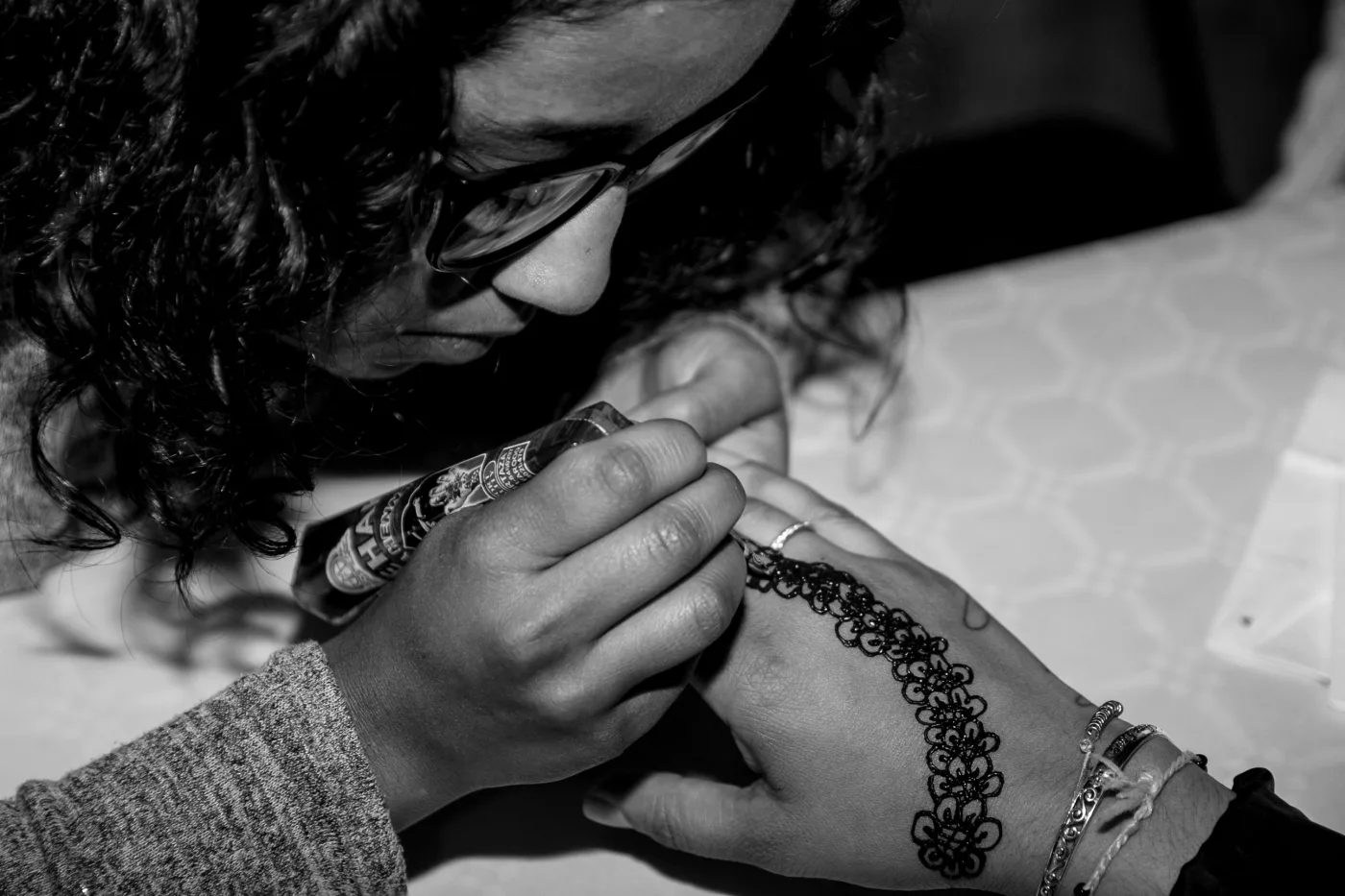
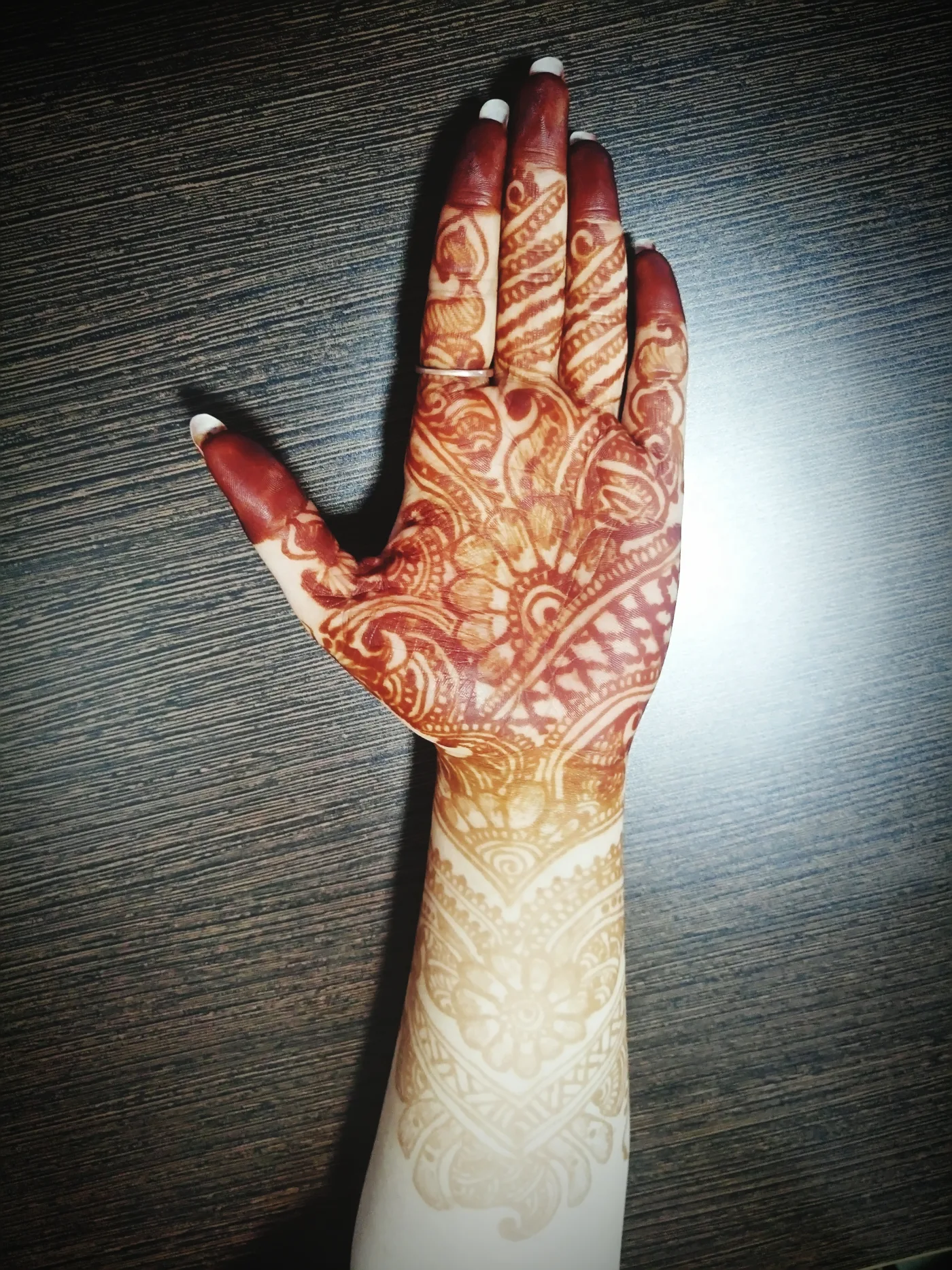
Photos provided by Pexels.
Frequently asked questions
How do I remove mehndi fast without damaging my skin?
Combine gentle methods and repeat them daily rather than reaching for anything harsh. Soak the area in warm soapy water for ten to fifteen minutes, massage in a cleansing oil such as olive or coconut, then use a mild oil-bound salt or sugar scrub or a soft exfoliating glove. This speeds the natural shedding of the stained surface cells. Expect a fresh stain to fade noticeably over three to seven days, not in a single wash.
Why will not mehndi just wash off with soap and water?
Because the colour is not sitting on your skin. The henna dye bonds chemically to keratin inside the dead cells of your outer skin layer, so there is nothing on the surface to rinse away. Soap and water run right over it. The stain only leaves as those dead cells naturally shed, which is why removal takes days of gentle exfoliation rather than one good scrub.
Can I use bleach or nail polish remover to get rid of mehndi?
No. Bleach, hydrogen peroxide and acetone based removers do not selectively lift the stain, which is locked inside dead cells. Instead they attack living skin and can cause burns, severe dryness and lasting sensitivity, while the colour barely fades. Hard scrubbing with a stiff brush or pumice does the same damage mechanically. If your skin turns pink or stings, stop immediately and moisturise.
Why does mehndi on my palms take so long to fade?
Palms and the soles of the feet have the thickest layer of dead, keratin-rich skin on the body. That is why they stain the darkest and why the colour is buried in many more cell layers, so it takes longer to shed away. The same gentle routine works there, it simply needs more days. Thin skin, such as on the forearm, fades far faster on its own.
How long does mehndi take to fade completely on its own?
Left alone, a natural mehndi stain usually lasts one to three weeks, fading as your outer skin layer naturally renews itself. Deeper stains and areas like palms and soles sit at the longer end. With a consistent gentle fade routine of warm soaks, oils and mild exfoliation, you can often bring a fresh stain down to under a week, but there is no safe way to make it disappear overnight.
Is there any way to remove mehndi instantly?
No, and any product or trick promising an instant result is either ineffective or harmful. Because the stain lives inside dead skin cells, it can only leave as those cells shed, which is a process measured in days. The fastest safe approach is to stack gentle exfoliation methods daily. Anything that claims to strip it in minutes is working on your living skin, not the stain.
Have a question or a topic to suggest?
We read every message. Tell us what you would like to see next on the blog.
Get in touchYou may also like
How Long Does a Henna Tattoo Last?
Henna lasts about 1 to 3 weeks, peaking on days 2 to 5. See a day-by-day fade timeline, how body location changes longevity, and how to make it last.
How to Make Mehndi Darker: 12 Tricks
Want a deeper henna stain? Here are 12 evidence-based ways to darken mehndi, from fresh paste and terpene oils to 8-hour timing and warm aftercare.
The Chemistry of a Henna Stain
Henna stain science explained clearly: how lawsone bonds to keratin, why the stain starts orange then turns brown, and why palms stain the darkest.