Terminology
Henna vs Mehndi: What's the Difference?
The two words name the same plant and the same dye. The difference is language and geography, not the substance. Here is the etymology and where the mix-up begins.
Here is the short answer, because it is genuinely simple: henna and mehndi are the same thing. Henna is the plant and the reddish-brown dye made from its leaves. Mehndi is the art of applying that dye to skin, and it is also the everyday word for henna across South Asia. So there is no difference in the substance on your hands. The difference is in the words, where they come from, and which parts of the world use which one. This guide walks through the etymology, the regional terminology, and exactly where the confusion tends to creep in.
The short version
- Same substance, different words. Henna the plant, mehndi the practice and the South Asian name for it.
- Two language roots: "henna" from Arabic hinna, "mehndi" from Sanskrit mendhika.
- Geography decides the word. Middle East and the West say henna; South Asia says mehndi.
- "Henna" carries more jobs, including hair dye, which is where most of the mix-up starts.
The short answer, stated plainly
If you take one thing from this page, take this: there is no chemical, botanical or practical difference between henna and mehndi. Both refer to the same plant, Lawsonia inermis, whose dried and ground leaves make a paste that stains skin, hair and nails a reddish brown. When someone in Cairo or London calls it henna and someone in Lahore or Delhi calls it mehndi, they are pointing at the identical jar of paste.
The reason the two words feel like they should mean different things is that they travelled through different languages and settled into slightly different jobs. "Henna" tends to name the raw material: the plant, the powder, the dye, and by extension hair colour. "Mehndi" tends to name the event and the art: the intricate patterns, the paste as it is used on the body, and the pre-wedding celebration built around it. Same paste, different emphasis.
Henna
The plant and its dye. Also used in the West for the hair colour and the reddish shade itself.
Mehndi
The South Asian word for henna, and the name for the body art and the pre-wedding ceremony.
Hinna
The Arabic root of "henna", written حِنَّاء. It named the dye long before English borrowed it.
Mendhika
The Sanskrit source of "mehndi", the classical name for the henna plant in the subcontinent.
Where the two words come from
Both words are old, and they were born in different language families, which is the whole reason we ended up with two names for one plant. "Henna" comes from the Arabic hinna (حِنَّاء), which named the dye across the Arabic-speaking world. English borrowed it more or less directly, and from English it spread into most European languages. That is why "henna" is the word you meet on a box of hair dye or in a Western beauty aisle: it arrived through the Middle East and the Mediterranean, not through India.
"Mehndi" took a different road. It derives from the Sanskrit mendhika, the classical term for the henna plant itself, and it passed down into the modern languages of the subcontinent. In Hindi, Urdu, Punjabi, Gujarati and Bengali the word names both the paste and the practice of decorating the body with it. So the split is not really about the plant at all. It is about which trade route, which empire and which language carried the word to a given place.
Two roots, one plant, two modern words. The paste never changed; only the language carrying its name did.
One plant, many names
Because henna grows across a wide band of hot country from North Africa through the Middle East to South Asia, nearly every language in that band has its own word for it. Lined up together, the variety makes the point better than any argument: these are all the same leaf.
| Language or region | Common word | What it usually names |
|---|---|---|
| Arabic (Middle East, North Africa) | hinna (حِنَّاء) | The plant, the dye and the body art |
| English (West) | henna | The plant, dye, hair colour and the shade |
| Hindi and Urdu (South Asia) | mehndi / mehendi | The paste and the body art |
| Sanskrit (classical) | mendhika | The henna plant |
| Punjabi | mehndi | The paste and the wedding ritual |
| Bengali | mehedi | The paste and body art |
| Persian | hana | The plant and dye |
| Turkish | kina | The dye and the henna night |
| Botanical (Latin) | Lawsonia inermis | The species itself, worldwide |
Notice that the two big families in that table, the hinna group and the mehndi group, do not disagree about anything real. They are simply two names that grew up in two neighbourhoods for the same plant. The formal botanical name, Lawsonia inermis, is the one label everyone can agree on, and it belongs to no everyday language at all.
How usage actually differs
So if the substance is identical, what is the practical difference between the two words? It comes down to habit and context. Each word has picked up a slightly different set of everyday jobs, and knowing those jobs is enough to sound like you know what you are talking about.
"Henna" is the broader, more industrial word. It covers the plant, the powder you buy, the dye, the reddish colour it makes, and crucially the hair product. When a Western brand sells a natural hair colourant, it says henna, never mehndi. It is also the default word for the body art in the Middle East, North Africa and among people who came to the tradition through those regions rather than through the subcontinent.
"Mehndi" is the narrower, more cultural word. In South Asia it can mean the paste in a general sense, but its centre of gravity is the art and the occasion: the intricate bridal patterns, the cones, the guests decorating their hands, and above all the mehndi ceremony held before a wedding. Nobody in Delhi asks for mehndi to dye their hair. They ask for mehndi for their hands, or they attend a mehndi.
One word, many jobs
The everyday senses each term routinely carries in English. The extra breadth of "henna" is exactly why the two get muddled.
The wedding word
One job belongs almost entirely to "mehndi", and it is worth calling out because it is where the word does something "henna" simply cannot. In South Asian weddings, the Mehndi is an event: a night, usually before the wedding, when the bride's hands and feet are decorated in dense patterns while family and friends gather, sing, eat and often get small designs of their own. The word names the celebration as much as the paste.
That is why you will hear "we are going to the mehndi" as easily as "she is getting her mehndi done". The ceremony carries centuries of ritual meaning, and the henna-and-weddings connection is genuinely ancient rather than a modern invention. If you want the long history behind that link, our piece on the history of mehndi and how it spread traces the plant from the ancient Mediterranean into the South Asian courts. And if you are curious about what the word signifies beyond the paste, our guide to the meaning of mehndi goes deeper into the symbolism.
A useful rule of thumb: if the context is a plant, a powder, a box of hair dye or the Middle East, the word will almost always be "henna". If the context is bridal patterns, cones, cultural celebration or the subcontinent, the word will almost always be "mehndi". Both are correct. Neither is more authentic than the other; they just belong to different rooms in the same house.
So where does the confusion come from?
Given how simple the answer is, why do so many people ask whether henna and mehndi are different? Three things feed the confusion, and all of them are about words rather than substance.
First, the hair-dye overlap. Because "henna" also names a hair product sold everywhere, many Western readers first meet the word attached to a bottle of colour, then later see "mehndi" attached to hand art, and reasonably assume they must be two different things. They are not; the hair dye and the hand paste come from the same leaf.
Second, the style overlap. People sometimes use "henna" to mean the free-flowing Middle Eastern and African look and "mehndi" to mean the dense South Asian bridal look, as if the words named styles. They do not. The styles are real and worth learning, but they are regional grammars of one art, not two substances. Our walk-through of simple Arabic mehndi designs shows how much the same paste can vary just by how it is laid down.
Third, the marketing overlap. Salons and brands lean on whichever word sells better to their audience, so the same service gets labelled "henna tattoo" in one place and "bridal mehndi" in another. That is a business decision, not a factual one, but it quietly trains people to expect a difference that is not there.
Does the difference ever matter in practice?
For the substance on your skin, no. What matters for a good stain is the quality of the paste and the time you give it, not which of the two words the artist happens to use. The colour comes from a single dye molecule, lawsone, binding to the keratin in the top layer of your skin, and that reaction needs hours of contact whatever you call the paste. If you want the chemistry in plain terms, our explainer on how henna actually stains your skin covers why time beats pressure every time.
Where the words do matter is safety, and here the label to watch is not "henna" or "mehndi" but "black". Natural henna, called by either name, stains orange first and matures to deep reddish brown over a day or two. It never stains black on contact. Anything sold as "black henna" that turns dark within minutes has had something added to it, and the usual additive can cause severe skin reactions. So the useful distinction is not henna versus mehndi; it is real plant paste versus adulterated paste.
In everyday conversation, then, use whichever word your audience uses. Ask for mehndi at a South Asian wedding and henna at a North African festival, and you will be understood perfectly in both places, pointing at exactly the same jar.
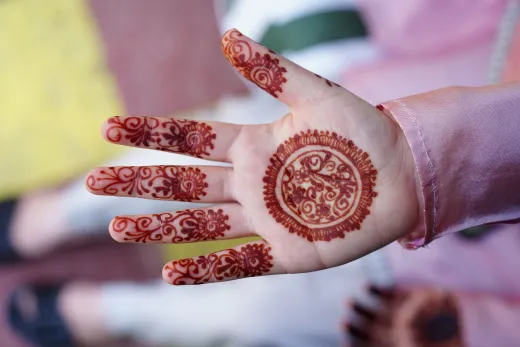
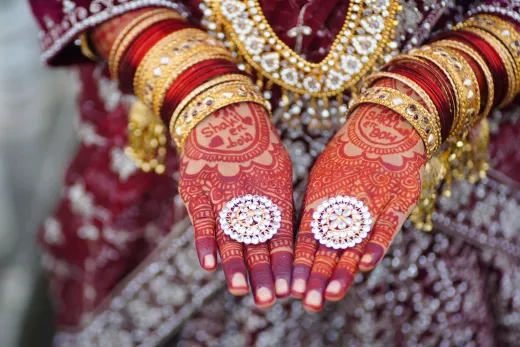
Henna and mehndi in pictures
A few real examples worth saving. Screenshots communicate far better than words, so take the ones you like to your artist.
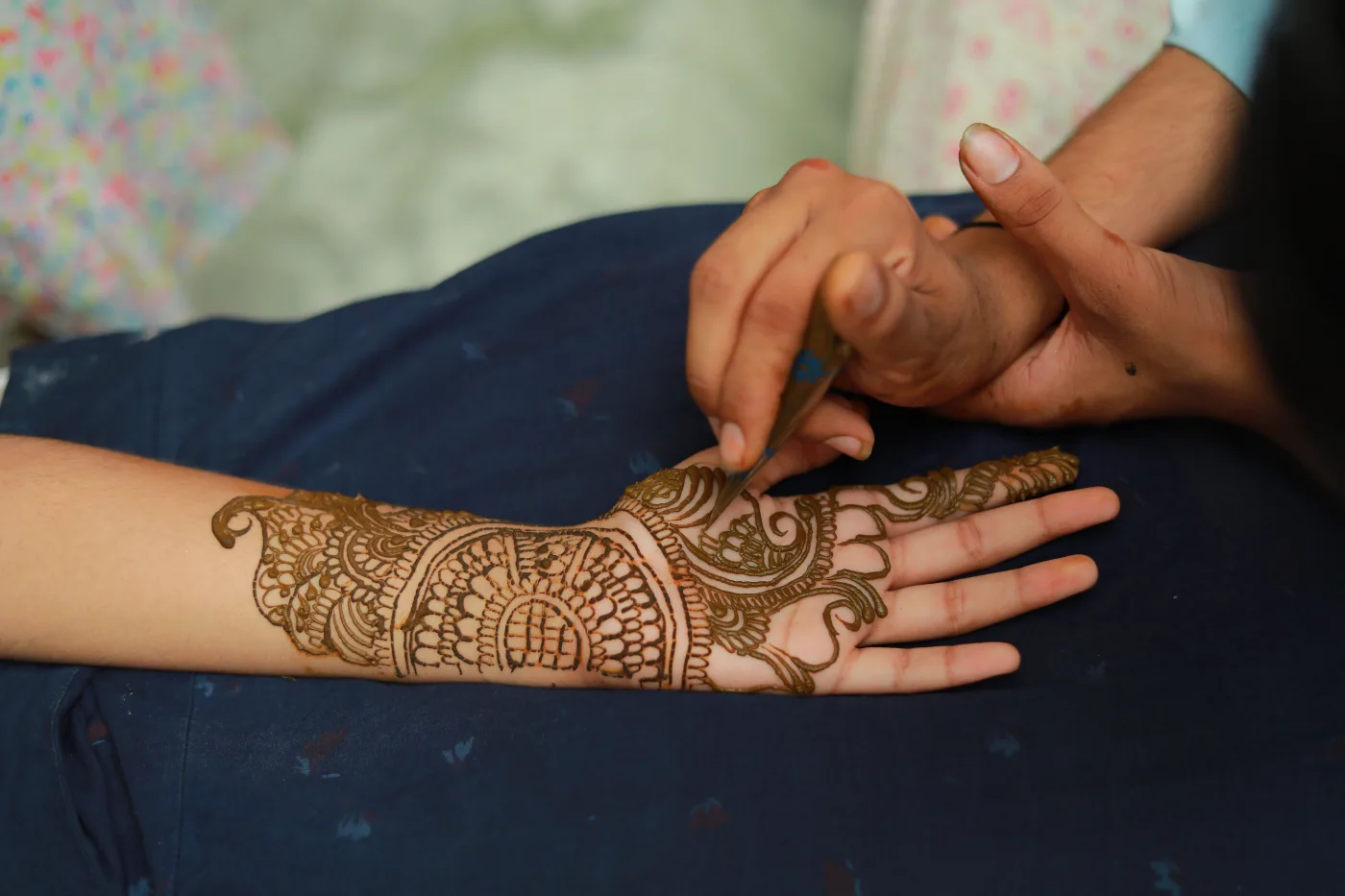
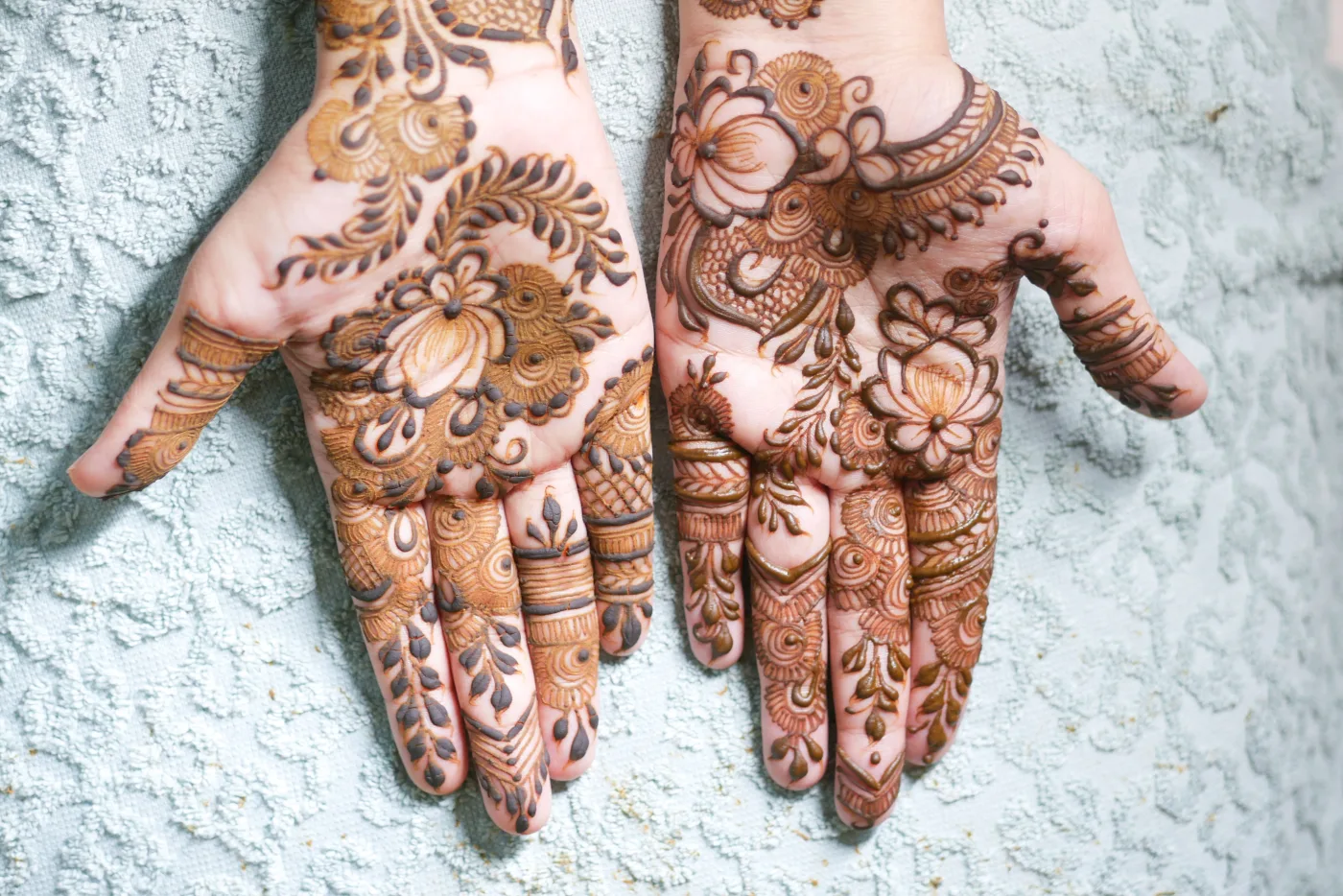
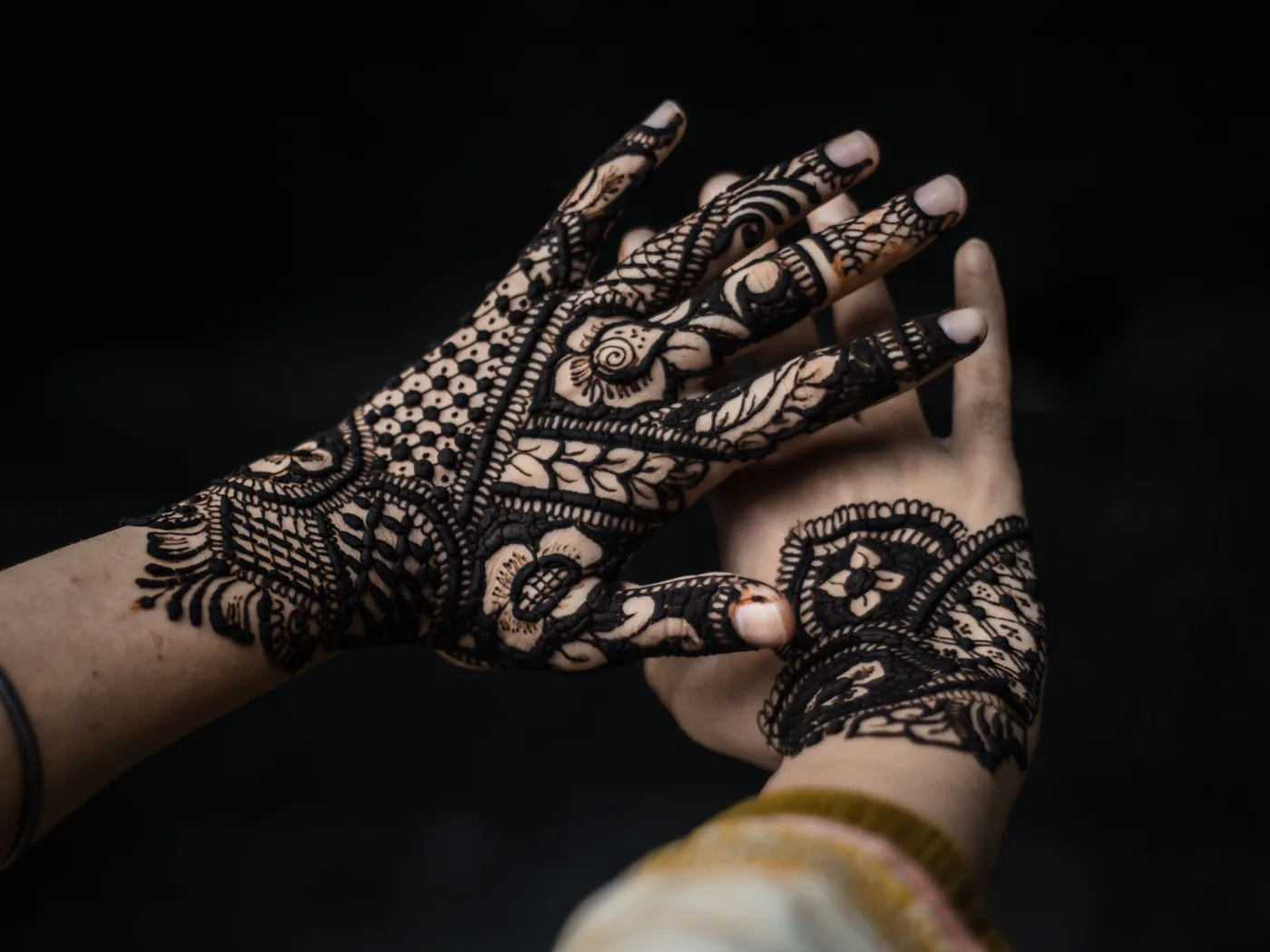
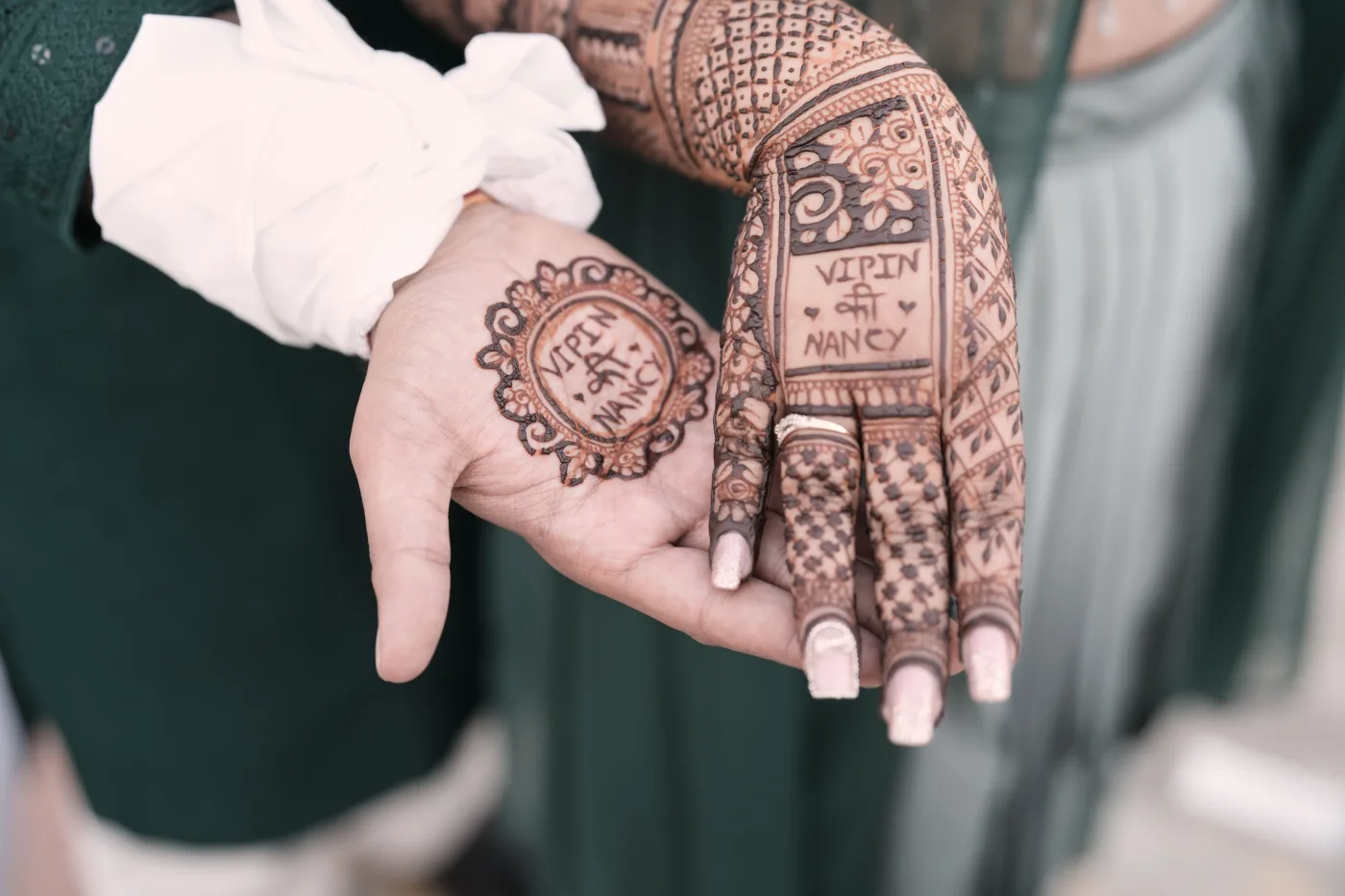
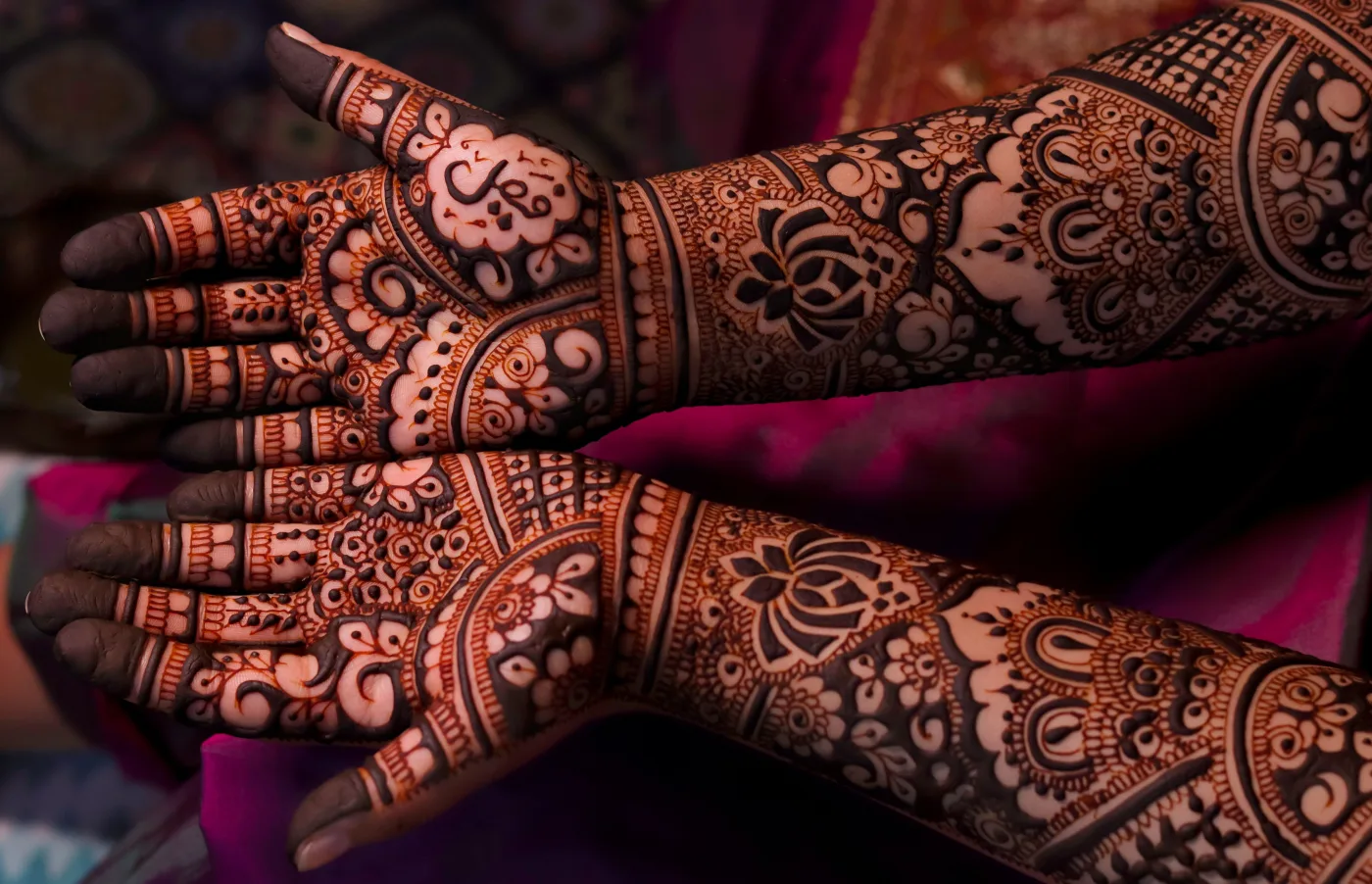
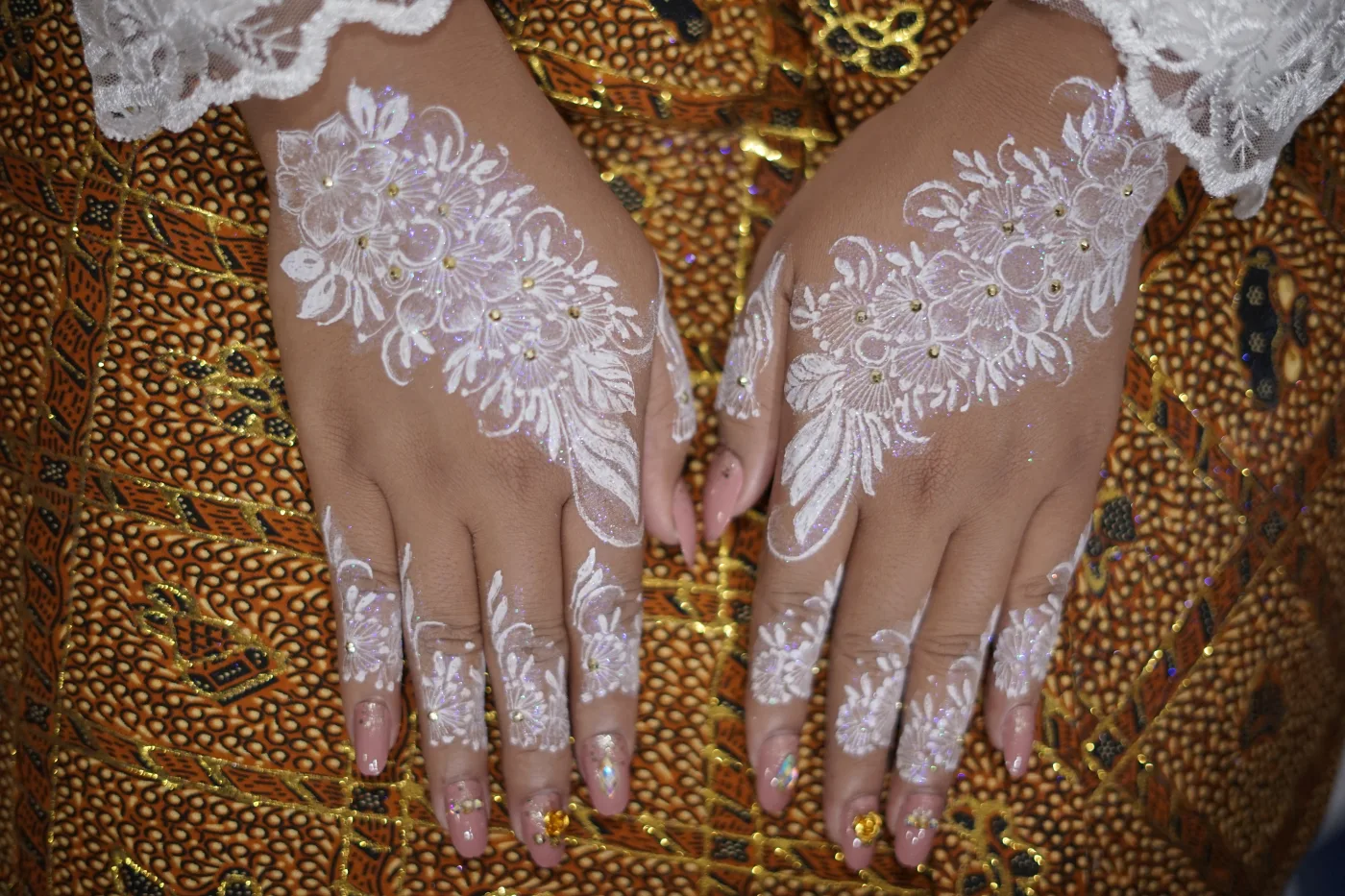
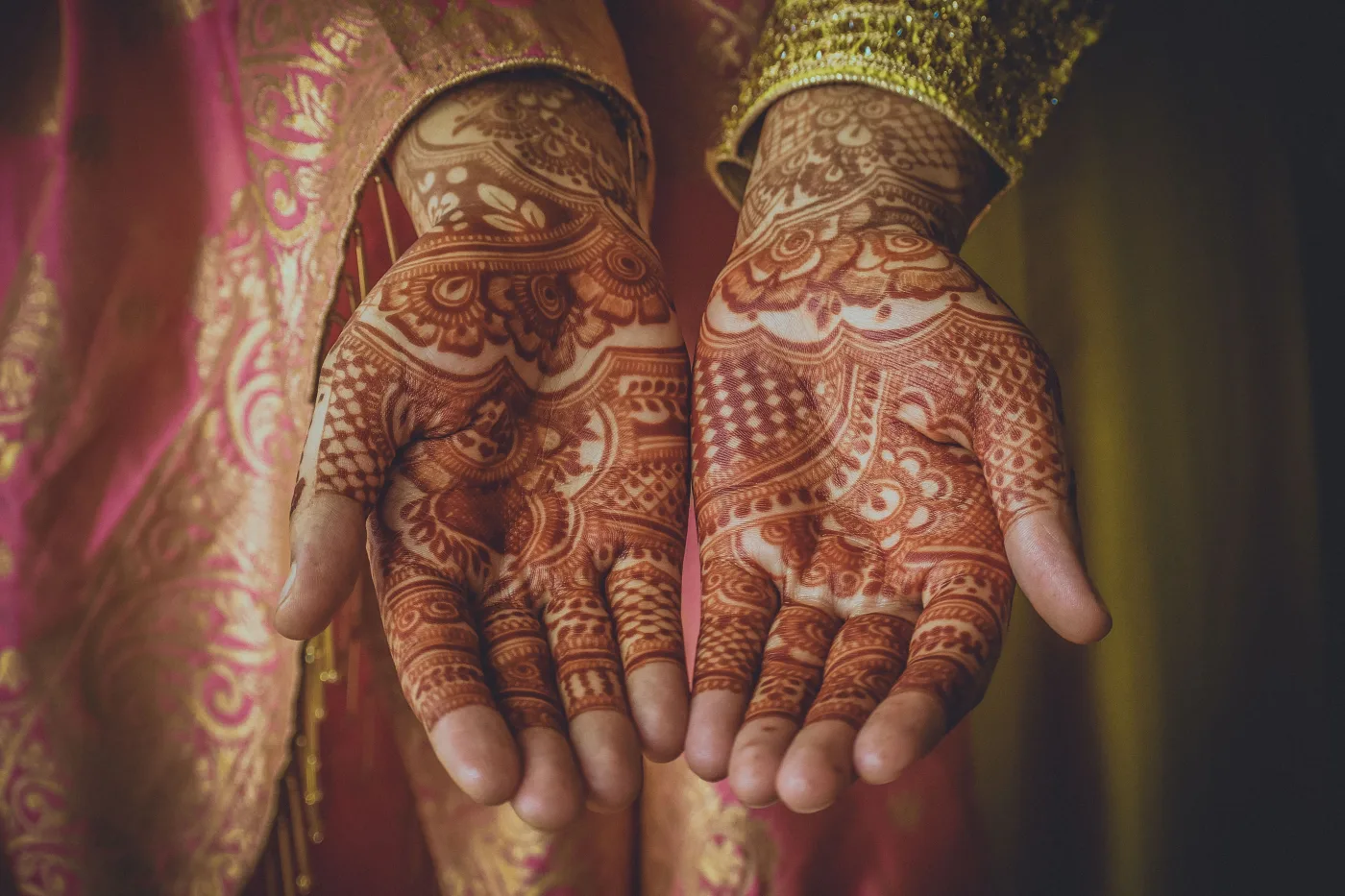
Photos provided by Pexels.
Frequently asked questions
Is henna the same as mehndi?
Yes. They refer to the same plant and the same reddish-brown dye made from its leaves. "Henna" is the word used in the Middle East and the West, while "mehndi" is the word used across South Asia for the same paste and for the body art made with it. The substance is identical; only the name changes with the region.
What does the word henna mean and where does it come from?
"Henna" comes from the Arabic word hinna (حِنَّاء), which named the dye long before English borrowed it. In English it refers to the henna plant, the powder and paste made from its leaves, the reddish colour it produces, and the natural hair dye sold under the same name.
What does mehndi mean?
"Mehndi" derives from the Sanskrit mendhika, the classical name for the henna plant. In modern South Asian languages such as Hindi, Urdu and Punjabi it means both the henna paste and the practice of decorating the hands and feet with it. It is also the name of the pre-wedding celebration built around applying it to the bride.
Why do some people say henna and others say mehndi?
Because the two words reached different places through different languages. "Henna" spread from Arabic through the Mediterranean into English and Europe, so it dominates in the West, the Middle East and North Africa. "Mehndi" descended from Sanskrit into the languages of the Indian subcontinent, so it dominates in South Asia. Both name the same plant.
Is the henna used for hair the same as mehndi for hands?
It is the same plant and the same dye. The difference is only in how the paste is prepared and used: for hair it is mixed to coat strands evenly, and for body art it is put into a fine cone to draw detailed patterns. Both rely on the same lawsone dye staining keratin, which is why hair henna and hand mehndi come from the identical leaf.
Is black henna real henna?
No. Natural henna, whether you call it henna or mehndi, stains orange and matures to reddish brown over a day or two and never turns black on contact. Any paste that stains black within minutes has had a dye added to it, and the common additive can cause severe skin reactions. If it promises instant black, treat it as a warning sign rather than stronger henna.
Have a question or a topic to suggest?
We read every message. Tell us what you would like to see next on the blog.
Get in touchYou may also like
The History of Mehndi: 5,000 Years in 10 Minutes
The history of mehndi: what the archaeology actually shows, why it links to weddings, how lawsone stains skin, and how the regional styles separated.
The Chemistry of a Henna Stain
Henna stain science explained clearly: how lawsone bonds to keratin, why the stain starts orange then turns brown, and why palms stain the darkest.
What Does Mehndi Symbolize?
What does mehndi symbolize? A cultural guide to the meaning of henna: love, luck, blessing, marriage, the darker-the-stain folklore, and motif meanings.