Culture and symbolism
What Does Mehndi Symbolize?
The reddish stain means far more than decoration. What mehndi symbolizes, where those meanings come from, and how they shift across South Asia, the Arab world and North Africa.
Mehndi means far more than decoration. Across the many cultures that use it, the reddish-brown stain stands for joy, luck, blessing and above all the bond of marriage. It is applied to celebrate, to bless and, in some traditions, to protect. The exact meaning shifts as you travel from South Asia to the Arab world to North Africa, but the thread running through all of them is the same: henna marks the happiest and most important days of a life. This guide walks through what mehndi symbolizes, where those meanings come from, and how they differ from one region to the next.
The short version
- Mehndi symbolizes joy, luck and blessing. Henna has long been linked with good fortune and celebration.
- Its deepest meaning is marriage. The bridal application carries the biggest wishes for love and happiness.
- "The darker the stain, the deeper the love" is folklore, and everyone treats it as a fond joke rather than fact.
- Meanings differ by region: South Asian prosperity, Arab celebration, North African protection.
What mehndi symbolizes at its core
Strip away the regional differences and mehndi comes down to a small set of ideas: joy, luck, beauty and blessing. Henna has been used to adorn the body for celebrations since the late Bronze Age, and across that long history it has been treated as something more than a cosmetic. In many cultures the plant itself was thought to carry barakah, an Arabic word for blessing, and the paste was applied for luck as much as for beauty. When a bride sits for hours to have her hands covered, the density and intricacy of her design are meant to hold her greatest joy and the biggest wishes for her good fortune.
That is the single idea to keep hold of. Mehndi is applied at the moments a life turns happy and important: weddings, births, festivals, homecomings. It is a way of marking the body for an occasion that matters, and of wrapping that occasion in a wish for luck. Everything else, the specific motifs and the regional customs, grows out of that one root.
The meaning of marriage
If mehndi has a single deepest meaning, it is the bond of marriage. The oldest written reference to henna we have, in the Ugaritic legend of Baal and Anath, already ties it to a wedding: it describes women marking themselves with henna in preparation to meet their husbands. That link between henna and marriage is not a modern South Asian invention layered onto an old plant. It appears to be almost as old as the documented use of henna itself.
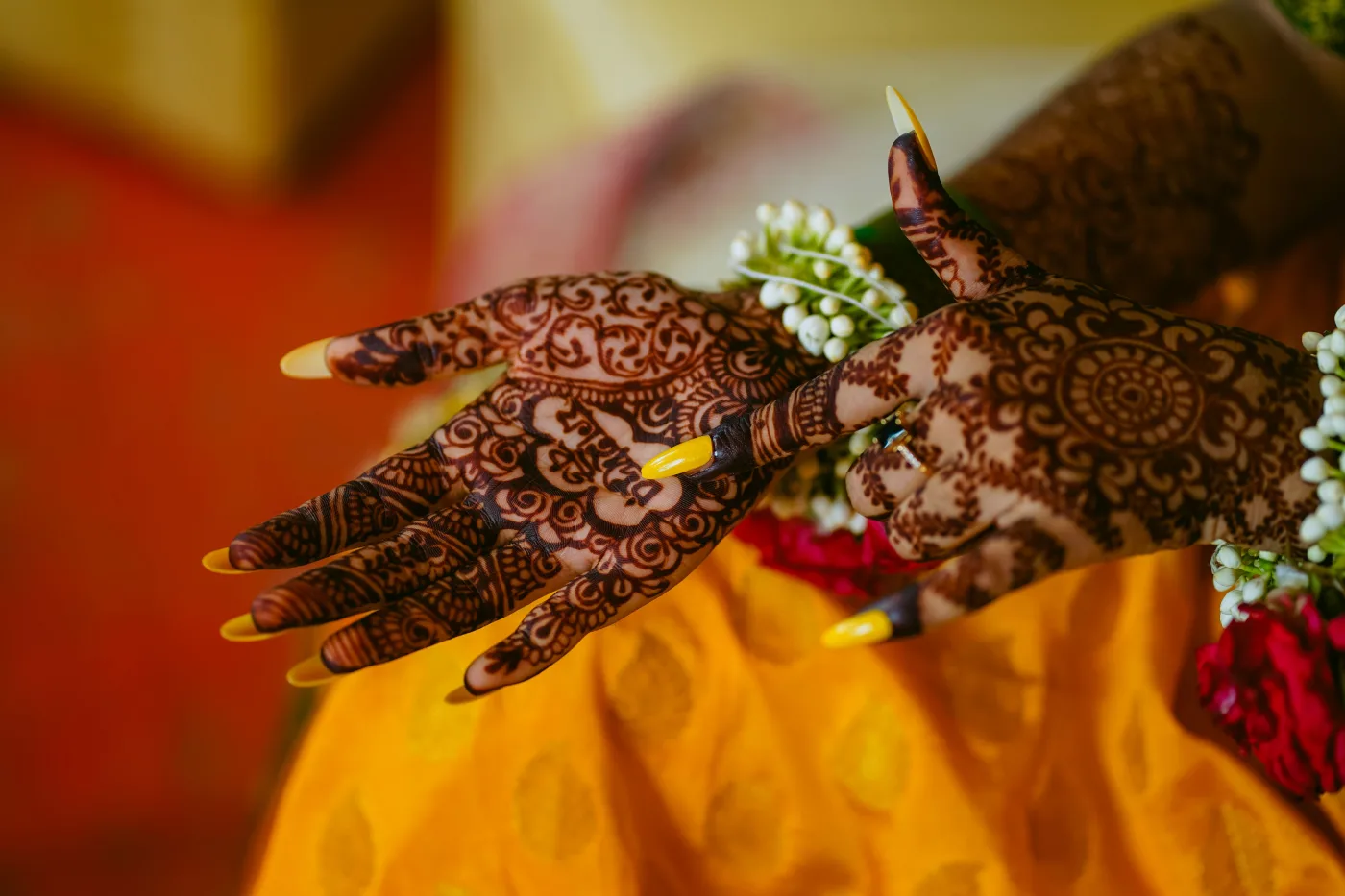
In practice this is why the bride receives the most elaborate application of anyone at a wedding. Her hands and feet are covered in dense, fine patterns while family and friends gather around her, and the design often hides the name or initials of the groom somewhere in its detail. The application is slow on purpose. It fills an afternoon that has to be spent together, with the bride unable to use her hands, surrounded by the women of both families. The ceremony is the meaning as much as the stain is. For the long story of how that connection formed and spread, our piece on the history of mehndi traces the plant from the ancient Mediterranean into the South Asian courts.
Why the bride gets the most: the amount and intricacy of a bride's mehndi is traditionally read as a measure of the joy and luck wished on her. It is not about showing off the artist. The dense fill is a blessing made visible, which is why bridal designs are the most detailed a person will ever wear.
The darker the stain, the deeper the love
No piece of mehndi folklore is repeated more often than this one: the darker your henna comes out, the more your partner, or your future partner, loves you. In Indian culture it is treated as a cultural joke rather than a genuine belief, a warm and teasing thing said to a bride while everyone waits for her colour to develop. A related version says the longer the stain lasts, the longer the marriage will be happy.
It is worth being honest about what is actually happening on the skin, because the folklore has a completely ordinary explanation. The colour comes from lawsone, a dye molecule in the henna leaf, binding to keratin in the top layer of your skin, and how dark it goes depends on the quality of the paste and how many hours you leave it on. A deep stain means good henna and patience, not a verdict on anyone's love. If you want the chemistry in plain terms, our explainer on how henna stains your skin covers why time beats pressure every time. The nicest way to hold the tradition is to enjoy the joke while understanding the science.
Blessing, luck and protection
Beyond marriage, mehndi carries a cluster of related meanings that show up again and again: good fortune, prosperity, and in several traditions genuine spiritual protection. For Hindus, the art form is associated with prosperity and good fortune, which is part of why it appears not only at weddings but at festivals such as Karva Chauth, Vat Purnima, Diwali and Teej. Among Muslims it is applied for the two Eids, Eid al-Fitr and Eid al-Adha, again as a mark of celebration and blessing.
The protective meaning is strongest at the edges of the tradition. In some Jewish and North African customs, henna is applied specifically to guard the bride and groom from harm. Yemenite Jewish practice has treated the henna mixture as carrying a herb that repels evil, and some hold that the stains mislead unfriendly spirits. In Morocco, henna is applied after the wedding as well to ward off any jealousy directed at the newlyweds. These are not universal beliefs, but they run through enough cultures to make protection a real strand of what mehndi has meant.
Love
The central meaning. Mehndi marks the union of two people and the wish that it lasts.
Joy
Applied for happy occasions. The intricacy is meant to match the size of the celebration.
Luck
Long linked with good fortune and the blessing tradition calls barakah.
Protection
In some Jewish and North African customs, applied to guard the couple from harm and envy.
Fertility
An old association tying henna to new life and the hopes placed on a new marriage.
Prosperity
For Hindus especially, the art form signifies good fortune and a prosperous home.
What the motifs mean
Mehndi is built from a repeating vocabulary of shapes, and while artists rarely treat them as a strict code, several motifs carry meanings that are widely recognised. It helps to know them, because a bride often chooses her design partly for what the shapes traditionally stand for.
Four of the most recognised mehndi motifs and the meanings usually attached to them. Artists mix them freely; the meanings are tradition, not rules.
Peacock
Beauty, grace and romance. The peacock is India's national bird and a long-standing emblem of love and courtship.
Lotus
Purity, awakening and feminine grace. It rises clean from muddy water, so it reads as new beginnings.
Paisley
The bent teardrop, from the Persian boteh. Long tied to life, growth and fertility.
Sun and moon
Often paired to suggest a couple joined, or deep and unchanging affection between two people.
Flowers and vines
Joy, happiness and new growth. The most common fill in any design, and the least loaded with rules.
Mango / leaves
Fertility and abundance, drawn from the fruit and the harvest, and closely related to the paisley shape.
A fair warning about motif meanings: they are traditions, not a fixed dictionary. The paisley in particular has a genuinely contested history. It comes from the Persian boteh motif, and scholars still debate whether it began as a cypress tree, a mango, a bush, or an older religious sign. Treat these meanings as a rich part of the tradition rather than a code every artist follows. If you want to see how the shapes are actually laid onto a hand, our guide to simple Arabic mehndi designs breaks the core motifs down one by one.
How the meaning differs by region
Henna grows across a wide band of hot country from North Africa through the Middle East to South Asia, and each region shaped its own meaning around the plant. The differences are real, but they are variations on the same theme of celebration and blessing rather than three separate ideas.
| Region | Core meaning | Where it appears | Distinctive note |
|---|---|---|---|
| South Asia (India, Pakistan) | Prosperity, good fortune, marital love | Weddings, Karva Chauth, Diwali, Teej, Eid | The dense bridal application; the groom's name hidden in the design |
| Arab / Middle East | Celebration, beauty, blessing | The "Night of the Henna" before a wedding | Flowing designs; henna nights shared across communities |
| North Africa (Morocco, etc.) | Protection as well as celebration | Multiple wedding ceremonies, including after the wedding | Geometric patterns; henna applied to ward off envy of the couple |
| Jewish tradition (Sephardi, Yemenite) | Protection and blessing | The henna ceremony before marriage | Henna treated as repelling evil and misleading unfriendly spirits |
The South Asian tradition gave mehndi its density, its bridal scale and much of the visual language most people picture, and the broader culture of India weaves it through a full calendar of festivals rather than weddings alone. The Arab and Middle Eastern tradition centres the "Night of the Henna," a bridal preparation shared, in different forms, across Muslim, Jewish, Hindu and Sikh communities. The North African tradition leans hardest into protection, applying henna at more than one point around the wedding to guard the couple. One plant, several grammars of meaning.
The words behind the meaning
Part of the confusion around what mehndi "means" comes from the words themselves. Henna is the plant and its dye, a word that reached the West from Arabic. Mehndi is the South Asian name for the same plant and for the art of applying it, descended from Sanskrit. So when people ask what henna symbolizes versus what mehndi symbolizes, they are asking about one substance under two names. The meaning does not split along the words; it splits along the cultures that use them. If the naming itself interests you, our piece on henna versus mehndi untangles the etymology in full.
You can also read the plant's own long story, its spread and its cultural range, on the Wikipedia entry for henna, which collects the archaeological and ritual references well, and on the companion Mehndi article, which covers the South Asian ceremony and its festival calendar.
Wearing the meaning respectfully
Mehndi is a living tradition that many cultures share, and the kindest way to take part in it is to know what it stands for. You do not need to belong to any one culture to wear henna, but it helps to understand that on a bride it is a blessing, at a festival it is a celebration, and in some homes it is a quiet act of protection. Knowing that turns an afternoon of sitting still into something that connects you to five thousand years of people marking their happiest days the same way.
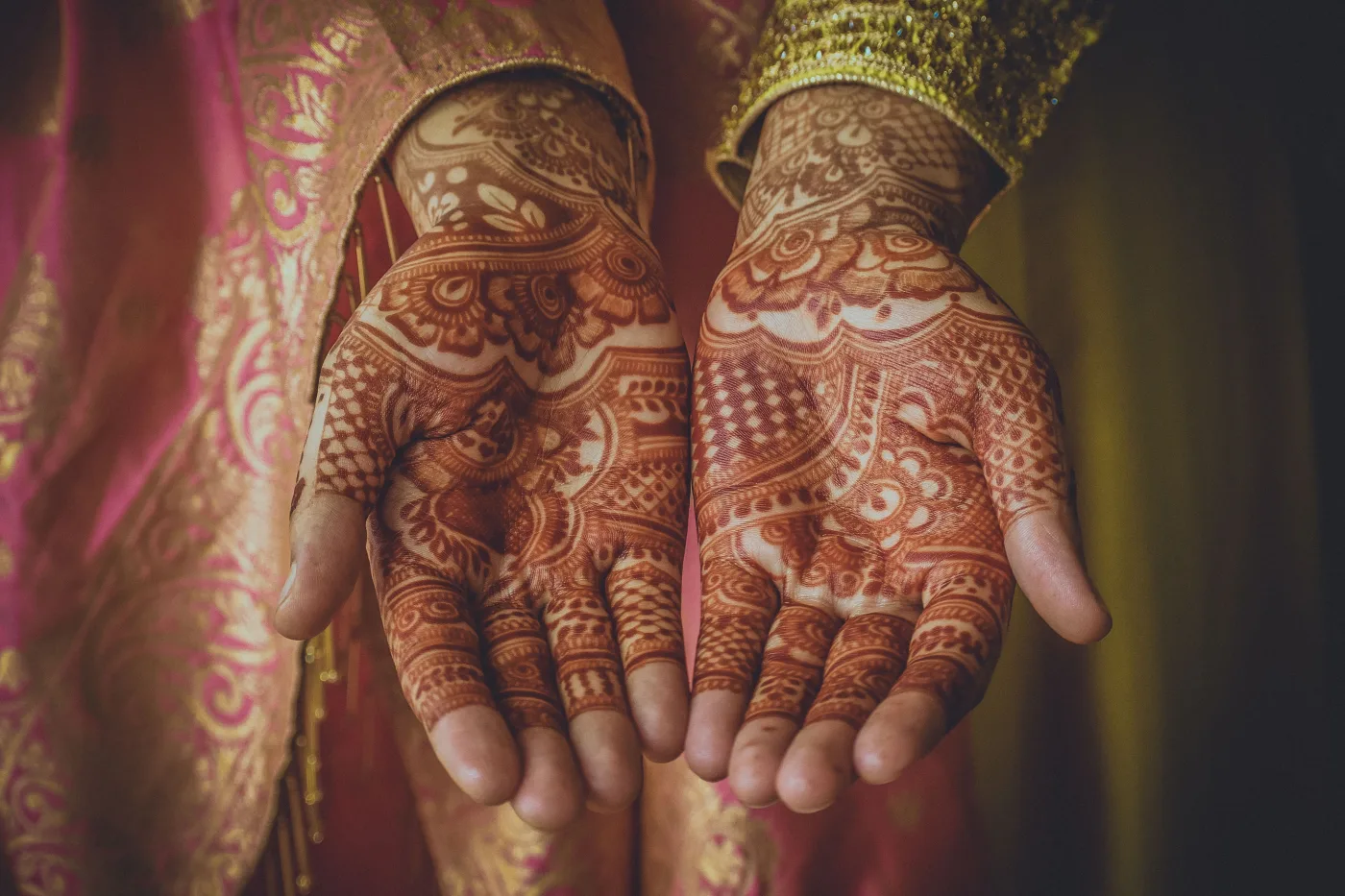
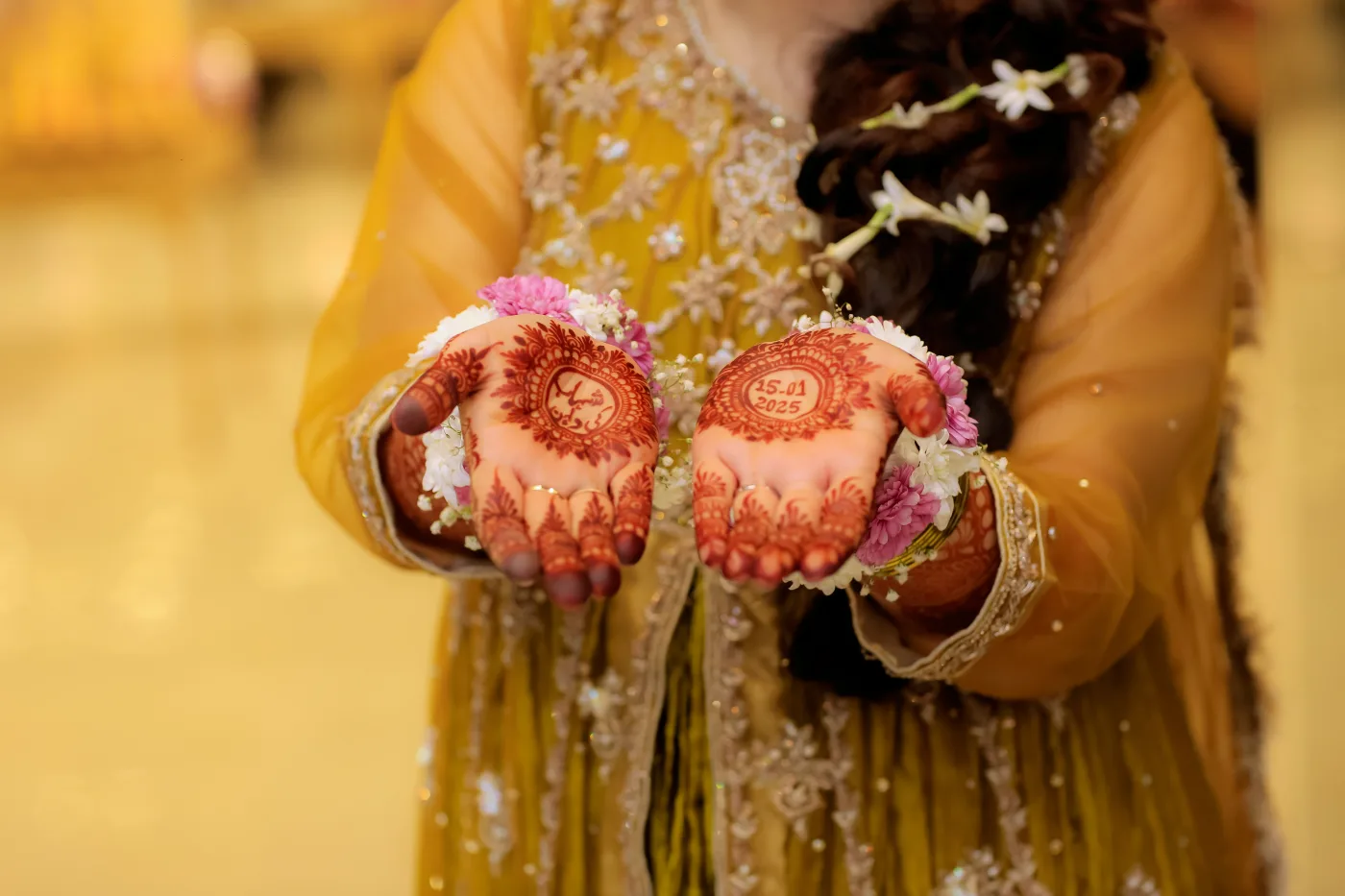
Mehndi in pictures
A few real examples worth saving. Screenshots communicate far better than words, so take the ones you like to your artist.
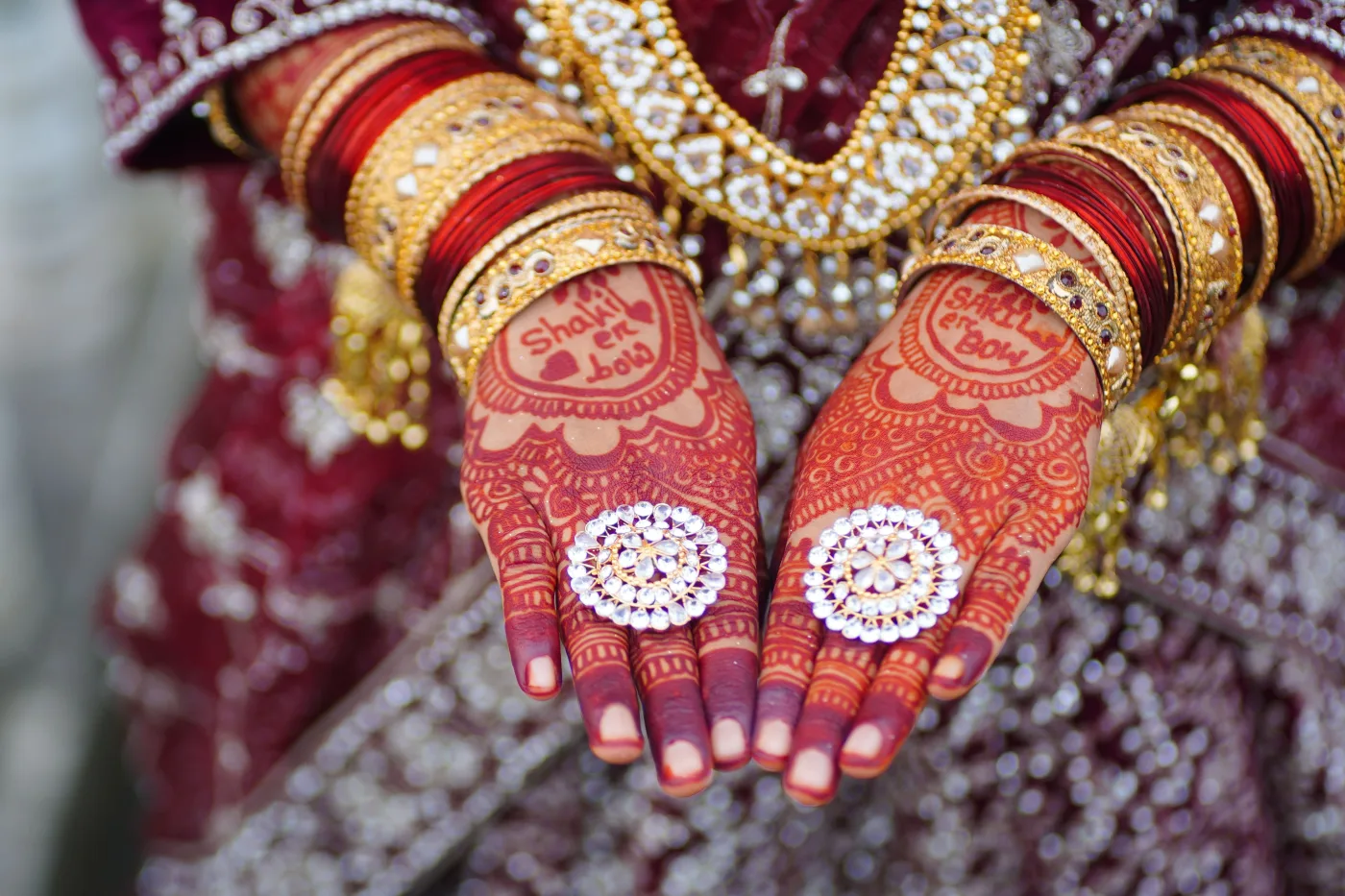
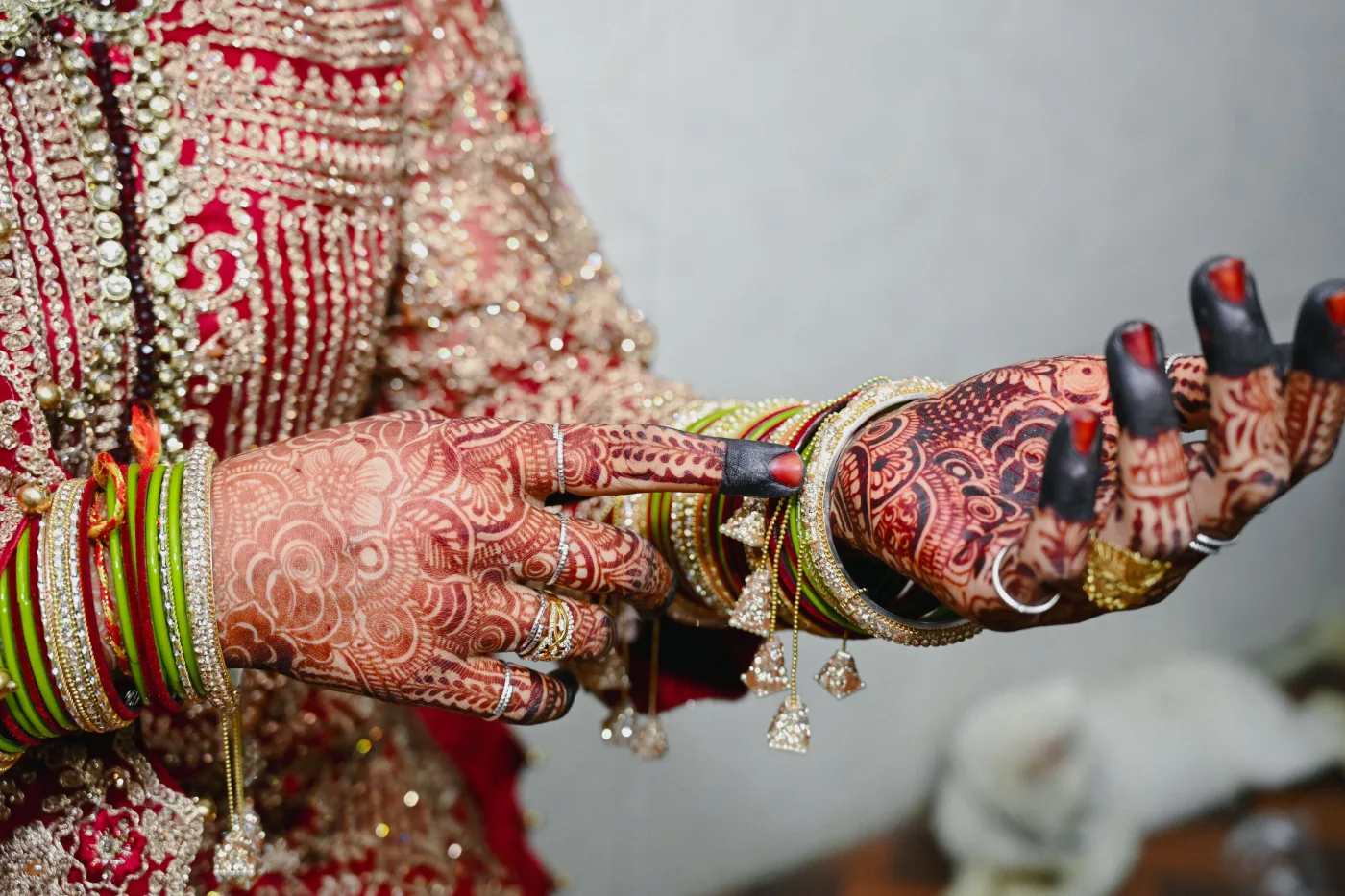
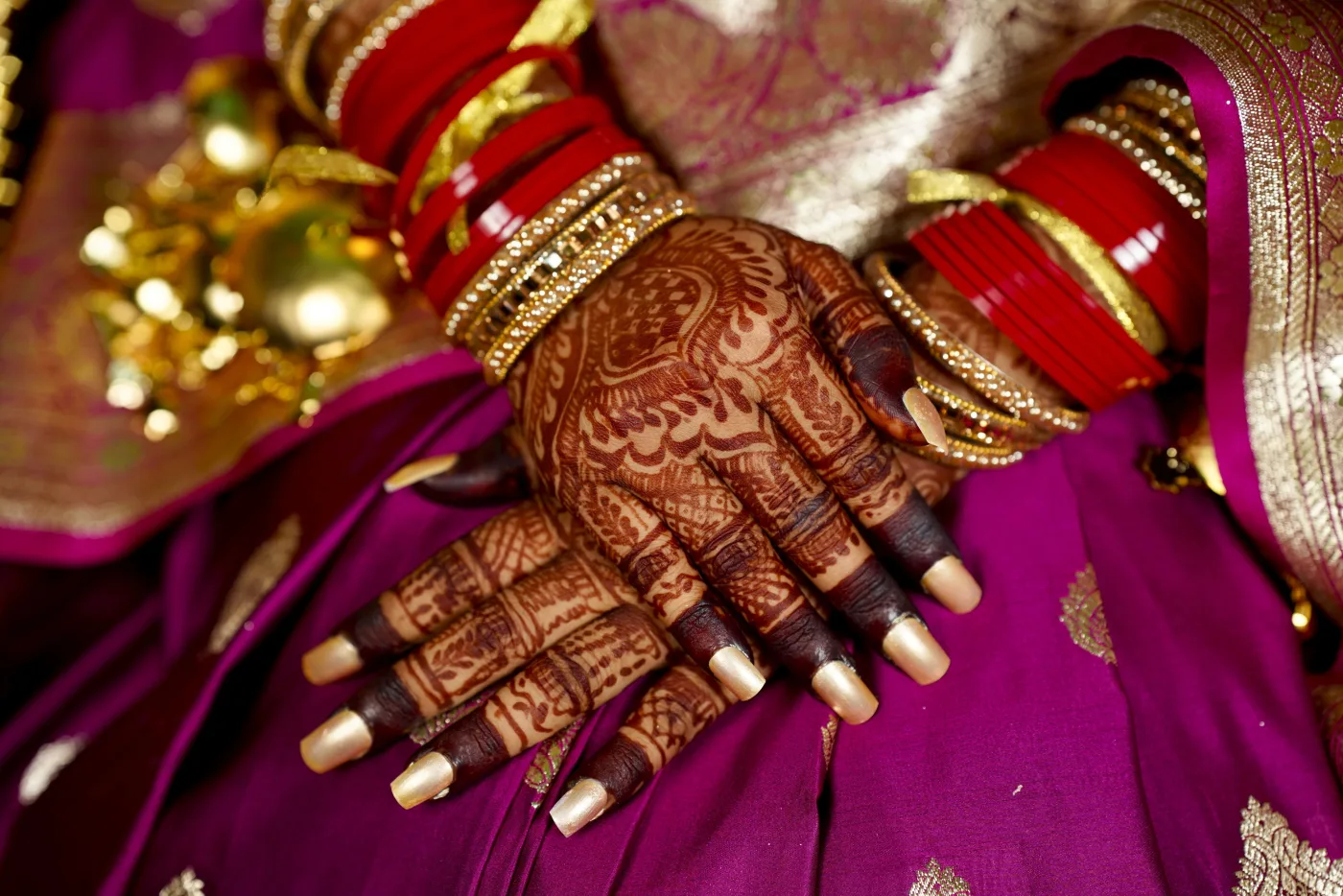
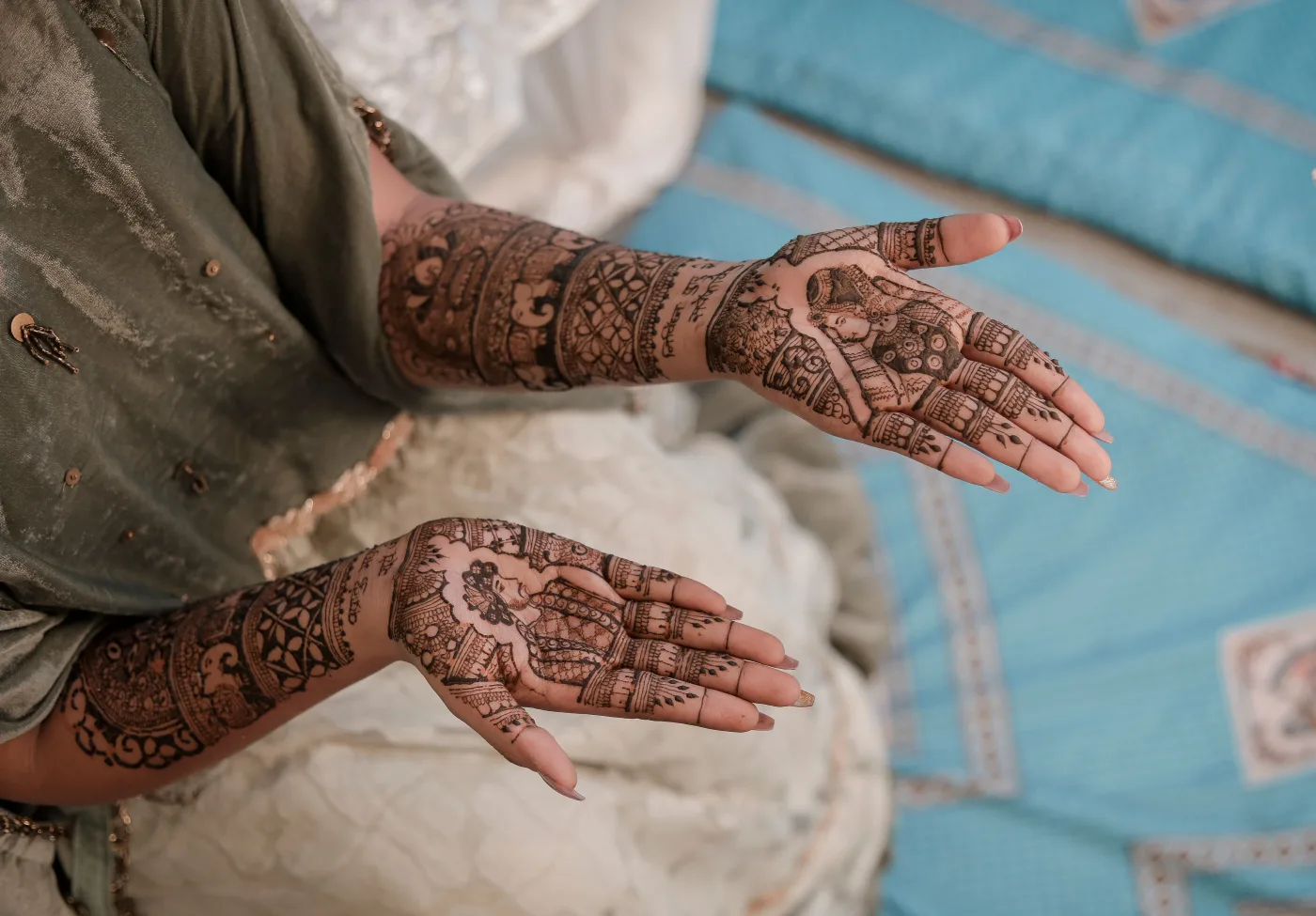
Photos provided by Pexels.
Frequently asked questions
What does mehndi symbolize?
Mehndi symbolizes joy, luck, beauty and above all the bond of marriage. Across the cultures that use it, henna has long been linked with good fortune and blessing, which is why it is applied for weddings, festivals and other happy occasions. On a bride, the intricacy of the design is traditionally read as a wish for the greatest possible joy and luck in her marriage.
What does the folklore "the darker the mehndi, the deeper the love" mean?
It is a fond cultural joke, most associated with Indian weddings, which says that the darker a bride's henna develops, the more her partner loves her. A related version says a long-lasting stain means a long, happy marriage. In reality the darkness depends on the quality of the paste and how long it is left on the skin, not on anyone's feelings, but the saying is enjoyed as part of the celebration rather than taken literally.
Do mehndi motifs have specific meanings?
Several do, by tradition. A peacock suggests beauty and romance, a lotus stands for purity and new beginnings, a paisley is tied to life and fertility, and a paired sun and moon can represent a couple joined together. These meanings are cultural traditions rather than a strict code, and artists mix the motifs freely, so a design is not meant to be read like a sentence.
How does the meaning of mehndi differ across cultures?
The core meaning of celebration and blessing is shared, but the emphasis shifts by region. In South Asia mehndi signifies prosperity and marital good fortune and appears across many festivals. In the Arab and Middle Eastern world it centres on the bridal "Night of the Henna." In North Africa and some Jewish traditions it carries a stronger sense of protection, applied to guard the couple from harm or envy.
Is henna the same as mehndi in meaning?
Yes. Henna and mehndi are two names for the same plant and dye, so they carry the same symbolism. "Henna" is the word used in the Middle East and the West, and "mehndi" is the South Asian word for the same substance and the art made with it. Any difference in meaning comes from the culture using the word, not from the words themselves.
Why does the bride get the most detailed mehndi?
Because the amount and intricacy of a bride's mehndi is traditionally understood as holding the biggest wishes for her joy and luck. The dense, fine patterns are a blessing made visible, and the slow application is itself part of the ritual, filling an afternoon that brings the women of both families together around her before the wedding.
Have a question or a topic to suggest?
We read every message. Tell us what you would like to see next on the blog.
Get in touchYou may also like
The History of Mehndi: 5,000 Years in 10 Minutes
The history of mehndi: what the archaeology actually shows, why it links to weddings, how lawsone stains skin, and how the regional styles separated.
Henna vs Mehndi: What's the Difference?
Henna vs mehndi: they are the same plant and the same dye, just two different words. Learn the etymology, the regional split and where the confusion begins.
Simple Arabic Mehndi Designs
Simple Arabic mehndi designs explained: the five motifs, the layouts worth copying, how long each takes, and how Arabic differs from Indian and Pakistani work.