Wedding planning
How Long Does Bridal Mehndi Take?
A practical, hour-by-hour breakdown of how long bridal mehndi really takes, by coverage, and how to schedule the mehndi function so the stain peaks on your wedding day.
Bridal mehndi takes roughly 3 to 8 hours to apply, and that is only the drawing. Palms and the backs of the hands alone run about 2 to 3 hours. Add the feet and you are at 4 to 6. A full bride with arms to the elbow and legs to mid-calf can sit for 7 to 9 hours or more. Then the paste has to dry on the skin for another 6 to 8 hours before it comes off, and the colour keeps deepening for a day or two after that. Once you count all three stages, the real answer is not "an afternoon". It is the better part of a day and a night, which is exactly why brides book the function for the evening before the wedding.
The short version
- Application is the visible part. Plan for 3 to 8 hours in the chair depending on coverage.
- Drying is the hidden part. The paste stays on 6 to 8 hours, hands out of action the whole time.
- Colour finishes on its own. The stain darkens for 24 to 48 hours after the paste comes off.
- Do it the day or night before. Never the wedding morning; there is no time for drying or colour.
- Rushing ruins it. A hurried artist gives thin lines and a paler stain. Build in a buffer.
Why the honest answer is "most of a day"
Brides ask "how long does bridal mehndi take" expecting a single number, and artists give vague ones because the true answer has three parts stacked on top of each other. There is application, the hours you actually sit while the cone works across your skin. There is development, the long stretch the dried paste sits on you doing nothing you can see. And there is maturation, the day or two afterwards when the colour quietly climbs to its final depth without you doing anything at all.
Only the first part is negotiable, and even that has a floor. A dense bridal hand cannot be rushed without the design suffering. The other two are set by chemistry, not by the artist, and no amount of budget speeds them up. Understanding that is the whole trick to planning the day: you are not scheduling an appointment, you are scheduling a process that outlasts the appointment by many hours.
Application
The drawing itself. 3 to 8 hours by coverage. The only stage the artist controls, and the only one you pay by the hour for.
Development
Paste dried on the skin, releasing dye. 6 to 8 hours minimum. Hands are useless the whole time.
Maturation
After the paste is scraped off, the stain oxidises from orange to deep brown over 24 to 48 hours.
How long by coverage
Application time is driven by one thing above all others: how much skin the design covers and how far up the limbs it travels. The table below is the realistic range for a bride's own hands and feet with a single experienced artist. Guest and family mehndi is separate and adds up fast, so it is not counted here.
| Coverage | What it includes | Application time | Chair plus dry-off |
|---|---|---|---|
| Hands only | Palms and backs of hands to the wrist | 2 - 3 hrs | ~10 hrs |
| Hands and feet | Hands to wrist, feet to the ankle | 4 - 6 hrs | ~12 hrs |
| Half arms and feet | Hands to mid-forearm, feet to ankle | 5 - 7 hrs | ~14 hrs |
| Full arms and legs | Hands to elbow, feet to mid-calf | 7 - 9+ hrs | ~16 hrs |
| Signature full bridal | Full coverage, portraits, dense detail | 9 - 12 hrs | Split over 2 days |
Two numbers surprise people. First, the jump from "hands and feet" to "full arms and legs" is not a small upgrade; it can double your time in the chair, because forearms and calves are large, curved, slow surfaces to detail. Second, the busiest signature artists often split a full bridal set across two sittings, because ten hours in a single chair is genuinely hard on both the bride and the hand doing the work.
Where the hours actually go
It helps to see the day broken into stages, because the part that eats the calendar is the part you cannot feel happening. Here is a typical full hands-and-feet bride, from the first line to the moment the colour has matured.
A full bridal timeline, stage by stage
Hands-and-feet bride, single artist. The drawing is the short part; drying and colour development dominate.
Notice the shape. The two application bars are what everyone pictures when they imagine the mehndi function, but the long tail is drying and maturation, and both of those happen while you are doing nothing. Wikipedia's own summary of the craft notes that once applied, the paste is left to dry and is often wrapped to hold warmth and moisture, and that the design only reaches its deep reddish brown over the following day or more. That is the timeline chemistry, not artist preference, and it is why the schedule has to give the stain room to breathe.
Why the paste cannot be rushed
The colour is not painted on; it grows in. The dye molecule in the leaf, lawsone, has to migrate out of the drying paste and bind to the keratin in the top layer of your skin, and that reaction runs on time, not on pressure. General guidance on henna is that the paste should stay on for a minimum of four to six hours, and that leaving it on longer, even overnight, gives a deeper, longer-lasting stain. For a bride, who wants the darkest possible result on camera, longer is always better, which is precisely why bridal mehndi is an overnight job.
This is also the reason you cannot compress the timeline by asking the artist to work faster. Speed only affects the drawing. It has no effect on the six to eight hours the paste needs to sit, and it cannot touch the one to two days the stain takes to darken. If anything, a rushed application produces thinner lines and less paste contact, which gives a paler final colour. The clock protects your stain; fighting it just makes the result worse.
The drawing is the smallest block. Drying and maturation run overnight and into the next day, which is why the mehndi function lands the evening before.
When to book it in the wedding schedule
The mehndi function is one of the pre-wedding celebrations that anchor the run-up to the main day, and across the traditions catalogued under the Indian wedding it is typically held one or two days before the ceremony, not on the wedding morning. The timeline above is the reason. The bride needs a full night for the paste to develop and the colour to climb, and she needs her hands free on the actual wedding day, not wrapped in tissue and unable to hold anything.
The practical rule is simple. Count backwards from the wedding. The stain looks its best two to three days after application, so for a Saturday wedding, a Thursday evening mehndi function gives you Friday for the colour to deepen and Saturday for the peak. A Friday-night application still works but is tighter. Anything done on the wedding morning is a mistake: the stain will be a raw orange on camera, not the deep brown everyone pictures, and your hands will be out of action while you are meant to be getting ready.
| When you apply | Colour on the wedding day | Verdict |
|---|---|---|
| 3 days before | Fully matured, deep and even | Ideal for large coverage |
| 2 nights before | Rich, near peak | The classic sweet spot |
| Night before | Good, still darkening slightly | Fine for smaller sets |
| Wedding morning | Pale orange, undeveloped | Avoid entirely |
Planning the mehndi function itself
Because application alone can run most of a working day, the function has to be built around the bride's timeline, not squeezed into a party that happens to have music and food. A few decisions made in advance are what separate a relaxed evening from a panicked one.
- Start early. If the bride needs seven hours in the chair, a 2pm start finishes at 9pm with drying still ahead. A late start pushes paste-off past midnight.
- Seat the bride first. The artist works on her before touching guests, so her long development window starts as early as possible.
- Book a second artist for guests. One pair of hands cannot do a full bride and a room of relatives. Guest mehndi runs in parallel, not after.
- Eat and use the bathroom before the feet. Once both hands and feet are wet, the bride is immobilised for hours. Plan the practicalities up front.
- Arrange a helper for the night. Someone to hold a phone, feed her, and manage the wrap while her hands are out of use until morning.
Coverage is the single biggest driver of how long the bride sits, and it is also the single biggest driver of the bill, because you are paying for the artist's hours. Our bridal mehndi price guide breaks down exactly how coverage maps to cost, which is worth reading alongside this timeline: the same coverage decision sets both how long your day runs and what it costs.
Planning tip: do a timed trial run four to six weeks before the wedding. A trial tells you three things you cannot guess otherwise: exactly how many hours your chosen coverage takes with this specific artist, how dark your skin actually stains with their paste, and how the design looks in photographs. Time the trial and you will know whether a 2pm start is early enough or whether you need to begin at noon. Our guide to the bridal mehndi trial covers how to run one properly so there are no surprises on the night.
How to avoid a rushed job
Almost every disappointing bridal stain traces back to time pressure somewhere in the chain. The artist started late, the guest queue ate into the bride's hours, or the paste came off early because the function ran past everyone's bedtime. None of these are about skill; they are about scheduling. Protect the timeline and the design mostly takes care of itself.
Confirm the hours in writing
Ask the artist how many hours your exact coverage takes, and agree a start time that leaves a buffer at the end.
Separate bride and guests
A dedicated guest artist means the bride's time is never traded away to clear a queue of relatives.
Protect the overnight
Wrap the design and leave it on until morning. Scraping it off at midnight to sleep costs you the darkest colour.
Build in a spare day
Applying two to three days out, not the night before, gives you a margin if anything overruns.
The person you book matters as much as the schedule, because an experienced bridal artist knows their own pace and will tell you honestly how long your design takes rather than promising an impossible afternoon. If you are still choosing, our guide on how to choose a bridal mehndi artist covers the questions that reveal whether someone can actually deliver your coverage in the time you have.
The bottom line
How long does bridal mehndi take? The drawing is 3 to 8 hours, the drying is another 6 to 8, and the colour takes a day or two more to reach its best. Plan the whole process, not just the appointment. Decide your coverage first, because it sets both the hours and the cost, book the function for the evening two nights before the wedding, seat the bride early, keep a second artist for guests, and leave the paste on overnight. Do that and the timeline works for you instead of against you, and the stain that shows up in your wedding photos is the deep, matured brown you were picturing all along.
Bridal mehndi in pictures
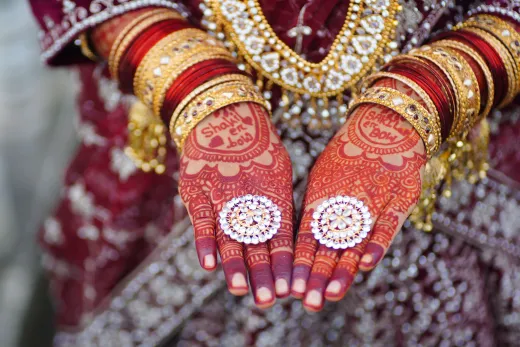
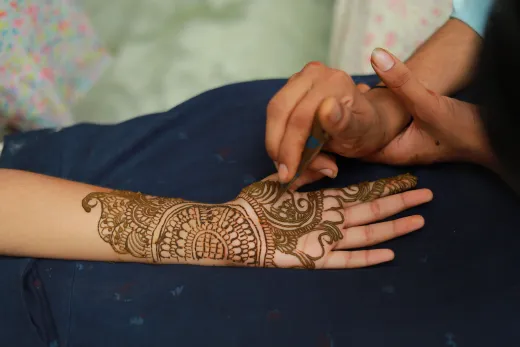
A few real examples worth saving. Screenshots communicate far better than words, so take the ones you like to your artist.
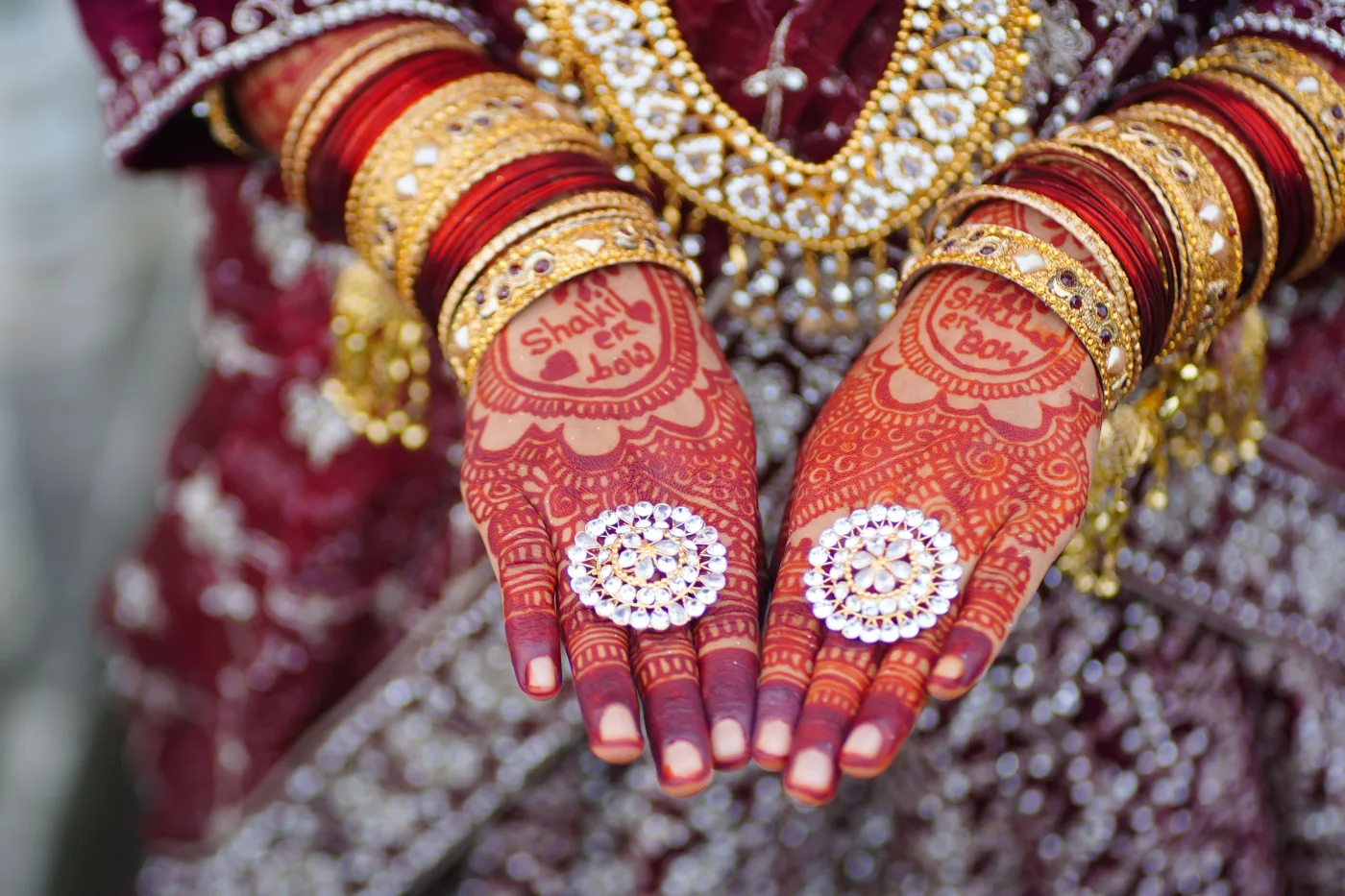
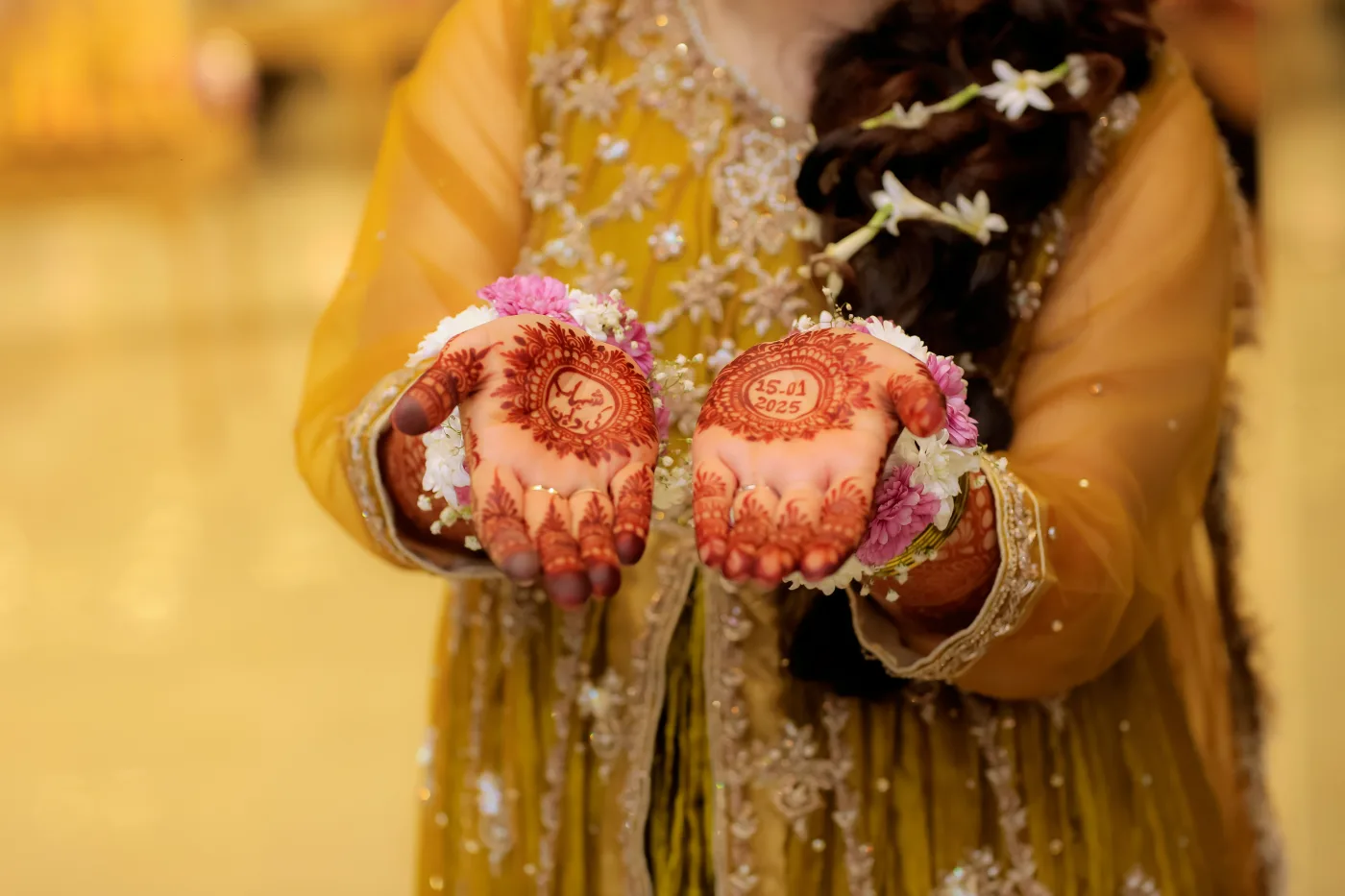
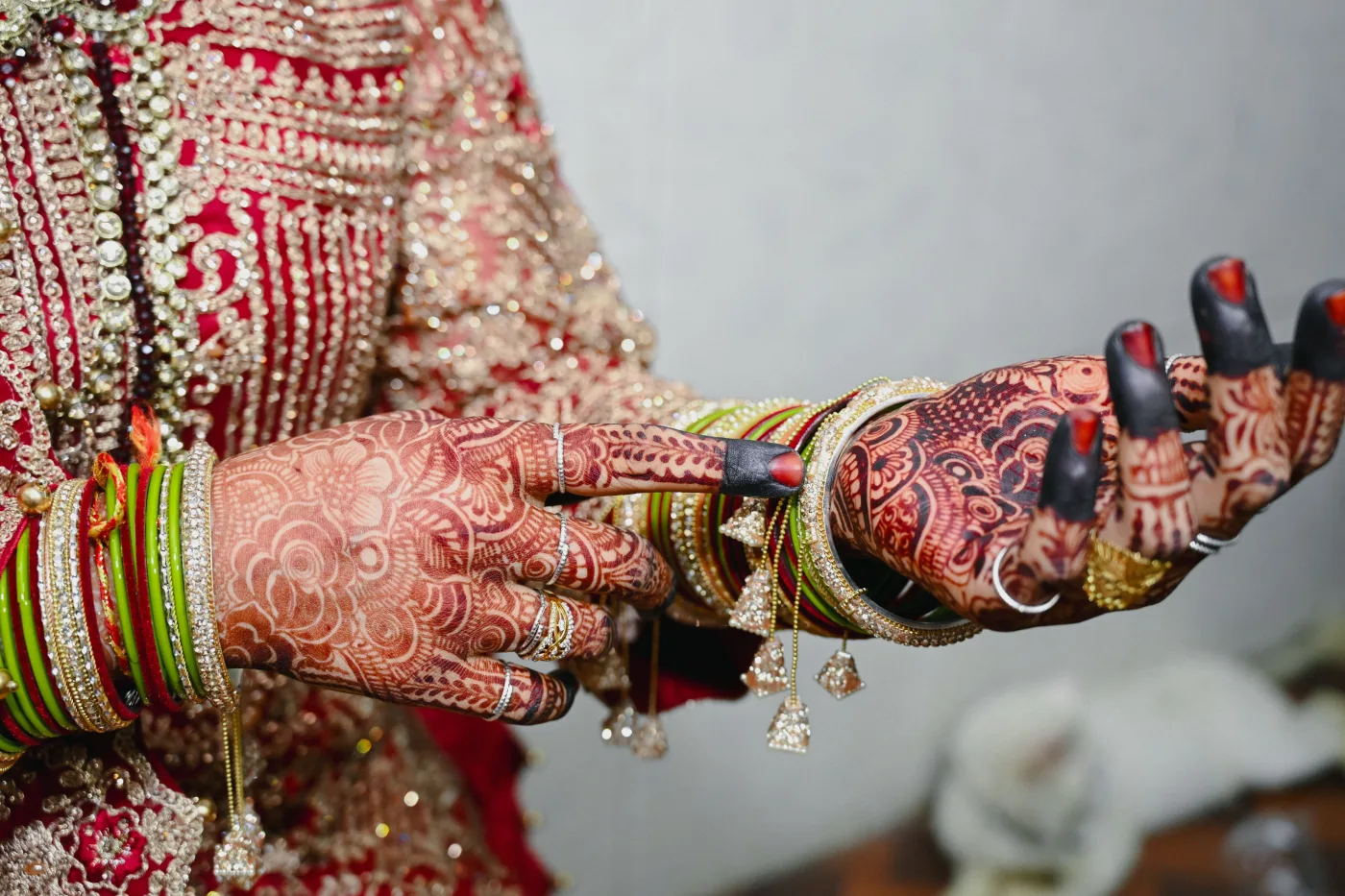
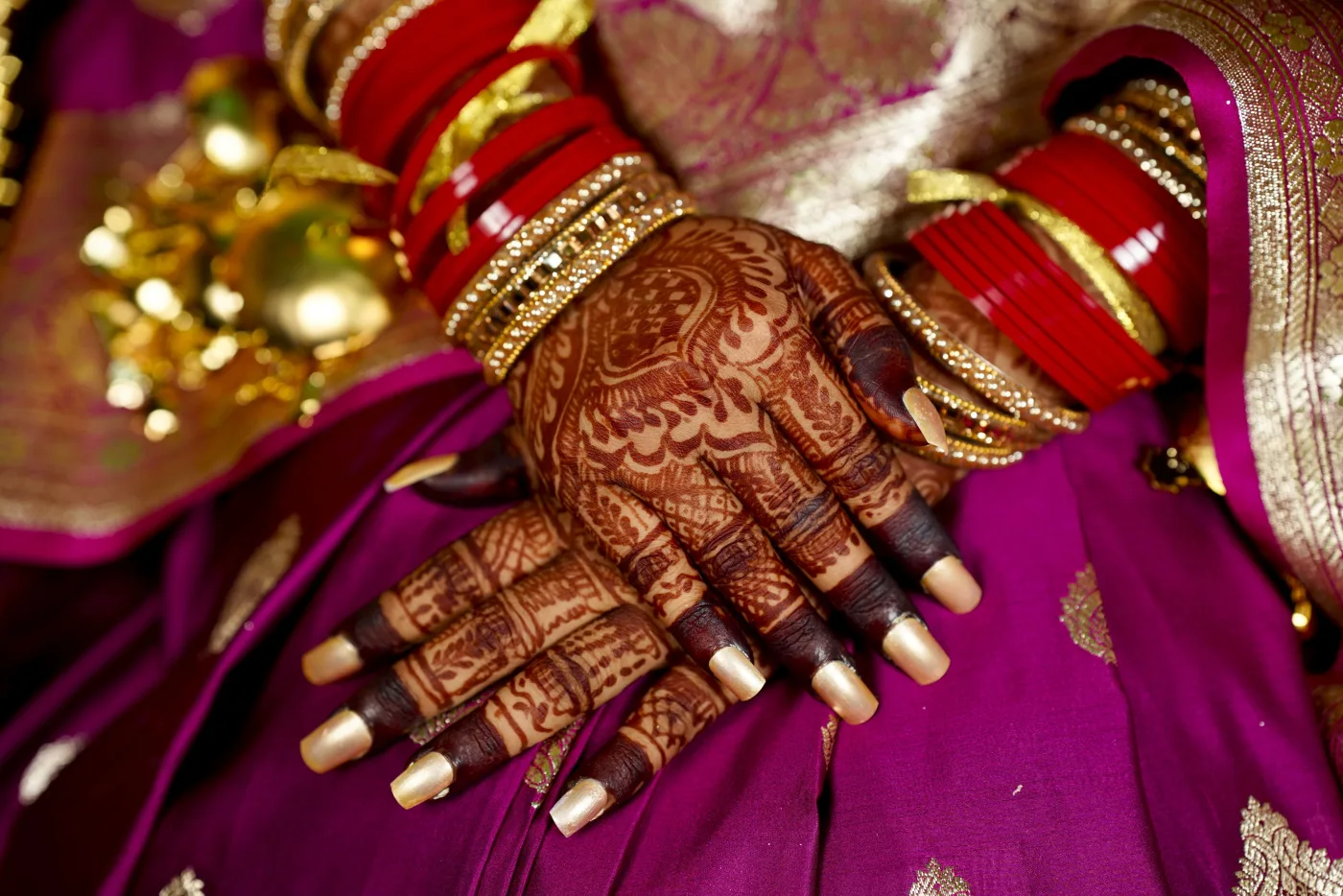
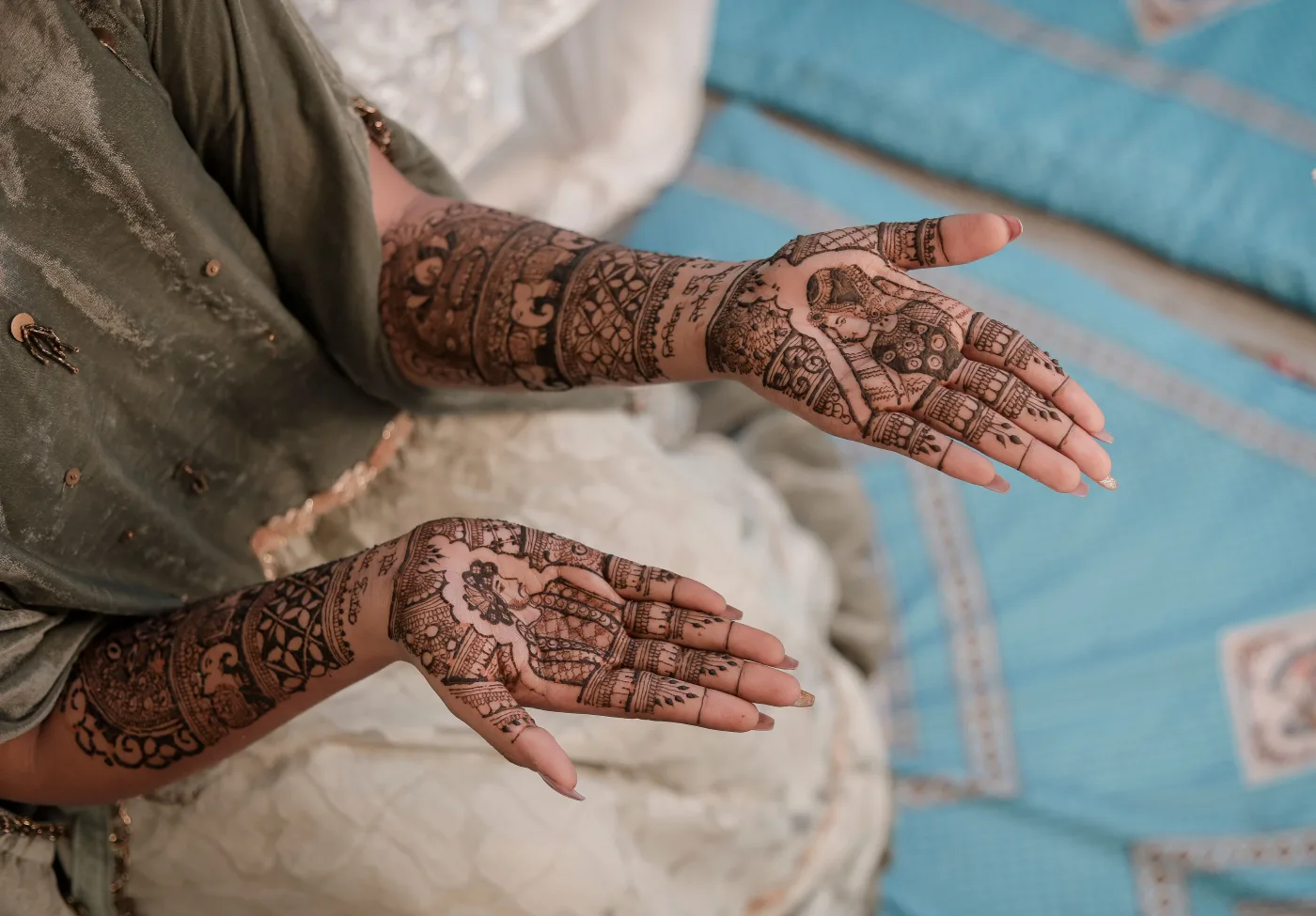
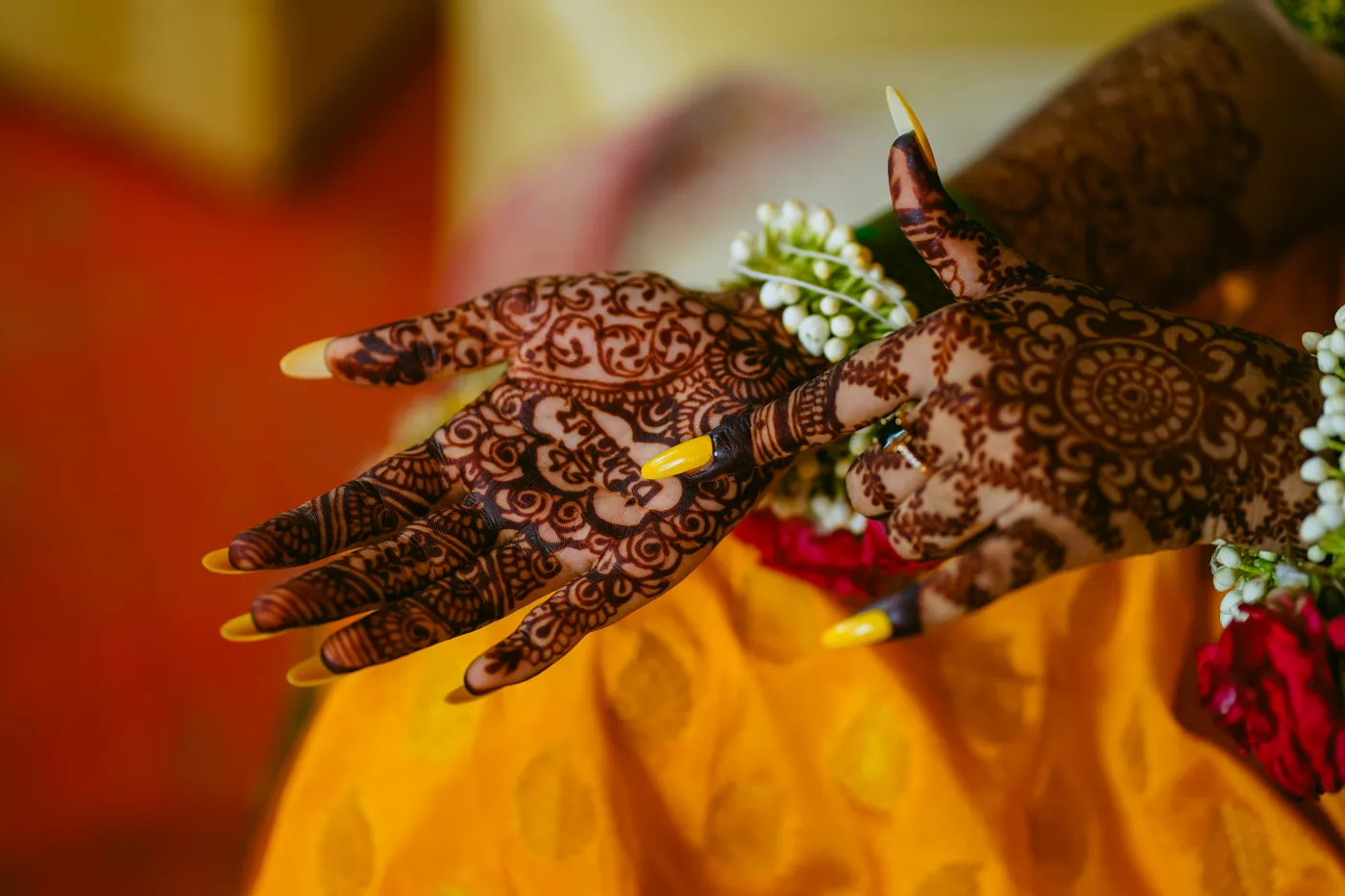
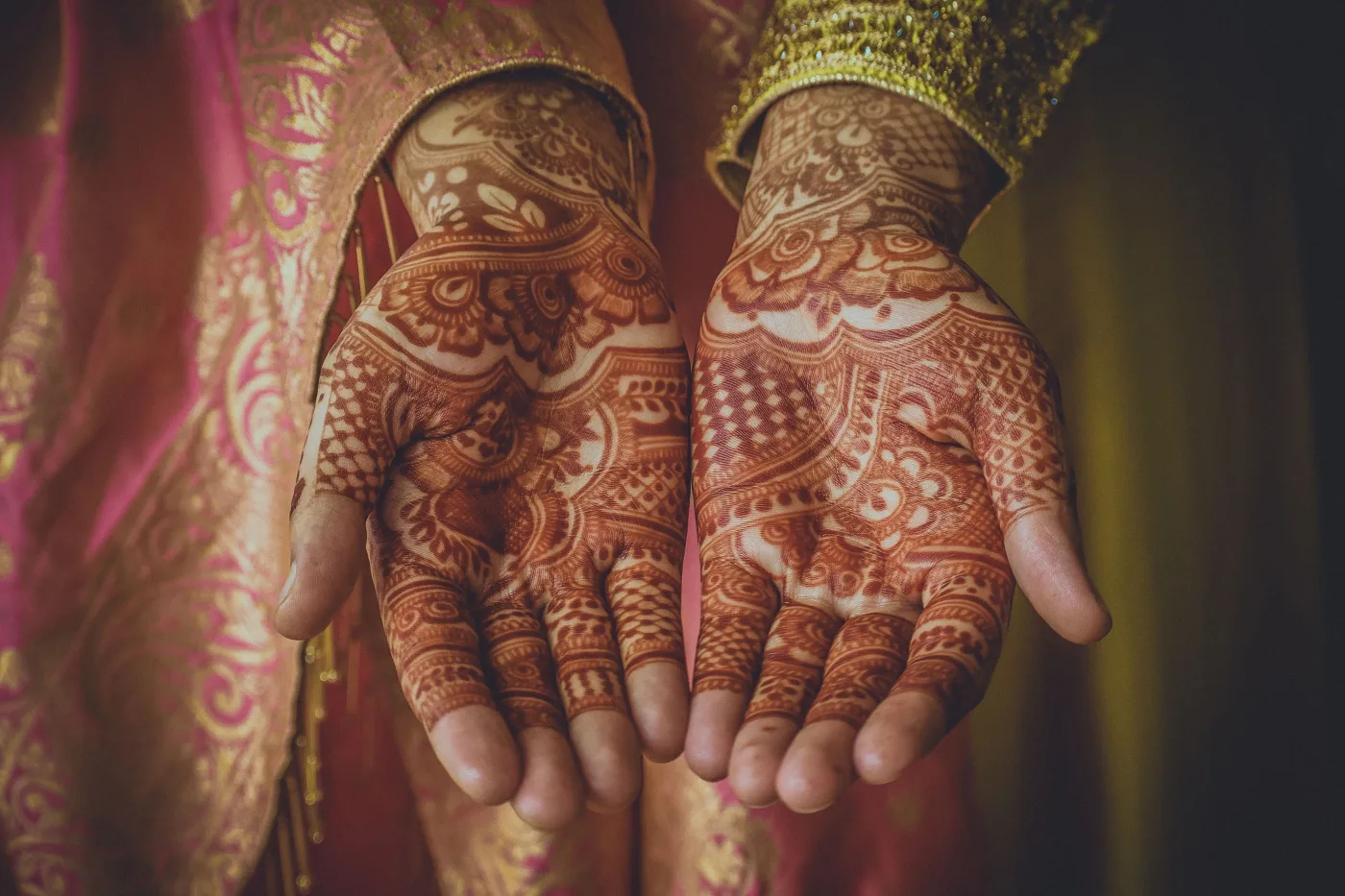
Photos provided by Pexels.
Frequently asked questions
How long does bridal mehndi take to apply?
Application takes about 3 to 8 hours depending on coverage. Hands alone run 2 to 3 hours, hands and feet 4 to 6, and full arms to the elbow with legs to mid-calf can reach 7 to 9 hours or more with a single artist. That is only the drawing; the paste then needs another 6 to 8 hours to dry on the skin.
When should bridal mehndi be done before the wedding?
Two nights before the wedding is the sweet spot, and never the wedding morning. The stain needs a full night for the paste to develop and then 24 to 48 hours to darken to its deep brown. Applying two to three days out means the colour peaks exactly on the wedding day, and your hands are free when you need them.
Why does the mehndi paste have to stay on so long?
The colour is a slow chemical reaction, not paint. The dye in the henna leaf has to bind to the top layer of your skin, and that needs time rather than pressure. Leaving the paste on for six to eight hours, or overnight, gives a much deeper and longer-lasting stain than rushing it off after an hour or two.
How long does the mehndi colour take to darken?
After the paste comes off, the stain is a pale orange and darkens on its own over the next 24 to 48 hours as it oxidises into a deep reddish brown. This is why the design you photograph right after paste-off is not the colour you will have on the wedding day; it gets richer for a day or two first.
Can bridal mehndi be done in one day?
The application can, but the full process cannot. Even a fast hands-only set needs the paste on for six to eight hours and another day for the colour to mature. That is why the mehndi function is held the evening before, so the overnight development and the following day give the stain time to reach its peak.
How can I stop my bridal mehndi feeling rushed?
Confirm the exact hours with your artist in advance, start the function early enough to leave a buffer, book a separate artist for guest mehndi so the bride's time is never traded away, and apply two to three days before the wedding rather than the night before. A timed trial run beforehand tells you exactly how long your coverage takes.
Have a question or a topic to suggest?
We read every message. Tell us what you would like to see next on the blog.
Get in touchYou may also like
Bridal Mehndi Price Guide: What Artists Charge
What bridal mehndi really costs: package ranges, the five factors that move a quote, season pressure, and the questions to ask before paying a deposit.
Bridal Mehndi Trial: Questions to Ask
A bridal mehndi trial shows how henna stains your own skin, the true hours your design needs, and the exact questions to ask your artist before you book.
How to Choose a Bridal Mehndi Artist
A practical guide to choosing a bridal mehndi artist: where to find them, how to read a portfolio, compare quotes fairly, check hygiene, and book the right one.