Bridal planning
How to Choose a Bridal Mehndi Artist
How to find a bridal mehndi artist, judge their portfolio by stain photos not wet paste, compare quotes on equal terms, check reviews and hygiene, and lock in the booking.
Choosing your bridal mehndi artist is one of the few wedding bookings where the work cannot be redone if it goes wrong. The stain sits on your skin for two to three weeks, and it shows up in every photograph of the day. Yet most brides pick an artist from a single pretty picture and a price, which is exactly how disappointments happen. This guide walks through where to find good artists, how to actually read a portfolio, how to compare quotes without being fooled by a low number, and what to lock down in writing before you pay a deposit.
The short version
- Judge stain photos, not fresh paste. Wet paste is always dark; the real skill is the colour a day later.
- Look for consistency, not one hero image. Ten even hands beat one perfect one.
- Compare like for like. A cheap quote usually leaves out guest mehndi, forearms or travel.
- Book 2 to 6 months ahead. The artists worth having are gone before the season starts.
- Get it in writing. Hours, coverage, deposit and a double-booking backup, on paper.
What you are actually hiring
Before you compare anyone, it helps to be clear about what a bridal mehndi artist really sells. You are not buying a design. You are buying a person's hours, their reliability on a day with no room for error, and a stain that will only look its best if their paste and their technique are sound. A wedding artist has to turn up on time, work steadily for the hours your coverage needs, and leave you with a colour that matures into deep brown rather than staying a raw orange on camera. That combination, skill plus dependability, is the thing you are choosing between, and it is why a portfolio alone never tells the whole story.
The tradition itself is old and well documented. Applying mehndi for weddings and festivals goes back centuries across South Asia, North Africa and the Middle East, and the craft has always rewarded patience over speed. Keeping that in mind changes how you evaluate people: the best artists talk about time and colour, not just motifs.
Where to find bridal mehndi artists
Start wide, then narrow. Each source has a bias, so use several rather than trusting one.
Personal referrals
The most reliable source. A friend who was a recent bride can tell you about punctuality and colour, not just the photos.
Social portfolios
Instagram and similar feeds show volume of work and recent style. Treat the grid as a highlight reel, not an average.
"Mehndi artist near me"
A local search surfaces studios and freelancers close by. Proximity matters for home visits and last-minute touch-ups.
Salons and studios
Convenient and accountable, but you may not get to pick which artist works on you. Ask for a named person.
Wedding vendors
Photographers and planners see many artists on real wedding days and know who runs on time and who overruns.
Bridal groups
Local wedding forums and community groups collect honest, unfiltered feedback that never makes it onto a portfolio.
Whichever route you use, the goal at this stage is only to build a shortlist of three or four names. The real filtering happens next, when you look past the marketing and read the work properly.
How to read a portfolio properly
A portfolio is a sales tool, so read it the way you would read one. The single most common mistake brides make is judging a design by how dark it looks in the photo, when that photo was taken while the paste was still wet. Fresh henna paste is nearly black on the skin. It says nothing about the stain underneath, which is the only thing you will actually wear.
The same design, wet versus matured. Ask to see the second picture, because the deep reddish brown on the right is what you will actually wear on the day.
With that in mind, here is what to look for as you scroll through someone's work, and what to ask for when the feed does not show it.
Stain photos, not just paste
Ask for pictures taken 24 to 48 hours after application. A confident artist has plenty and shares them happily.
Consistency across many hands
Even line weight and spacing repeated across dozens of clients matters far more than one flawless hero shot.
Real bridal work
Full hands to the elbow, feet, dense detail. Party and festival designs do not prove someone can carry a full bridal set.
Recent and dated
Styles and standards change. Look for work from the last year or two, not a portfolio frozen five seasons ago.
On real skin, in real light
Be wary of heavy filters and studio lighting. You want to see the colour as a camera at a wedding would capture it.
Range, not one trick
Arabic, Indian and fusion in the same feed shows an artist who can adapt to your taste rather than repeat one template.
How to compare quotes fairly
Once you have two or three artists whose stain photos hold up, the quotes arrive and the trouble starts. A number on its own is meaningless, because two artists can quote for completely different amounts of work and call both of them "full bridal". The only fair way to compare is to force every quote onto the same terms before you look at the price.
| Ask every artist | Why it changes the price |
|---|---|
| Exactly how far does coverage go? | "Full hands" can mean the wrist or the elbow. Forearms roughly double the hours. |
| Is guest and family mehndi included? | Guest work is often billed per head and is the classic surprise on the final invoice. |
| How many hours are you booking for me? | The honest unit of the job. It tells you if a low quote just means less time. |
| Feet included, or hands only? | Feet can add two to three hours and are quietly dropped from cheaper quotes. |
| Is travel or a home visit extra? | A studio price and a home-visit price are not the same booking. |
| Any late-night or overtime surcharge? | Common when the function runs over, and rarely mentioned up front. |
Put the answers side by side and the cheapest headline quote often turns out to be the most expensive once the missing pieces are added back in. What actually drives the cost is coverage and the artist's hours, not the henna itself, which is only a few hundred rupees of paste. Our bridal mehndi price guide breaks down the real ranges by coverage so you can sanity-check whether a quote is fair or fantasy before you commit to anyone.
Green flags and red flags
Beyond the portfolio and the price, how someone behaves during those first conversations tells you a great deal about how the wedding day will go. Punctuality, honesty about colour and a willingness to put things in writing are all visible before you pay a rupee. Watch for these.
| Green flags | Red flags |
|---|---|
| Shares stain photos taken a day or two later | Only ever posts dark, wet-paste close-ups |
| Offers or agrees to a paid trial run | Refuses any trial before the wedding |
| Explains that colour takes 24 to 48 hours to mature | Promises an instant black stain on the day |
| Quotes in hours and written coverage | Vague "full hands" with no detail or timing |
| Has a named backup if double-booked | No plan, or dodges the question entirely |
| Clear deposit, balance and cancellation terms | Wants a large cash deposit with nothing on paper |
| Fresh paste mixed close to the appointment | Cannot say what is in the cone or when it was made |
Checking reviews and hygiene
Reviews are useful, but read them for pattern rather than for stars. One glowing testimonial proves nothing; a run of comments all mentioning that the artist arrived on time and the colour came out dark tells you something real. Pay special attention to any review that mentions the day running late or the stain staying orange, because those are the two failures that ruin a bridal look and they repeat across a careless artist's clients.
Hygiene is the part brides forget to ask about and later regret. A wedding artist works on many people in a season, so ask how they keep their cones and their workspace clean, and confirm they use fresh, naturally mixed paste rather than a pre-made tube of unknown age. This is not fussiness. It is the difference between a safe stain and a chemical burn.
One non-negotiable on safety: never accept a paste that promises instant black colour. Natural henna stains orange first and deepens to reddish brown over a day or two, because the dye in the leaf needs hours to bind to your skin. A cone that turns black on contact usually contains para-phenylenediamine (PPD), a hair-dye chemical that can cause severe skin reactions and lasting scarring when painted straight onto skin. A wedding, with your face and hands on camera for years afterwards, is the worst possible time to discover you react to it. Any artist who offers "black henna" for a bride has just told you everything you need to know. Walk away.
The booking basics: deposit, contract and timing
Once you have chosen, the booking itself is where good intentions turn into a real agreement. Most bridal mehndi complaints trace back to something that felt understood but was never written down. You do not need a lawyer, but you do need the essentials on paper, ideally in a message you can both refer back to.
Deposit
A deposit is normal and secures your date. Keep it reasonable, pay it traceably, and get a written receipt confirming the date and coverage.
What is agreed
Coverage, hours, start time, guest arrangement, travel and the full price. If it is not written, treat it as not agreed.
Double-booking backup
Ask, in writing, what happens if the artist falls ill or is double-booked, and who the named replacement is.
Cancellation terms
Know what is refundable and by when, on both sides, so a change of plans does not become a dispute.
Timing is the other half of booking, and brides consistently leave it too late. Sought-after artists fill their calendars months in advance, and the peak wedding weeks sell out first, not last. As a rule, start looking three to six months before the wedding for a popular artist, and at least six to eight weeks before for anyone in demand during the season. Booking early also leaves room for the one step that removes almost all the remaining risk: a trial.
A trial run, four to six weeks before the day, is the single best way to confirm you chose well. It shows you exactly how dark your skin stains with this artist's paste, how long your coverage really takes, and how the design photographs. Our guide to the bridal mehndi trial explains how to run one so there are no surprises. And because coverage sets both the cost and the hours in the chair, it is worth reading alongside our bridal mehndi timeline, which shows how the whole day and night actually unfold once you have your artist locked in.
The bottom line
Choosing a bridal mehndi artist comes down to looking past the marketing. Build a shortlist from referrals and portfolios, then judge people on their stain photos rather than their wet paste, on consistency across many hands rather than one hero shot, and on real bridal coverage rather than party designs. Force every quote onto the same terms before you compare prices, watch for the green flags around honesty and punctuality, insist on natural paste and clean tools, and put the deposit, coverage and a backup plan in writing. Do that a few months out, run a trial, and the artist you book will be the one who actually shows up, works to time, and leaves you with the deep brown colour you pictured in every wedding photo.
Bridal mehndi in pictures
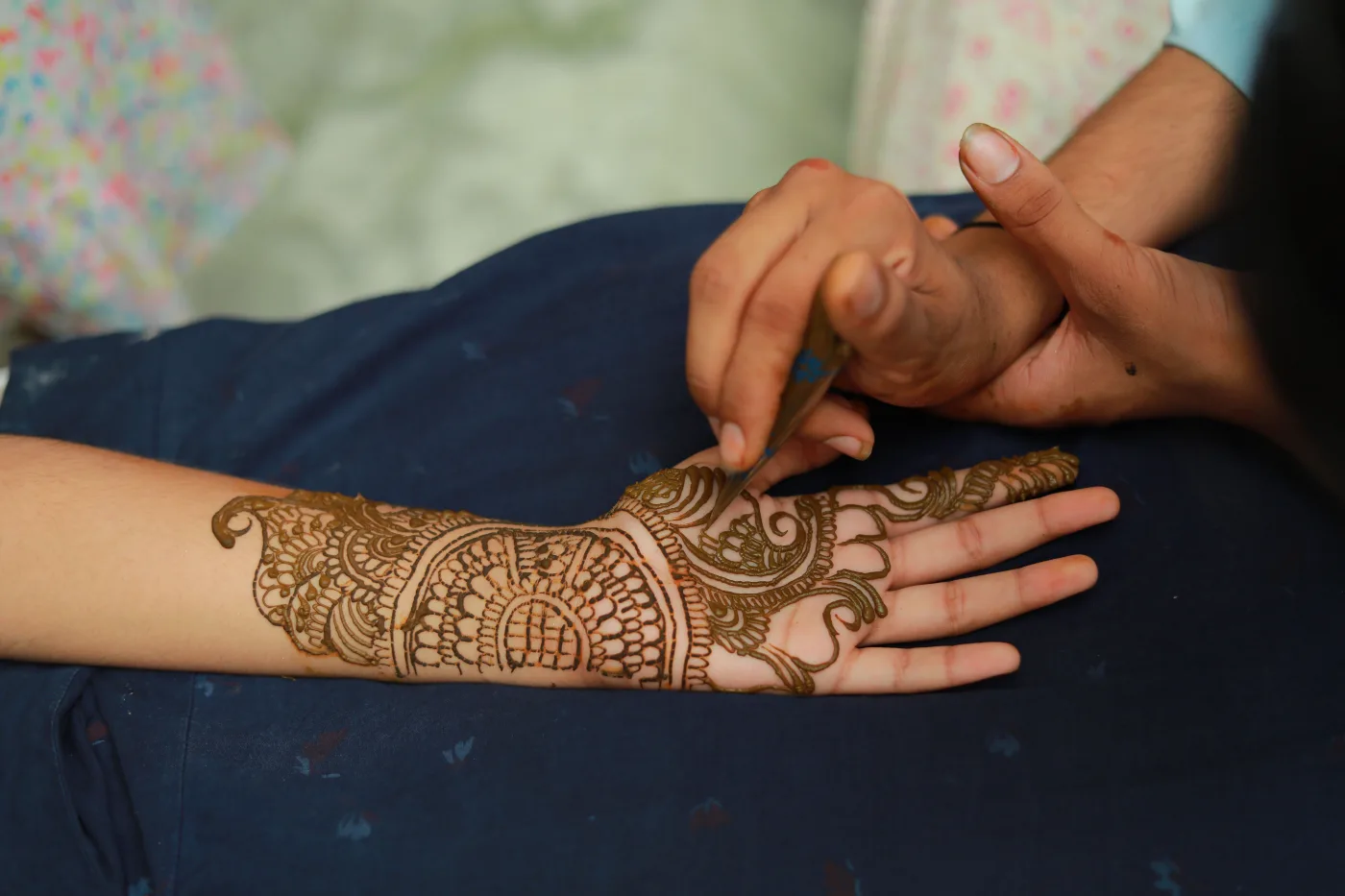
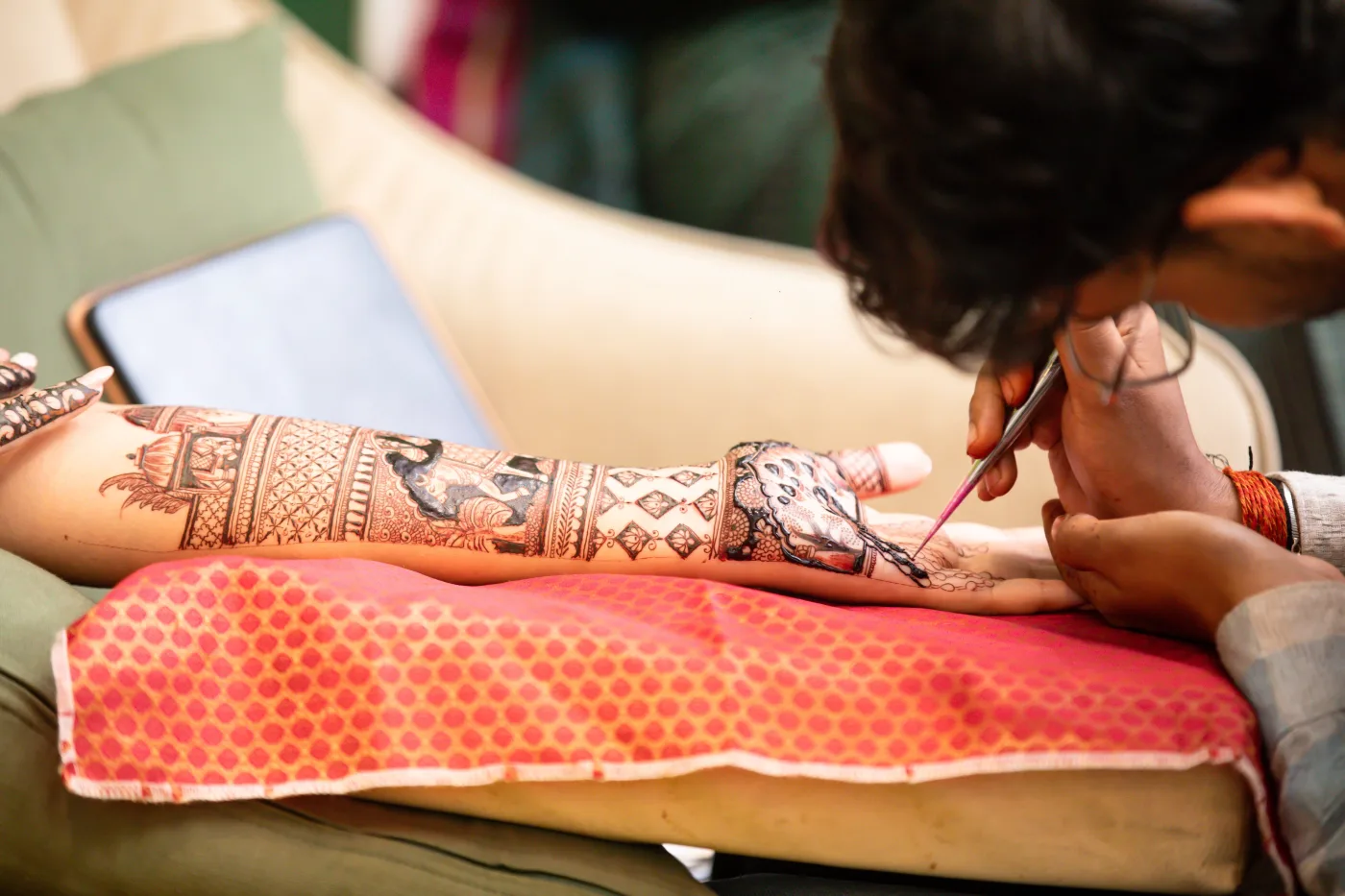
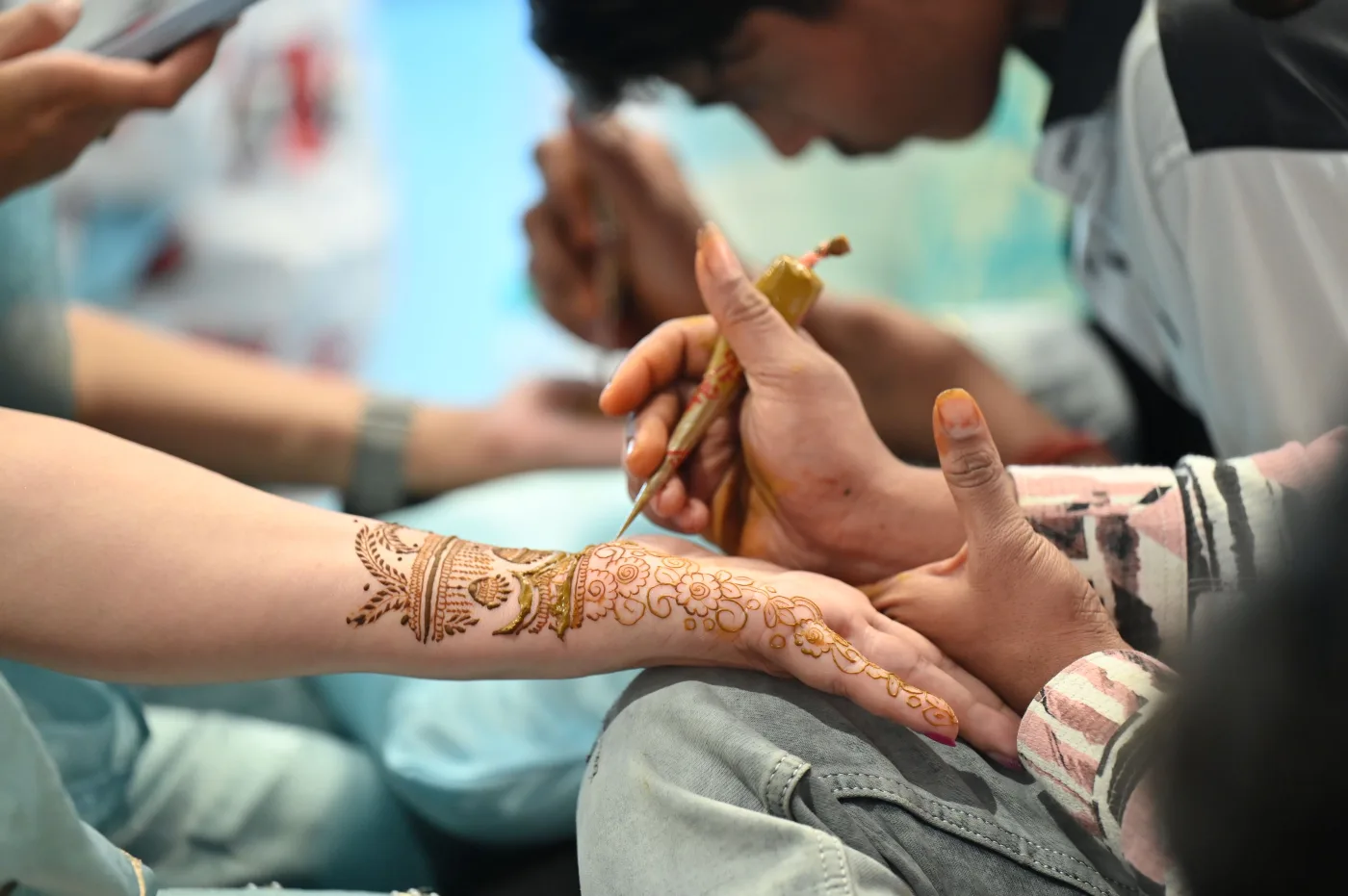
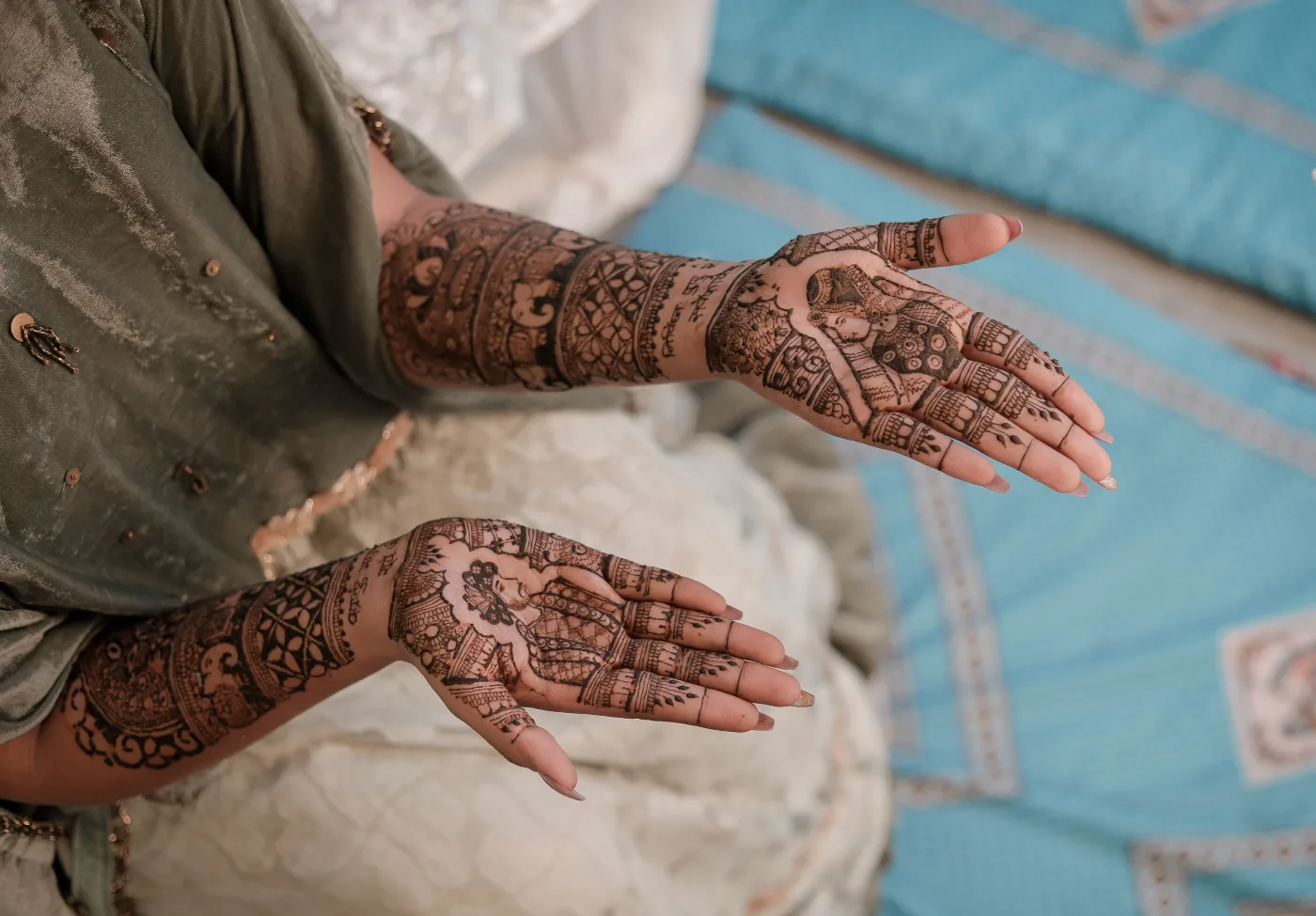
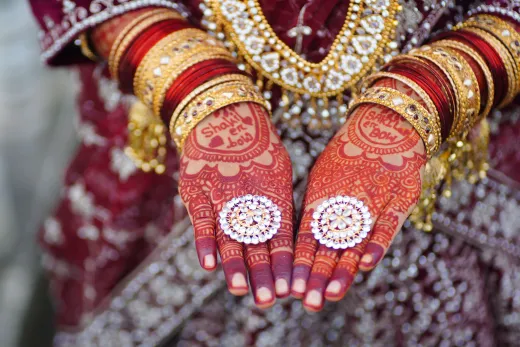
A few real examples worth saving. Screenshots communicate far better than words, so take the ones you like to your artist.
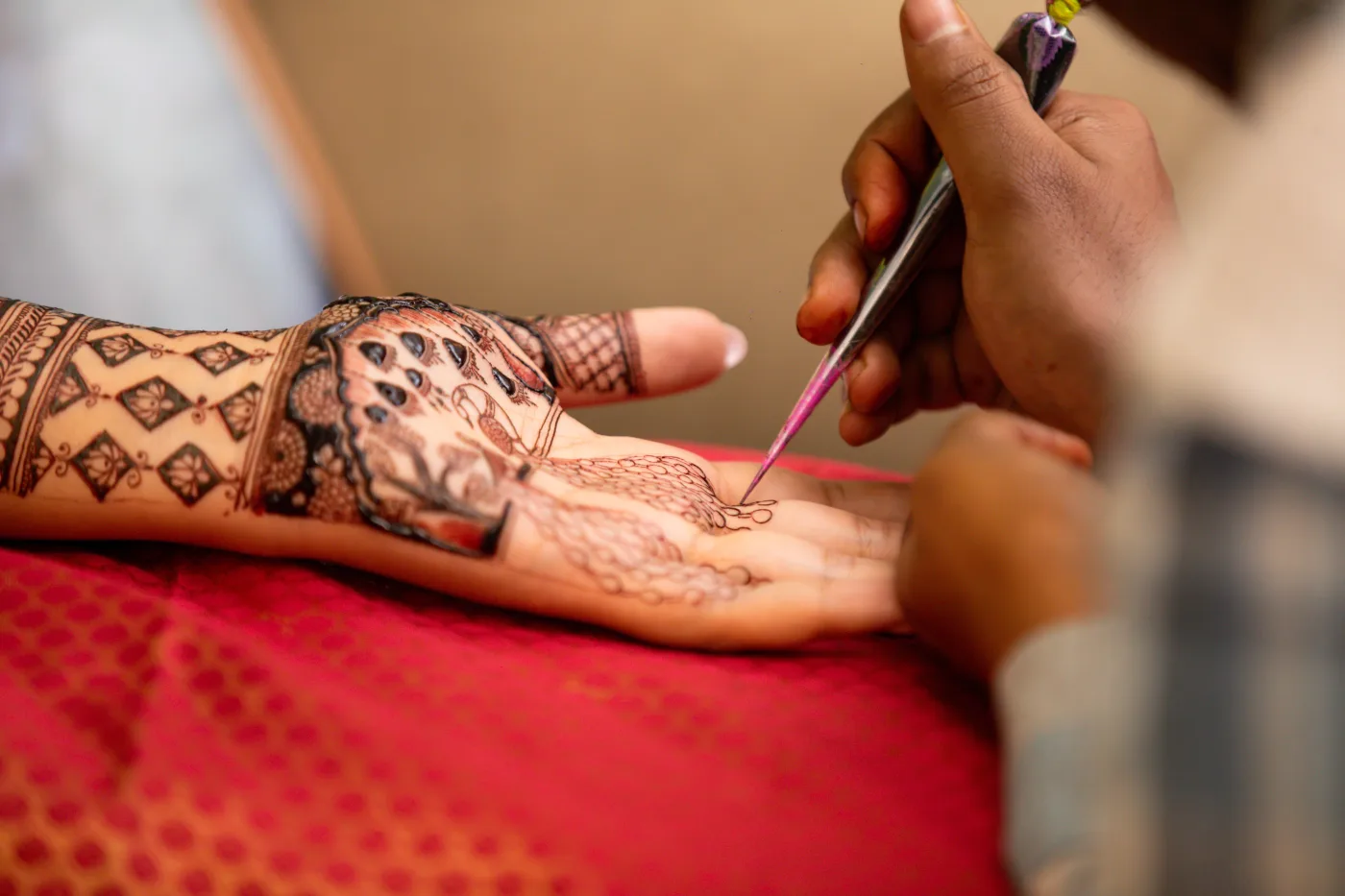
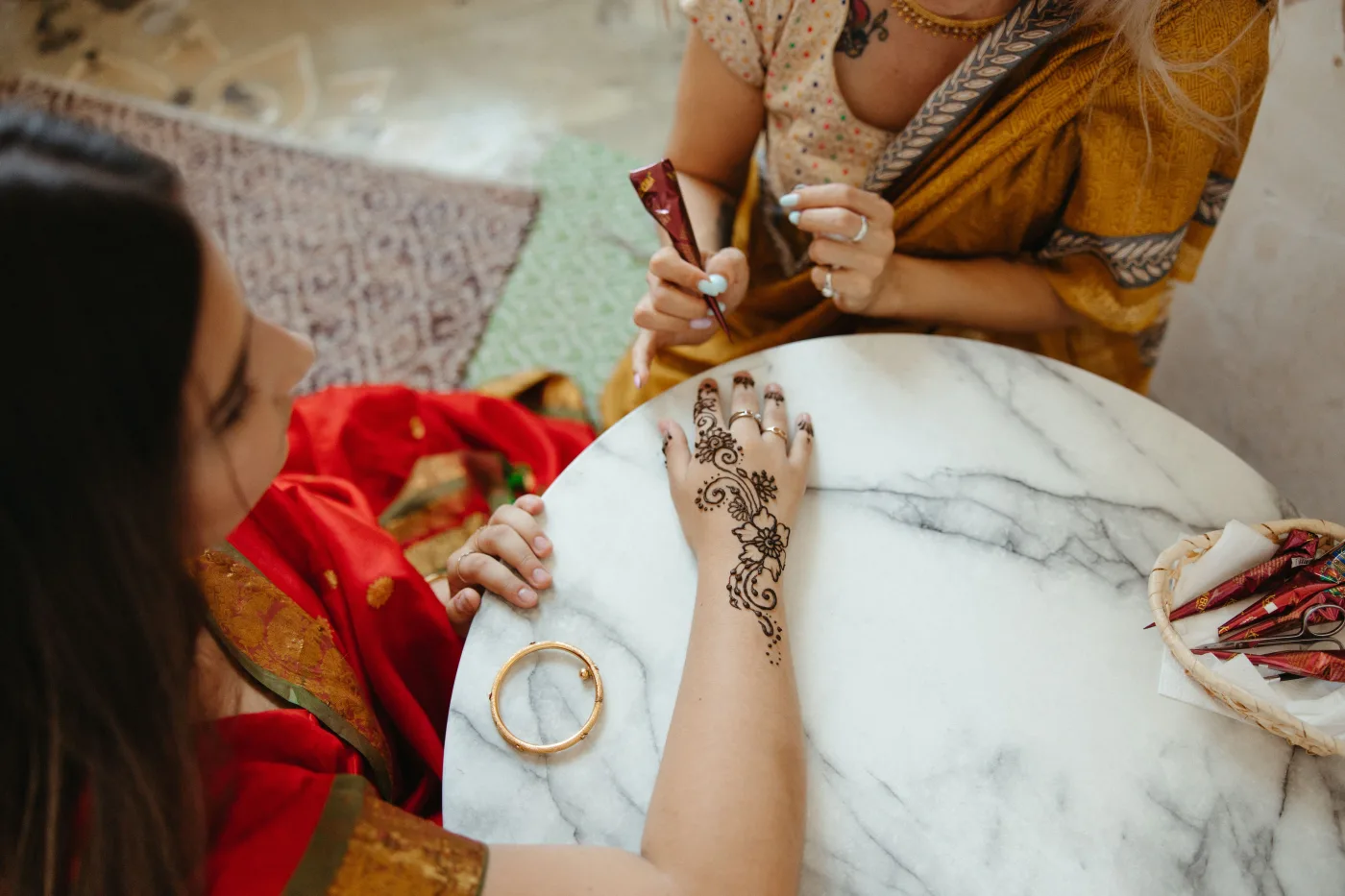
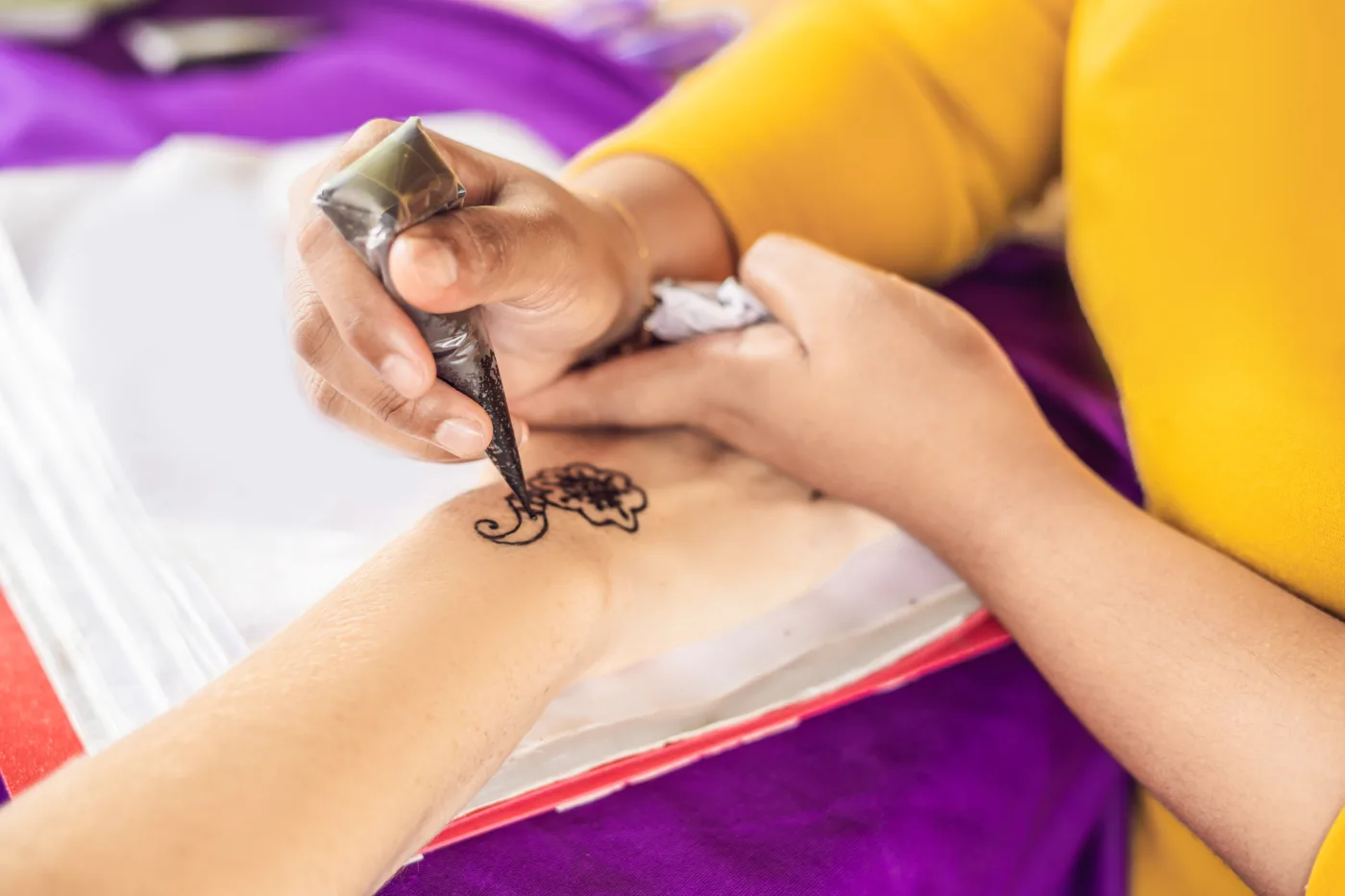
Photos provided by Pexels.
Frequently asked questions
How do I choose the best bridal mehndi artist?
Build a shortlist from personal referrals and recent portfolios, then judge each artist on stain photos taken a day or two after application rather than dark wet-paste close-ups. Look for consistency across many clients, genuine full bridal coverage, natural paste and clean tools, and a willingness to put the hours, coverage and price in writing. The best artist is the one who is honest about colour and reliable on the day, not simply the one with the prettiest single photo.
How far in advance should I book my mehndi artist?
Book a popular artist three to six months before the wedding, and at least six to eight weeks ahead for anyone in demand during peak season. The most sought-after artists sell out their wedding dates first, so early booking gives you a real choice rather than whoever is left. It also leaves time for a trial run four to six weeks before the day.
Why should I look at stain photos instead of the design in the photo?
Fresh henna paste looks almost black on the skin, so a photo taken while the paste is still wet tells you nothing about the colour you will actually wear. The true result is the matured stain that appears 24 to 48 hours after the paste comes off, which deepens from orange to reddish brown. Asking for those later photos is the only way to judge how dark an artist's work really sets.
How can I compare mehndi artist quotes fairly?
Force every quote onto the same terms before you look at the price. Ask each artist exactly how far coverage goes, whether guest and family mehndi is included, how many hours they are booking, whether feet are covered, and whether travel or late-night surcharges apply. A low headline quote often turns out to be the most expensive once the missing pieces are added back, because coverage and hours drive the cost far more than the henna itself.
Is a booking deposit for a bridal mehndi artist normal?
Yes. A deposit to secure your date is standard practice. Keep it reasonable, pay it in a traceable way, and get a written receipt that confirms the date, the coverage and the full price. Be wary of any artist who wants a large cash deposit with nothing on paper, or who cannot give you clear cancellation terms on both sides.
Is black henna safe for a bride?
No. Any paste sold as "black henna" that stains instantly has usually been mixed with para-phenylenediamine, a hair-dye chemical that can cause severe skin reactions and scarring when applied to skin. Natural henna always stains orange first and matures to brown over a day or two. An artist who offers instant black colour to a bride is one to avoid entirely.
Have a question or a topic to suggest?
We read every message. Tell us what you would like to see next on the blog.
Get in touchYou may also like
Bridal Mehndi Price Guide: What Artists Charge
What bridal mehndi really costs: package ranges, the five factors that move a quote, season pressure, and the questions to ask before paying a deposit.
Bridal Mehndi Trial: Questions to Ask
A bridal mehndi trial shows how henna stains your own skin, the true hours your design needs, and the exact questions to ask your artist before you book.
How Long Does Bridal Mehndi Take?
Bridal mehndi takes 3 to 8 hours to apply, plus 6 to 8 hours drying and a day to darken. A realistic timeline by coverage, and when to book it.