Bridal planning
Bridal Mehndi Trial: Questions to Ask
A practical checklist for the practice run every bride should book: what to test, the questions that reveal a safe and reliable artist, and the red flags that should end the booking.
A bridal mehndi trial is a paid practice run, four to six weeks before the wedding, where your chosen artist applies part of your real design so you can see it on your own skin before the day that matters. Most brides skip it, then spend the wedding morning discovering that the stain is paler than the photos on the artist's page, that the design takes two hours longer than promised, or worse, that the paste they used has left an angry red rash. A trial turns every one of those surprises into a question you ask now, when there is still time to change your mind. This is what to test, exactly what to ask, and the answers that should make you book or walk away.
The short version
- A trial tests your skin, not the portfolio. Stain depth depends on your body chemistry, not the artist's best client.
- Time it, do not just look at it. The trial tells you how many real hours your coverage needs.
- Ask about the paste first. Natural, freshly mixed, and PPD-free is non-negotiable.
- Get money and backup in writing. Deposit, balance, cancellation, and who covers you if the artist cannot come.
- Run it four to six weeks out. Late enough that the stain has faded, early enough to switch artists if it goes wrong.
Why a bridal mehndi trial is worth the money
The single biggest myth about bridal henna is that a good portfolio guarantees a good result on you. It does not, because the final colour is a reaction between the paste and your skin, and your skin is not the same as the hand in the photograph. The dye in the leaf, henna, binds to the keratin in the top layer of your skin, and how dark that reaction goes depends on where on your body it sits, how warm you run, how thick your skin is, and how long the paste stays on. A trial is the only way to see your number rather than someone else's.
The other thing a trial buys you is time. Bridal mehndi is one of the longer jobs in the whole wedding, and the schedule only works if the hours are honest. If your artist quotes "about four hours" for full arms and the trial reveals their real pace is closer to six, you want to learn that six weeks out, not at 3pm on the mehndi night with a room full of guests waiting. A trial is a rehearsal for the timeline as much as the design, which is why it pairs so closely with our guide to how long bridal mehndi takes.
What a bridal mehndi trial should actually test
A trial is not "draw something pretty and see if I like it". It is four separate checks, and a good bride runs all four deliberately rather than being dazzled by the first swirl. Treat each one as a box to tick.
Design
Does the artist's style suit your hands, your outfit and your jewellery? Bring the real motifs you want and see them drawn, not described.
Stain on your skin
The most important test. Leave a small patch on, take it off the same way you will on the day, and photograph the colour at 24 and 48 hours.
Timing
Time a defined section, say one full hand, and multiply up. This is how you learn the true hours for your coverage with this specific artist.
Comfort
Do you get on with them? You will sit with this person for most of a day. Rushed, distracted or dismissive now means the same on the night.
The stain test is the one brides most often forget, and it is the one that cannot be faked. Ask the artist to apply a coin-sized patch somewhere discreet, leave it on for the same length of time you plan to on the wedding, scrape rather than wash it off, and then photograph it at paste-off, the next morning, and two days later. Natural mehndi stains orange first and matures to deep brown over one to two days, so a patch that is still pale orange after 48 hours tells you the paste, the aftercare, or your own timing needs work before the real thing.
The exact questions to ask your artist
A trial is also an interview. The design tells you whether they can draw; the questions tell you whether they can be trusted with the most photographed day of your life. Below is what to ask, why each one matters, and the answer a professional gives. If the answers are vague, that is your answer.
| Ask this | Why it matters | A good answer sounds like |
|---|---|---|
| What is in your paste, and when was it mixed? | Fresh, natural paste stains best and safest. Old or shop-bought cones fade fast. | "Henna powder, lemon or water, sugar and essential oil, mixed and rested that morning." |
| Is it 100 percent PPD-free? No "black" or "instant" henna? | PPD is the additive in black henna and causes serious skin reactions. | "Always PPD-free. I never use black henna. Colour comes with time, not chemicals." |
| How many hours will my exact coverage take? | Sets your whole schedule. Vague hours become a panic on the night. | A specific range tied to your coverage, confirmed by the timed trial. |
| Do you travel to me, and is that included? | Home visits, late finishes and mileage are common hidden line items. | "Yes, travel within the city is included; beyond that is a fixed add-on." |
| What is the deposit, balance and cancellation policy? | Most disputes trace back to money that was never written down. | Clear figures and dates, given to you in writing without hesitation. |
| What happens if you fall ill or are double-booked? | A wedding date has no second chance. You need a named backup. | "I have two trusted artists I can send, and I will tell you in advance." |
| How do you keep cones and hands hygienic? | Shared cones and unwashed hands are an infection and reaction risk. | "Fresh cone per bride, clean hands between clients, no double-dipping." |
| Is guest mehndi separate, and do you bring a second artist? | One artist cannot do a full bride and a room of relatives in time. | "Guest mehndi is priced per head; I bring a second artist so your time is protected." |
A real trial patch climbs from orange to deep brown over two days. A patch that turns black on contact is not henna, and it is the one result that should end the booking.
Red flags to watch for at the trial
Some warning signs are about skill, and those are forgivable in a beginner. The ones below are about safety and reliability, and they are not.
End the booking if you see any of these. A paste that stains dark within minutes, or is sold as "black", "instant" or "emergency" henna, almost certainly contains p-phenylenediamine (PPD), a dye additive that was named Allergen of the Year and can cause severe, sometimes lifelong contact dermatitis. A bridal booking is the worst possible moment to discover a reaction, so refuse any cone that promises instant black, and read our full guide to the dangers of black henna before you sit down. The other red flags: refusing a patch test, dodging the ingredient question, reusing the same cone across clients, having no written deposit or cancellation terms, no named backup artist, and pressure to pay the full balance in cash on the spot. None of these are about artistry. They are about whether this person will look after you.
Your copyable question list
Take this to the trial. Read it out, or send it ahead by message so the artist has time to answer properly. A professional will welcome every question on it.
- Paste: What exactly is in your henna, and when was this batch mixed?
- Safety: Can you confirm it is 100 percent PPD-free, with no black or instant henna, ever?
- Patch test: Will you leave a stain patch on me today so I can check the colour at 24 and 48 hours?
- Hours: For my exact coverage, how many hours will you need in the chair?
- Travel: Do you come to me, and is travel included in the quote or extra?
- Deposit: How much is the deposit, when is the balance due, and what is your cancellation policy?
- Backup: If you fall ill or are double-booked, who covers my wedding, and how will you tell me?
- Hygiene: Do you use a fresh cone per bride and clean your hands between clients?
- Guests: Is guest mehndi separate, and will you bring a second artist so my time is protected?
- The day: What time do we need to start so the paste is on long enough before I sleep?
If you are still comparing artists rather than confirming one, these questions do double duty as a shortlist filter. Our guide on how to choose a bridal mehndi artist goes deeper on reading the answers, and the price side of the same decision is covered in the bridal mehndi price guide, because the quote and the trial should be judged together.
When and how to run the trial properly
Timing matters more than most brides expect. Too early and the patch has faded before you can compare it to the wedding; too late and there is no room to switch artists if it goes wrong. Four to six weeks out is the window. That is far enough that a trial stain will have faded before the big day, so you are not walking down the aisle with a practice design still visible, and close enough that the artist's paste, pace and skin match are the same ones you will get on the night.
Run it like a miniature of the real thing rather than a chat. Book a proper appointment, not a five-minute add-on. Bring the exact design references you want, ideally screenshots rather than descriptions. Wear or bring your jewellery so you can see the design against it. Ask for a defined section to be applied, one full hand is ideal, and time it from first line to finished. Then treat the aftercare exactly as you plan to on the wedding: leave the paste on the full duration, scrape it rather than washing, keep water off it, and photograph the colour in daylight at paste-off, the next morning, and two days later.
Book it 4 to 6 weeks out
Late enough that the practice stain fades before the wedding, early enough to change artists if the trial disappoints.
Bring real references
The actual motifs and coverage you want, as screenshots. A trial of a random design tells you nothing about your design.
Time a fixed section
One full hand, start to finish, then multiply. This converts a portfolio into an honest schedule for your coverage.
Photograph the fade-up
Same light, three times: paste-off, next morning, two days later. The 48-hour photo is your true wedding colour.
The bottom line
A bridal mehndi trial is not an indulgence; it is the cheapest insurance you can buy on the most photographed part of the day. It converts three of the biggest wedding-morning risks, a pale stain, a design you do not love, and hours that run over, into questions you settle six weeks early, when you still have every option open. Book it four to six weeks out, bring your real design, time a defined section, and above all patch-test the stain on your own skin and watch it climb to deep brown over two days. Ask the paste and safety questions before anything else, get the money and the backup in writing, and treat any instant-black cone as the end of the conversation. Do that, and the mehndi that shows up in your wedding photos is the one you already chose, on your skin, weeks before you needed to trust it.
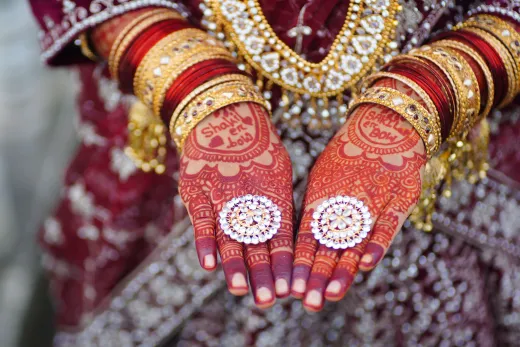
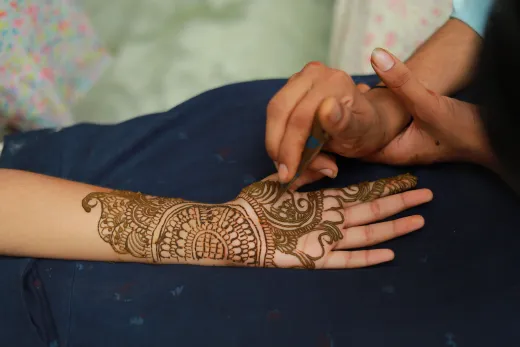
Bridal mehndi in pictures
A few real examples worth saving. Screenshots communicate far better than words, so take the ones you like to your artist.
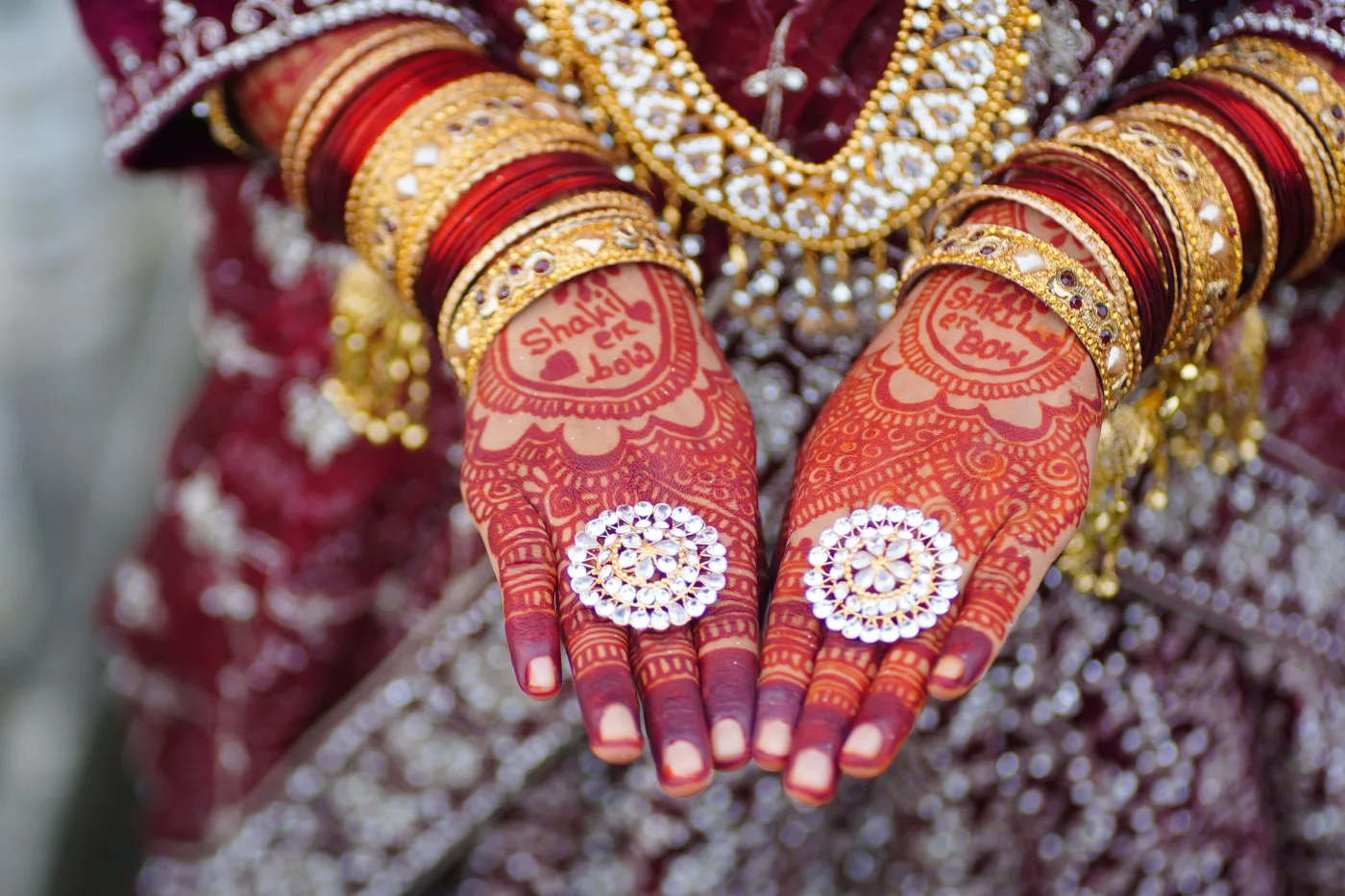
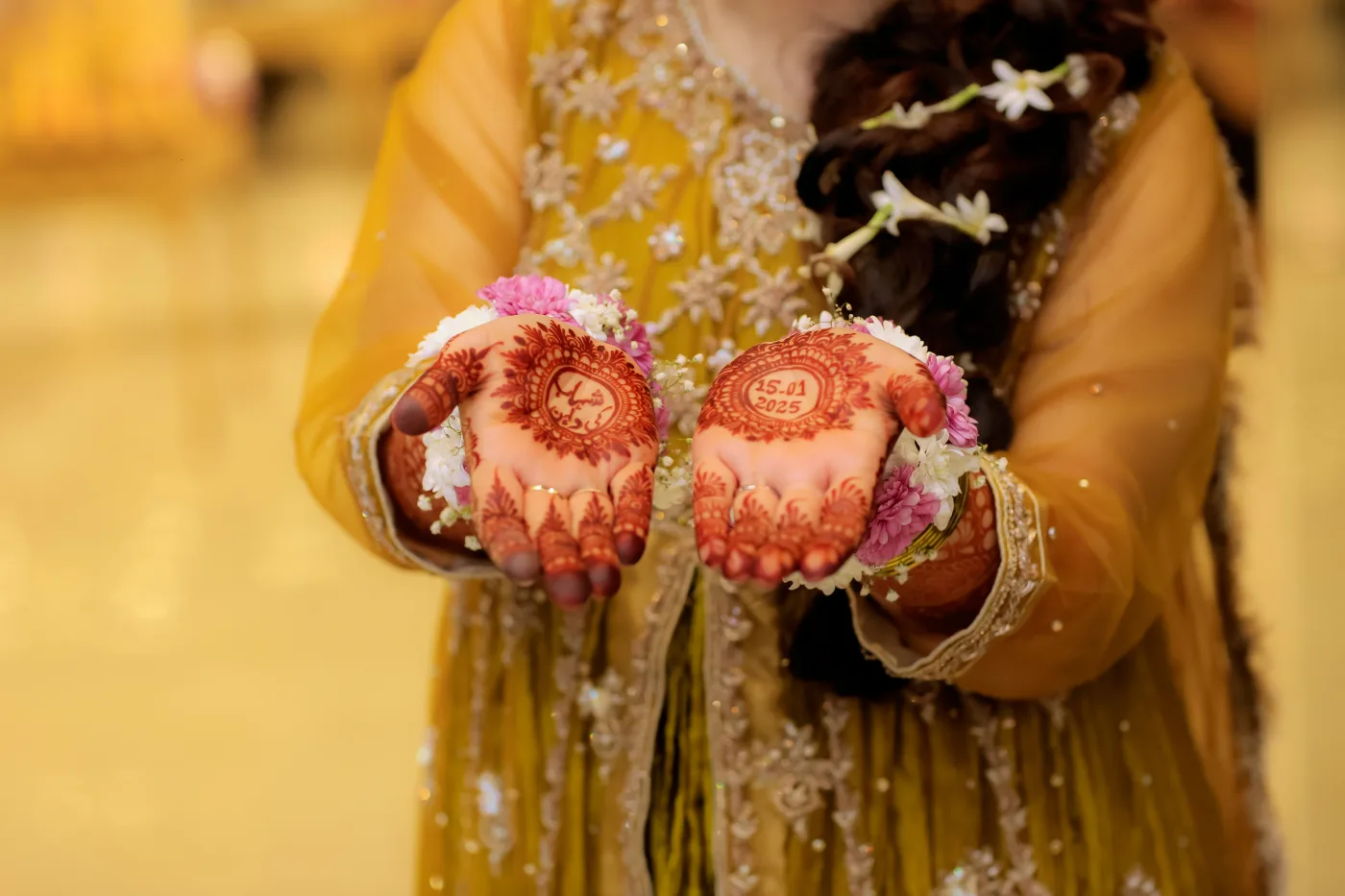
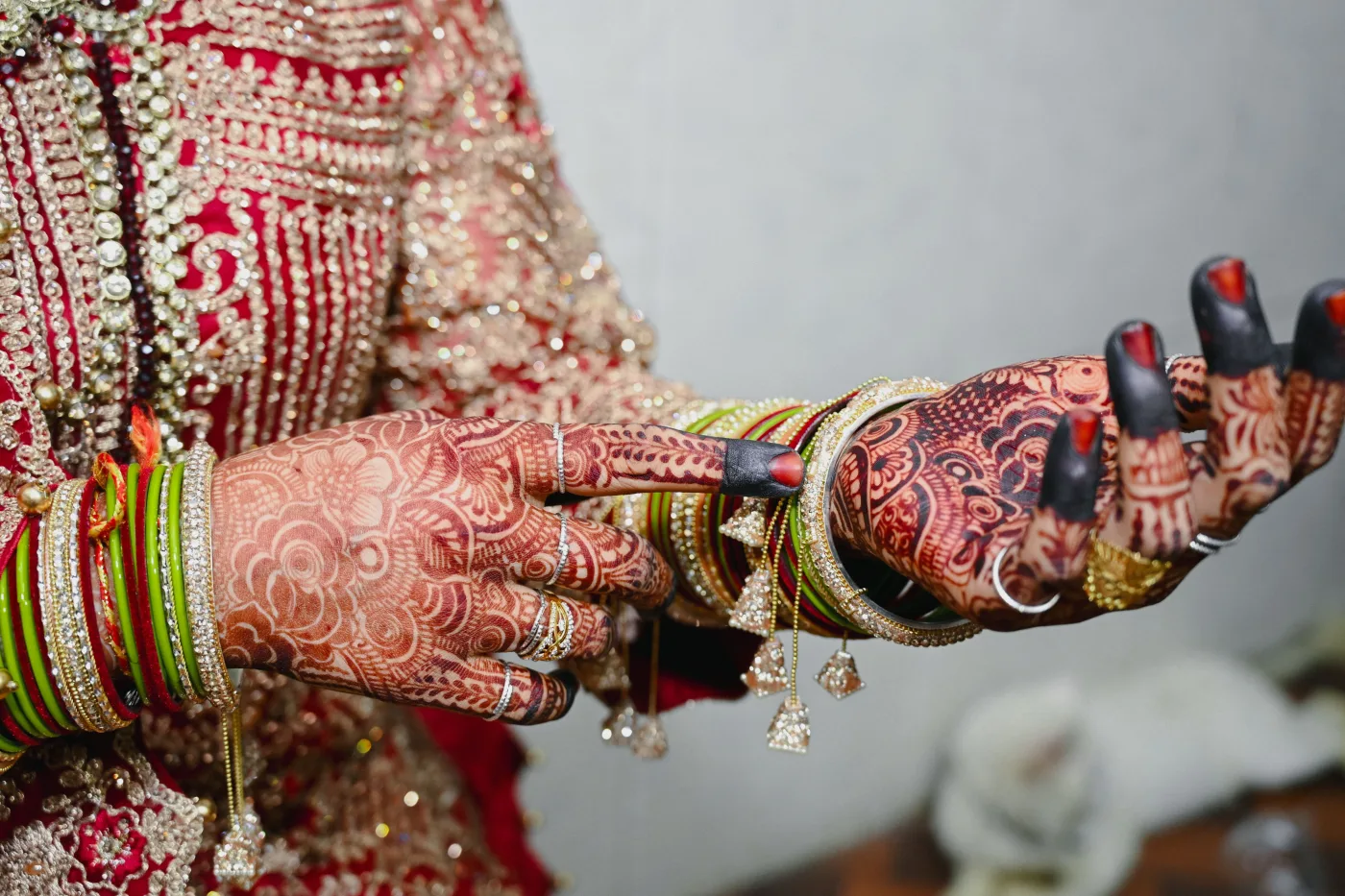
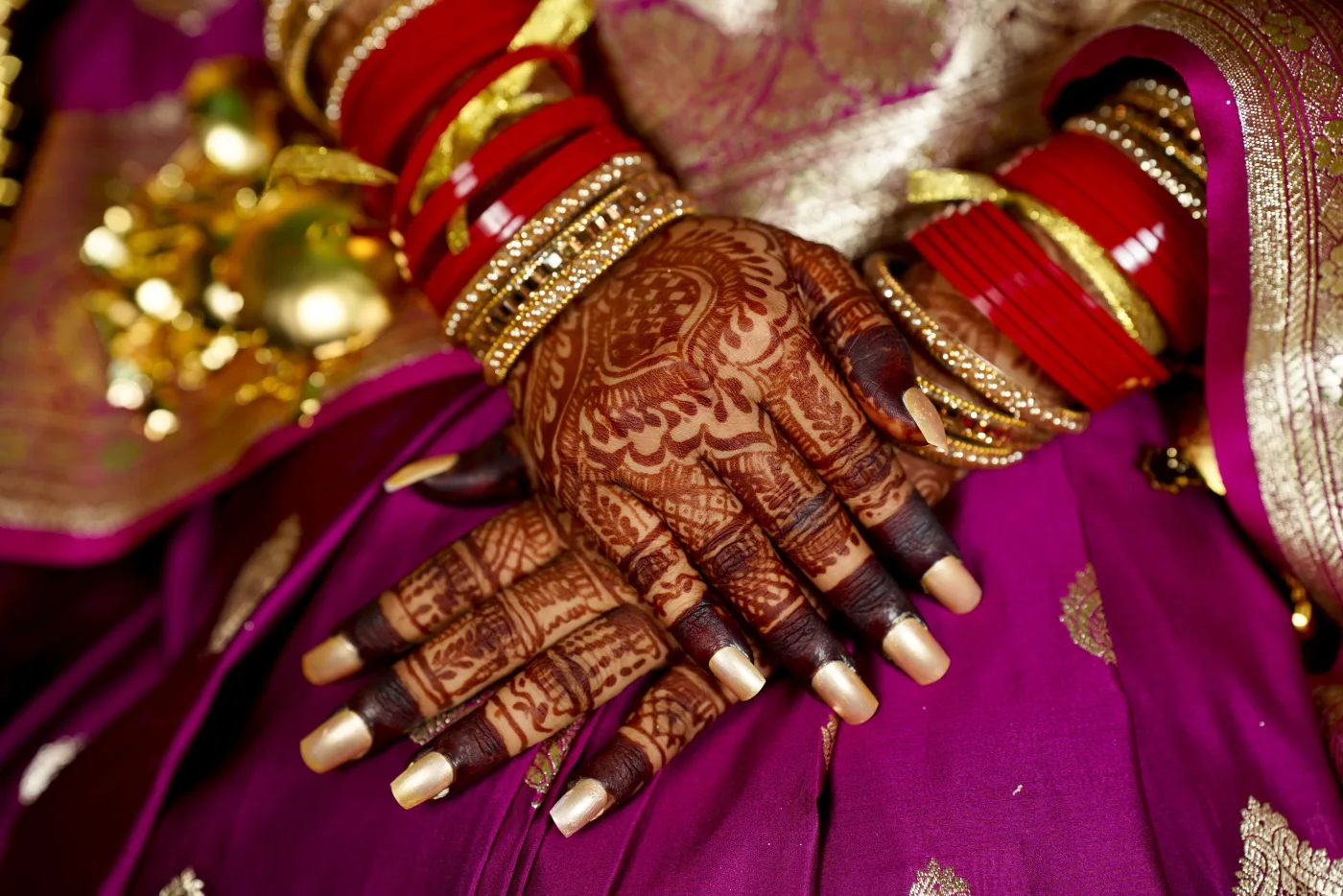
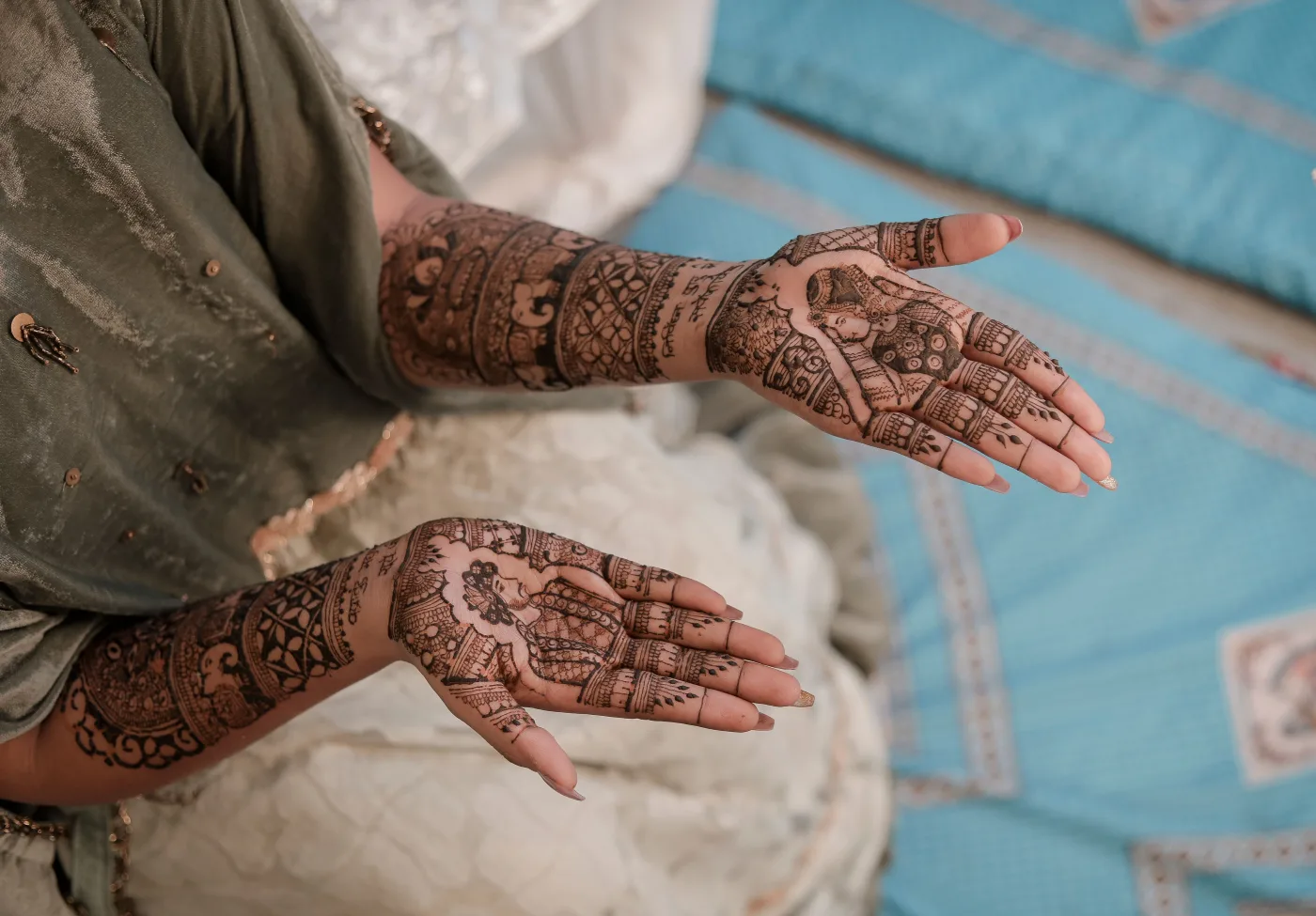
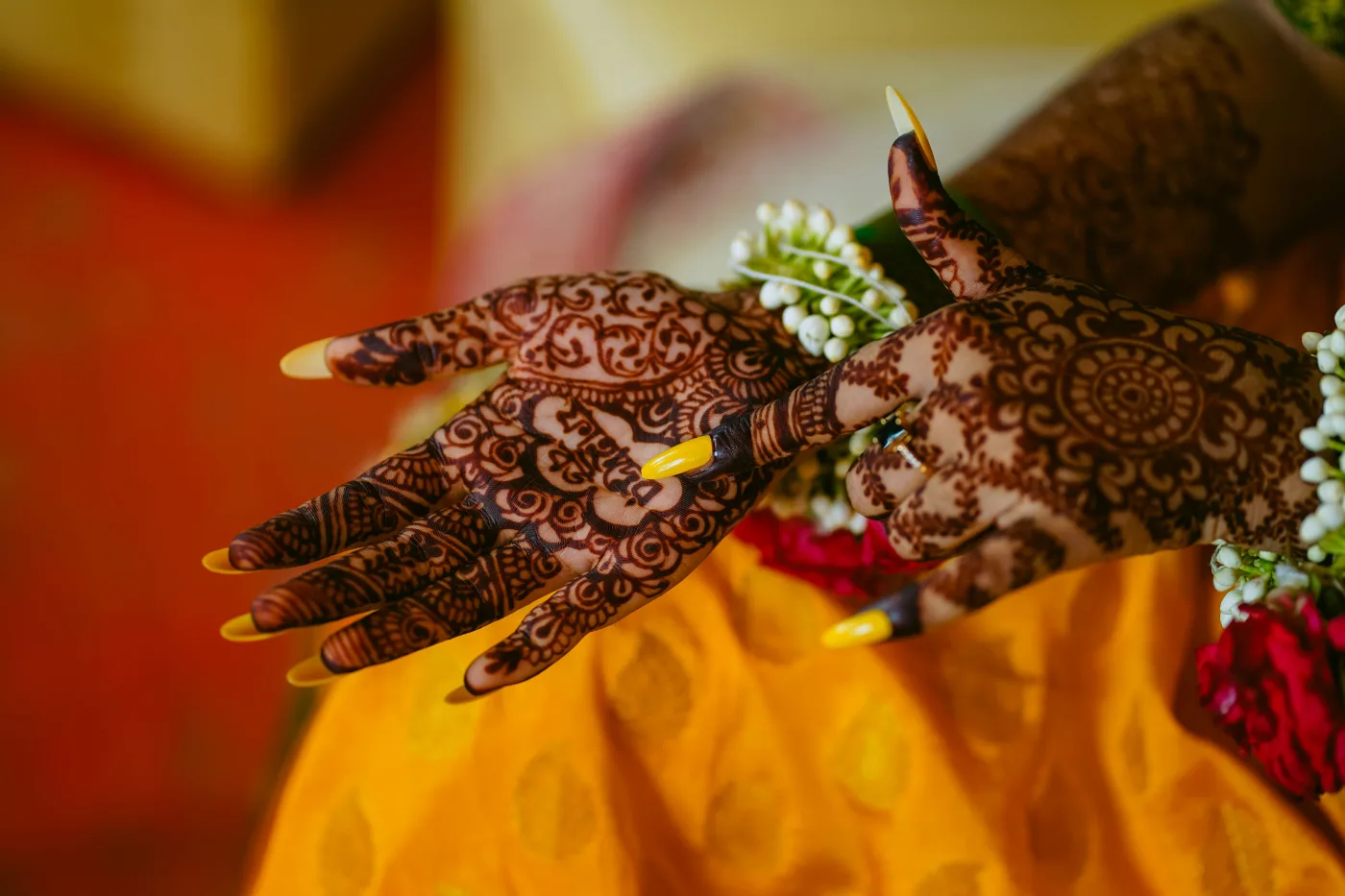
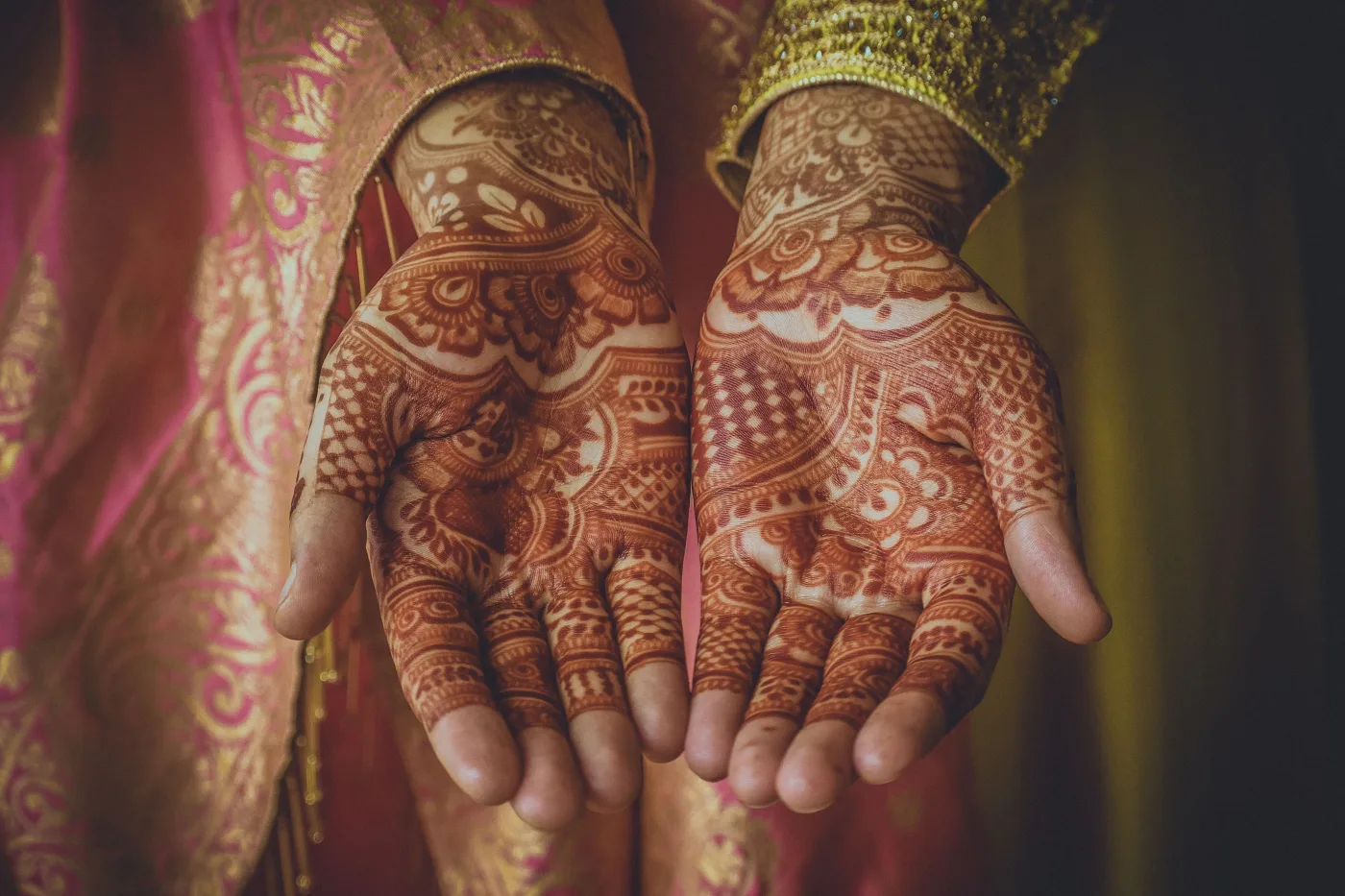
Photos provided by Pexels.
Frequently asked questions
Should I do a mehndi trial before my wedding?
Yes. A trial is the only way to see how your chosen artist's paste actually stains on your own skin, how long your specific coverage really takes, and whether you like the design against your outfit and jewellery. It turns wedding-morning surprises into questions you can still act on, and for the small cost of a practice session it is the best insurance you can buy on a day that cannot be redone.
How long before the wedding should the bridal henna trial be?
Four to six weeks before the wedding is the sweet spot. That is late enough that the practice stain will have faded before the day, so you are not left with a visible trial design, and early enough that if the colour, timing or comfort disappoints you, there is still room to switch artists or adjust the plan. Any closer than a month and you lose the ability to change your mind.
What questions should I ask a bridal mehndi artist?
Ask what is in the paste and when it was mixed, whether it is completely PPD-free with no black or instant henna, how many hours your exact coverage will take, whether travel is included, the deposit and cancellation terms, who the backup artist is if they cannot come, how they keep cones and hands hygienic, and whether guest mehndi is separate with a second artist. Vague answers to any of these are themselves an answer.
How do I test the mehndi stain quality at a trial?
Have the artist apply a coin-sized patch, leave it on for the same length of time you plan to on the wedding, then scrape rather than wash it off. Photograph it in daylight at paste-off, the next morning, and two days later. Natural henna starts pale orange and matures to deep brown over 24 to 48 hours, so a patch still orange after two days tells you the paste or aftercare needs work before the real thing.
What are the red flags at a bridal mehndi trial?
The biggest is any paste that stains dark within minutes or is sold as black, instant or emergency henna, which usually means it contains PPD and can cause severe skin reactions. Others include refusing a patch test, dodging the ingredient question, reusing the same cone between clients, having no written deposit or cancellation terms, no named backup artist, and pressure to pay the full balance in cash on the spot.
Is black henna safe to use for a bridal trial?
No. Black henna owes its instant dark colour to added p-phenylenediamine, a dye that can cause severe and sometimes lifelong contact dermatitis, and a wedding is the worst possible time to discover a reaction. Genuine henna never stains black on contact; it develops from orange to brown over a day or two. Refuse any cone that promises instant black, at the trial or on the day.
Have a question or a topic to suggest?
We read every message. Tell us what you would like to see next on the blog.
Get in touchYou may also like
Bridal Mehndi Price Guide: What Artists Charge
What bridal mehndi really costs: package ranges, the five factors that move a quote, season pressure, and the questions to ask before paying a deposit.
How Long Does Bridal Mehndi Take?
Bridal mehndi takes 3 to 8 hours to apply, plus 6 to 8 hours drying and a day to darken. A realistic timeline by coverage, and when to book it.
How to Choose a Bridal Mehndi Artist
A practical guide to choosing a bridal mehndi artist: where to find them, how to read a portfolio, compare quotes fairly, check hygiene, and book the right one.