Hair Henna Safety
Henna Hair Side Effects
A balanced look at henna hair side effects: the mild trade-offs of pure henna, and the serious risks of compound and black hennas containing metallic salts or PPD.
Pure henna is one of the gentlest ways to colour hair, and for most people it causes no harm at all. It coats the strand rather than stripping it, needs no ammonia or peroxide, and has been used on hair for thousands of years. So why does henna have a reputation for problems? Two reasons. The first is that even genuine henna has real trade-offs: it can leave some hair feeling dry or stiff, the colour is stubbornly permanent, and the result over already-dyed hair is hard to predict. The second is far more serious. Many products sold as "henna" are nothing of the sort. They are "compound" or "black" hennas spiked with metallic salts or a hair-dye chemical called PPD, and those can react violently with a later salon service. This guide separates the mild, manageable side effects of real henna from the genuine dangers of the fakes.
The short version
- Pure henna is generally safe for hair. It coats the strand and conditions many hair types rather than damaging them.
- The common complaints are dryness and stiffness for some people, and a colour that is very hard to remove or change.
- Results are unpredictable over treated hair. Bleached, dyed or grey hair can grab henna far more strongly than you expect.
- True scalp allergy to pure henna is rare but possible, which is why a patch test and a strand test both matter.
- The real danger is "compound" or "black" henna. Added metallic salts or PPD can react badly with a later chemical service and cause severe reactions.
First, the good news about pure henna on hair
It helps to be clear about what real henna is before listing what can go wrong. Body and hair henna both come from the dried, powdered leaves of Lawsonia inermis, the henna plant. The leaves carry a single dye molecule, lawsone, which is released when the powder is mixed with a mild acid and left to rest. On hair, that lawsone binds to the keratin protein of the shaft and wraps it in a translucent reddish layer. Because it works by coating rather than by opening the cuticle with ammonia and lifting pigment with peroxide, pure henna is fundamentally gentler than a conventional permanent dye. Many people find it makes hair look thicker and feel stronger, and it can be a genuinely good option, which is why we cover it in full in our guide to using henna for hair.
The real side effects of pure henna
Set the fakes aside for a moment and focus on 100 percent plant henna. It still has a handful of genuine trade-offs. None of them are dangerous, but knowing about them ahead of time is the difference between a happy result and an unpleasant surprise.
Dryness and stiffness
The most common complaint. Henna can leave some hair, especially fine or already-dry hair, feeling coarse, stiff or straw-like, particularly over the first few applications.
Near-permanence
Henna does not fade out like a semi-permanent dye. It builds up and grips the shaft, so it is very hard to lift, lighten or reverse once it is on.
Unpredictable colour
The final shade depends entirely on your starting colour. Over grey, bleached or previously dyed hair it can turn out far brighter, more orange or more uneven than expected.
Loss of curl or volume
Repeated heavy application can weigh hair down and loosen curl pattern for some people, as layers of dye build up on the strand.
Scalp sensitivity
Uncommon with pure henna, but the scalp can feel tight or itchy, and a genuine allergic reaction to the plant, while rare, is possible.
Time and mess
Not a health risk, but real. Henna needs a long processing time, stains everything it touches, and is much harder to apply evenly than a tube of dye.
Henna colours by coating the hair shaft rather than by opening it. That is what makes it gentle, and also what makes the colour hard to remove and, for some, a little stiff.
Why henna colour is so hard to reverse
Of all the pure-henna side effects, permanence is the one that catches people out most often. A conventional semi-permanent dye sits loosely and washes down over a few weeks. Henna does not. The lawsone bonds firmly to keratin and layers up with each application, so the colour is genuinely difficult to lift, lighten or dye over afterwards. If you henna your hair red and later decide you want to go blonde or ash, you are in for a long and frustrating process, because ordinary bleach struggles to shift a henna deposit evenly and can turn it unexpected shades.
This is not damage as such. It is simply that you are committing to a colour that behaves very differently from box dye. The practical lesson is to be sure before you start, to test on a hidden strand first, and to treat henna as a long-term choice rather than a casual experiment. We walk through shade expectations and application in detail in our henna hair dye guide, which is worth reading before your first full application rather than after.
Where pure henna gets unpredictable
Henna is translucent. It adds a red-to-auburn tone on top of whatever colour is already there rather than replacing it, which is exactly why the outcome depends so heavily on your starting point. On virgin dark hair the effect is usually a subtle reddish shine. On grey or white hair, which has no competing pigment, the same paste can grab as a vivid, almost neon copper. And on hair that has been bleached or chemically lightened, the porous, damaged shaft can drink up the dye and turn out far darker or brighter than the swatch suggested.
The most cautious scenario is henna over hair that has recently been permed, relaxed, bleached or coloured with a conventional dye. Even with genuine henna, the interaction can be uneven, and the result is hard to predict. That unpredictability is one reason a strand test is not optional over treated hair. It is also, as the next section explains, where the truly serious risks begin, because "henna" products aimed at covering grey are the ones most likely to hide unwanted additives.
The serious risk: compound henna, metallic salts and PPD
Everything above concerns real henna and is, at worst, a manageable annoyance. This section is different, and it is the single most important part of the article. A large share of the henna hair horror stories do not involve henna at all. They involve "compound henna," a category the henna plant's own encyclopedic entry warns about directly: products that add "metal salts that can interact with other chemical treatments, oils and waxes that may inhibit the dye, or dyes which may be allergens."
Two additives cause almost all the damage. The first is metallic salts, used in some "compound" hennas to fix or vary the colour. Hair loaded with metallic salts can react unpredictably with the peroxide in a later salon service. Stylists describe smoking, heat, colour turning green or a nasty smell, and in bad cases hair breaking off or melting mid-process. The metallic salts are also why so many salons flatly refuse to chemically colour or perm over "henna" of unknown origin. The second additive is para-phenylenediamine (PPD), a strong hair-dye chemical often added to "black henna" to force a fast, jet-black result. PPD is a potent allergen that can cause severe contact dermatitis, and it was named Allergen of the Year in 2006 by the American Contact Dermatitis Society. Once PPD has sensitised you, that reaction is a lifelong issue.
The rule that prevents the worst injuries: if a "henna" promises jet-black hair, a fast result, or a fixed colour "on any hair," treat it as adulterated. Pure henna is only ever a red-to-auburn tone, never true black, and it takes time. Before any bleach, perm or permanent colour service, tell your stylist exactly what has been on your hair. Mixing peroxide with metallic-salt "compound henna" can smoke, overheat and break hair off. Never assume an unlabelled henna is pure. If you cannot verify the ingredients, do not use it, and read our full warning on why black henna is dangerous.
Side effects at a glance: cause and cure
Almost every henna hair problem has a clear cause and a simple way to avoid it. This table is the quick reference. Note how sharply the last two rows, the ones about additives, stand apart from the rest in seriousness.
| Side effect | What causes it | How to avoid it |
|---|---|---|
| Dryness or stiffness | The dye coating plus acidic mixes, worst on fine or dry hair | Condition well after, add oil or yoghurt to the paste, do not over-apply |
| Colour too bright or orange | Grey, white or light hair grabbing henna with no competing pigment | Strand test first; adjust with indigo or shorter processing time |
| Uneven or wrong result over treated hair | Porous bleached or dyed hair absorbing dye unevenly | Always strand test on treated hair; wait after other chemical services |
| Cannot lighten or change the colour later | Henna bonds firmly and layers up; it does not wash out | Treat henna as a long-term commitment; be sure before the first full application |
| Scalp itching or a rash | Scalp sensitivity or, rarely, a true allergy to the plant | Patch test 48 hours before; stop if the skin reacts |
| Hair smoking, breaking or turning green in the salon | Metallic salts in "compound henna" reacting with peroxide | Only use pure henna; disclose all products to your stylist before any service |
| Blistering, severe scalp reaction, lifelong sensitisation | PPD hidden in "black henna" | Never use jet-black or instant "henna"; verify ingredients or avoid |
Who should take extra care
Most healthy adults can use pure henna on hair without a second thought. A few situations call for more caution, and one calls for medical advice first.
Anyone with recently treated hair
Bleached, permed, relaxed or freshly dyed hair reacts unpredictably. Strand test, and wait before layering henna on top.
People with reactive or allergy-prone skin
A history of eczema or contact allergies raises the odds of a scalp reaction. Patch test the paste 48 hours ahead.
Anyone previously exposed to PPD
Prior sensitisation to PPD, often from "black henna" tattoos, can make later reactions faster and stronger. Avoid all dark, fast "hennas."
People planning a salon colour or perm soon
Metallic-salt compound henna can wreck a later chemical service. If you may bleach or perm later, use only verified pure henna, or wait.
Pregnant and breastfeeding people
Pure plant henna on hair is generally considered low risk, but avoid unknown compound products and ask your doctor if unsure.
Families with G6PD deficiency
Henna has been linked to red-cell breakdown in G6PD-deficient infants. Keep it off very young children and ask a doctor first.
The last point is worth spelling out. Glucose-6-phosphate dehydrogenase deficiency is a common inherited condition in which red blood cells break down more easily, and natural henna has been linked to haemolytic crises in G6PD-deficient infants. This is a concern for babies and very young children rather than for an adult colouring their own hair, but it is a real reason to keep henna away from the youngest heads and to ask a doctor if the deficiency runs in the family.
How to avoid problems: patch test and strand test
Two quick tests catch almost every henna hair problem before it happens. They protect against different things, so do both. The patch test guards your skin against an allergic reaction. The strand test guards your hair against an ugly colour or a bad chemical interaction. Neither takes much effort, and both are the same principle a professional colourist uses.
For the patch test, dab a little of the mixed paste behind the ear or on the inner elbow, let it dry, and leave it as long as you would for a real application. Remove it and watch the skin for a full 48 hours. A faint stain is normal and expected. Redness, swelling, itching or bumps are not, and mean you should not proceed. This is the same test dermatologists use for contact allergies, and it is your best defence against a reaction, whether to the plant itself or to a hidden additive.
For the strand test, mix the paste as you would for the whole head and apply it to a small, hidden section of hair, ideally underneath at the back. Leave it the full processing time, rinse, dry, and look at the result in daylight. This shows you the true colour on your hair, reveals whether treated or grey sections grab too strongly, and, crucially, gives away a compound product: if the test strand feels gummy, smells chemical, overheats or behaves strangely, do not put that product on the rest of your head. The strand test is also the safe way to find out whether henna will play nicely with hair that has had other chemical services, which is exactly where the guesswork is most dangerous. If you want the wider safety picture beyond hair, our overview of whether henna is safe covers skin, children and allergies in one place.
General guidance, not a diagnosis: this article explains widely reported risks so you can make an informed choice. It is not medical advice. If you have a history of severe allergies, a scalp condition, G6PD deficiency in the family, or any doubt about a product, ask a qualified healthcare professional or a trusted colourist before using henna on hair.
The bottom line on henna hair side effects
Pure henna is not bad for hair. For most people it is a gentle, conditioning, plant-based colour whose worst side effects are a little dryness, a colour that is hard to undo, and results that need a strand test to predict. Those are trade-offs, not dangers, and they are easy to manage once you know to expect them. The genuine hazards, the smoking, breaking hair and severe skin reactions that give henna its scary reputation, come almost entirely from "compound" and "black" hennas carrying metallic salts or PPD, not from the plant. Buy only body-art-quality henna from a source that lists its ingredients, refuse anything that promises instant black or a fixed colour on any hair, patch test and strand test every time, and tell your stylist the truth about what has touched your hair before any chemical service. Do that, and henna is one of the safest colours you can put on your head.
Henna hair in pictures
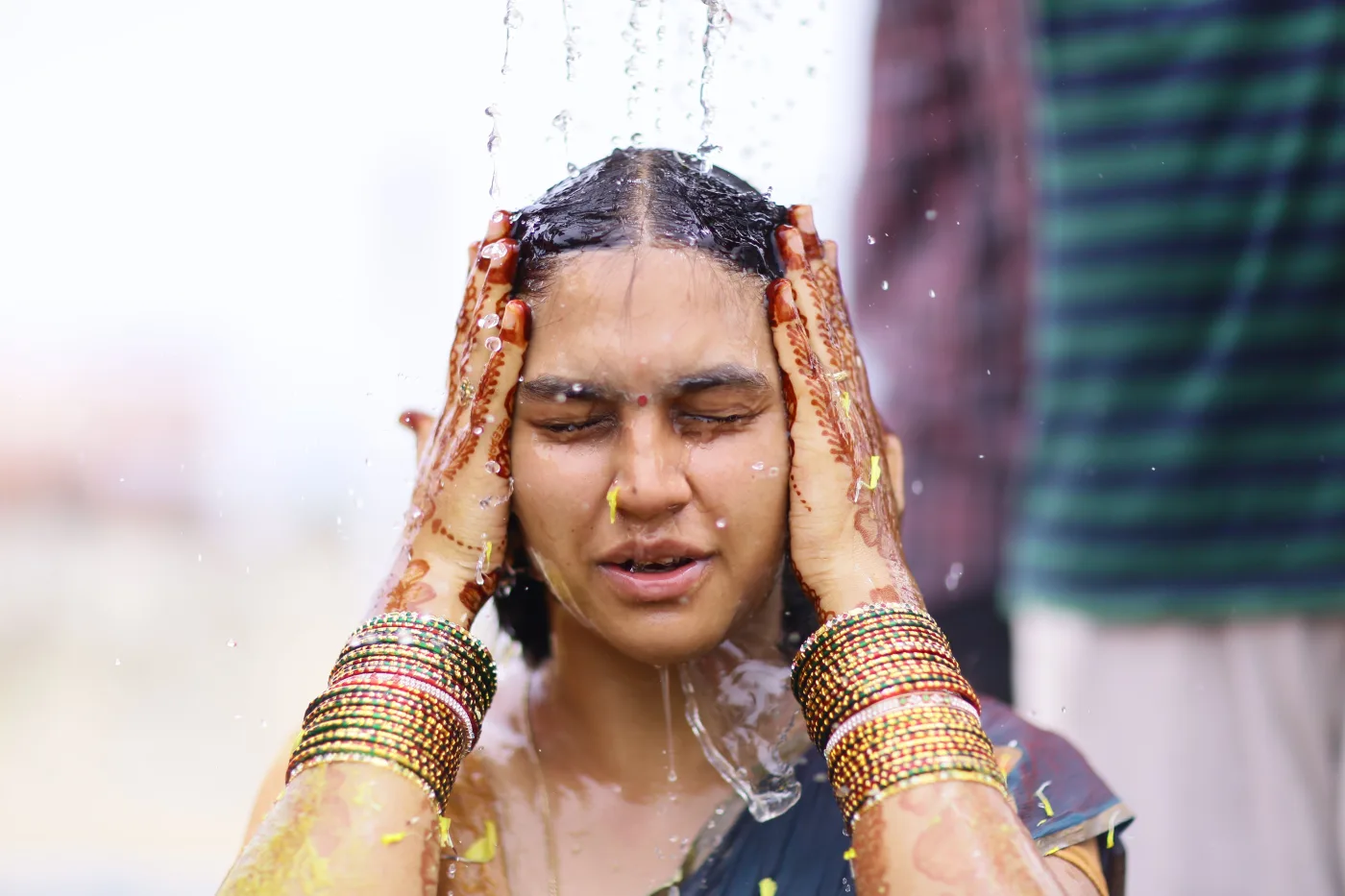
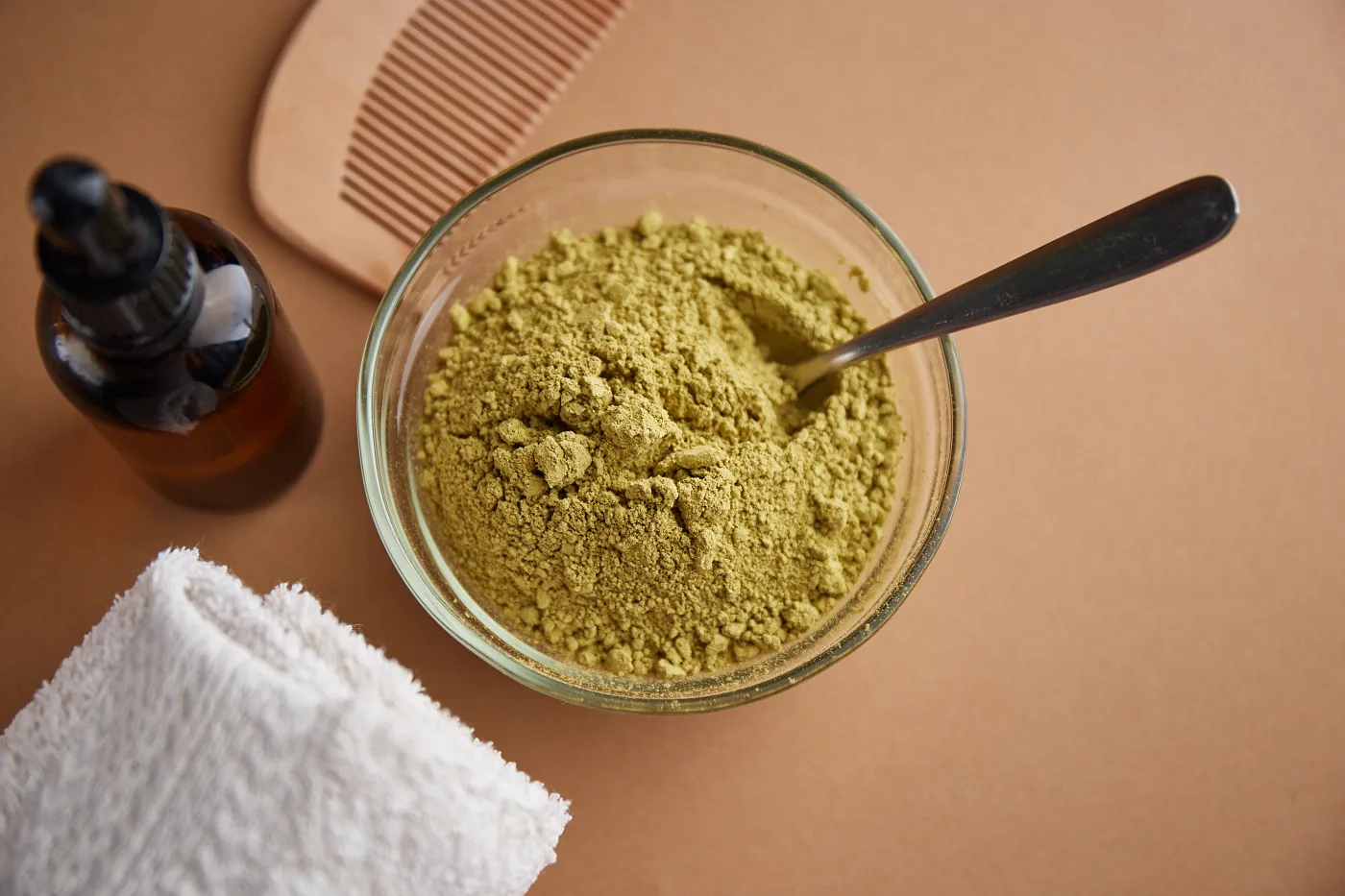
A few real examples worth saving. Screenshots communicate far better than words, so take the ones you like to your artist.





Photos provided by Pexels.
Frequently asked questions
Is henna bad for your hair?
Pure, 100 percent plant henna is generally not bad for hair. It colours by coating the strand rather than by stripping it with ammonia and peroxide, so it is gentler than a conventional permanent dye and often leaves hair looking thicker. The real side effects are mild: some people find it drying or stiffening, and the colour is very hard to remove. The serious dangers come from "compound" or "black" hennas that contain metallic salts or PPD, not from genuine henna.
Why does henna make my hair feel dry or stiff?
The stiffness comes from the dye coating the hair shaft and from the acidic liquids often used to release the colour, and it is most noticeable on fine or already-dry hair, especially in the first few applications. It is usually manageable. Deep-condition afterwards, add a little oil or yoghurt to the paste, and avoid over-applying. Many people find their hair smooths out and feels better after a few uses. If yours stays dry, that hair type may prefer a lighter touch.
Can I dye or bleach my hair after using henna?
With pure henna you can, but it is difficult, because henna bonds firmly and does not lift evenly, so results are unpredictable and going lighter is a slow process. With "compound henna" containing metallic salts it can be genuinely dangerous: the salts can react with peroxide and cause hair to smoke, overheat, turn green or break. Always tell your stylist exactly what has been on your hair, and ask for a strand test before any chemical service.
What is compound or black henna and why is it risky?
"Compound henna" is henna mixed with additives such as metallic salts or synthetic dyes to fix or change the colour, and "black henna" typically contains para-phenylenediamine (PPD), a hair-dye chemical added to force a jet-black result. Metallic salts can react violently with a later chemical service, and PPD is a strong allergen that can cause severe skin reactions and lifelong sensitisation. Pure henna is only ever red to auburn, never true black, so an instant-black claim is a warning sign.
Can you be allergic to henna hair dye?
A true allergy to pure henna is uncommon but possible, and usually shows as scalp itching, redness or a rash. Far more reactions are actually to PPD hidden in "black henna," which can cause blistering and lasting sensitisation. Because you cannot always tell what is in a product, do a patch test 48 hours before every application: dab paste behind the ear, wait, and watch for redness, swelling or itching, and do not proceed if the skin reacts.
How do I test henna before using it on my whole head?
Do two tests. A patch test protects your skin: dab paste behind the ear or on the inner elbow, leave it to dry, remove it, and watch for 48 hours for redness or itching. A strand test protects your hair: apply the paste to a hidden section, leave it the full time, rinse and check the colour in daylight. A strand that comes out gummy, smells chemical or overheats reveals a compound product you should not use on the rest of your head.
Have a question or a topic to suggest?
We read every message. Tell us what you would like to see next on the blog.
Get in touchYou may also like

Henna for Hair: Benefits & Risks
An honest look at henna for hair: what it really does to the shaft, realistic colour results by starting shade, its permanence, downsides and PPD safety.
Henna Hair Dye: Complete Guide
A complete henna hair dye how-to: choosing pure powder, mixing and dye release, copper to black with indigo, application, the 48-hour oxidation and touch-ups.
Is Henna Safe? Skin, Kids, Allergies
Is henna safe? Natural henna is safe for most skin. The real risks are black henna and PPD, rare allergies and G6PD in babies. Plus how to patch test.